MHA Monday Report April 28, 2025

MHA Testifies on Nurse Licensure Compact Bills, Senate Passes Prescription Drug Affordability Board and Momnibus Legislation

The House Health Policy heard testimony from the MHA in support of creating a nurse licensure compact and the Senate voted to establish a Prescription Drug Affordability Board in the state of Michigan during the …


GME Capitol Day Approaches May 21

The MHA is hosting the 2025 MHA Graduate Medical Education (GME) Capitol Day from 9 a.m. to 3:30 p.m. May 21 in Lansing. The event is an opportunity for Michigan’s physician residents from teaching hospitals and academic …


CMS Releases FY 2026 Proposed Rule for Inpatient Psychiatric Facilities

The Centers for Medicare & Medicaid Services (CMS) recently released a proposed rule to update the Medicare fee-for-service prospective payment system for inpatient psychiatric facilities for fiscal year (FY) 2026. Key provisions of the proposed rule include: Increasing the …


MHA Unemployment Compensation Program Receives Award for Outstanding Performance

The MHA Unemployment Compensation Program (UCP) was recognized by the National Association of State Workforce Agencies (NASWA) April 24 for the MHA UCP’s commitment to utilizing the NASWA’s nationwide, web-based system SIDES for receiving new claims and responding to …


CMS Releases FY 2026 Proposed Rule for Skilled Nursing Facilities

The CMS recently released a proposed rule to update the Medicare fee-for-service prospective payment system for skilled nursing facilities for fiscal year (FY) 2026. Key provisions of the proposed rule include: Increasing the per-diem …


Celebrate Patient Experience Week with Upcoming Webinars

The MHA is offering ways for hospital staff to engage during Patient Experience Week (April 28-May 2), to support and amplify patient-centered care. The upcoming Patient and Family Engagement Improvement Sprint webinar series, hosted …


CMS Releases FY 2026 Proposed Rule for Inpatient Rehabilitation Facilities

The CMS recently released a proposed rule to update the Medicare fee-for-service prospective payment system for inpatient rehabilitation facilities for fiscal year (FY) 2026. Key provisions of the proposed rule include: Increasing the …


MHA Virtual Member Forum Focuses on Cyberattack Response

The MHA, in conjunction with its statewide Health Information Technology Strategy Committee, is hosting a cybersecurity and cyberattack response virtual member forum from 9:30 to 11 a.m. May 9. This free, members-only event features six …


The Power of Patient-Centered Care
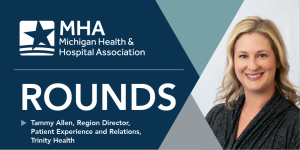
It’s no secret that patient experience within hospitals and health systems has evolved over the years – especially following the COVID-19 pandemic. With Patient Experience Week (PX Week) around the corner, it’s a good time to recognize the …


Keckley Report

Tax Exempt Status for Not-for-Profit Hospitals: The Debate Ahead

“Tax exemptions for hospitals are not a new topic inside healthcare, but lately they’ve drawn outside attention from regulators and in media. They seem to be asking ‘Do not-for-profit hospitals deserve their tax breaks?’ …

Hospitals face a headwind, especially those that are tax-exempt. Every U.S. hospital is reeling from the uncertainty surrounding the Kennedy (HHS)-Oz (CMS)-Makary (FDA) trifecta that will regulate hospital affairs in the next few months. Every hospital is feeling heat from disgruntled physicians and worn-out frontline caregivers. Every hospital is worried about how tariffs will impact supply chain costs and all are taking a cautious approach to major capital projects. And all face increased pushback from state legislators who think price controls on hospitals might be the answer.

For Rick Pollack and team at the American Hospital Association, it’s not business as usual. The hospital big tent is under duress. And NFP tax exempt hospitals might be where it’s hottest. Large employers have targeted large NFP systems for cost reduction and Congress appears poised to impose restrictions on NFPs intended to rein-in what some consider excesses under the protection of tax-exempt status. …

Spending in healthcare at current levels is not sustainable. NFP system say the health of the communities they serve is their highest priority, though many limit their attention to lucrative services while neglecting others that might pay longer-term dividends in public health.

Utopian? Yes, but necessary. Actions not taken by NFP systems to demonstrate they deserve their tax exemptions is risky. And lack of will to adopt minimal standards will ultimately mean exemptions are linked to charity-care only.

In 2025 and beyond, tax exemptions for not-for-profit hospitals will garner attention. They’re not guaranteed and they’re under attack.”

Paul Keckley, April 21, 2025


New to KnowNews to Know

  • The MHA is issuing a request for proposal for a $2.5 million competitive grant program for Michigan healthcare entities to expand access to hospital-based peer recovery coach services.
  • Registration is now open for the MHA Annual Membership Meeting June 25 through 27 at the Grand Hotel on Mackinac Island. Members are encouraged to register by May 23 to attend this memorable event

Jim Lee speaks with Mid-Michigan NOW about AI.

MHA in the News

Jim Lee, senior vice president, data policy & analytics, MHA, appeared in a story about artificial intelligence (AI) in healthcare aired by Mid-Michigan NOW on April 23. Lee discussed how AI is being used by …
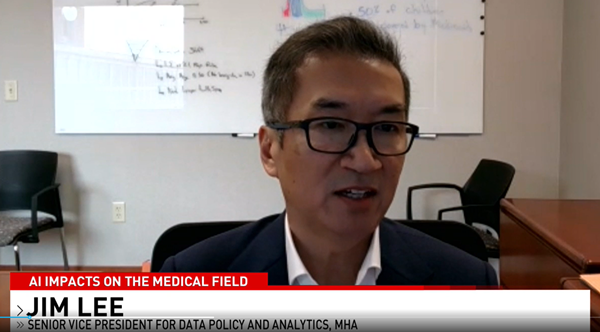
Lee Discusses AI in Healthcare

Jim Lee speaks with Mid-Michigan NOW about AI.

Jim Lee, senior vice president, data policy & analytics, MHA, appeared in a story about artificial intelligence (AI) in healthcare aired by Mid-Michigan NOW on April 23.

Lee discussed how AI is being used by hospitals and providers to assist with medical data and information and to reduce administrative burden.

“AI and healthcare is sort of like having a super smart assistant that helps doctors and nurses by quickly sorting through mountains of data and medical information,” said Lee.

Lansing political news outlet Gongwer also published two articles on April 23 that quote MHA representatives.

MHA CEO Brian Peters appeared in a story covering the newly launch Protect MI Care coalition to protect against Medicaid funding cuts.

“[Medicaid is] the financial lifeline that keeps hospitals, mental health providers and nursing homes open,” said Peters. “Cuts at this scale would lead to facility closures, creating health care deserts that hurt everyone, regardless of how they’re insured.”

MHA Chief Nursing Officer Amy Brown also appeared in an article following her testimony in the House Health Policy Committee in support of House Bill 4246, which would add Michigan to the nurse licensure compact.

“An important tactic to improve our ability as a state to attract talent and make it easy for nurses to choose Michigan to practice is to join the nurse license compact,” said Brown. “Hospitals continue to prioritize recruitment and retention efforts, but with the aging demographics of our state and the lack of participation in the compact hinder our ability to recruit younger nurses to replace the many nurses nearing and entering retirement.”

Members with any questions regarding media requests should contact John Karasinski at the MHA.

Leaders Convene for Crucial Healthcare Workforce Discussion

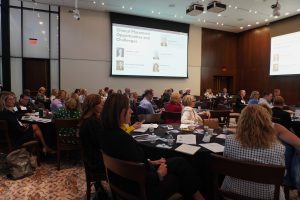
Crowd of attendees at The MHA Healthcare Workforce Conversation event in Lansing, MI.
Attendees at the MHA Healthcare Workforce Conversation event Sept. 11 in Lansing, MI.

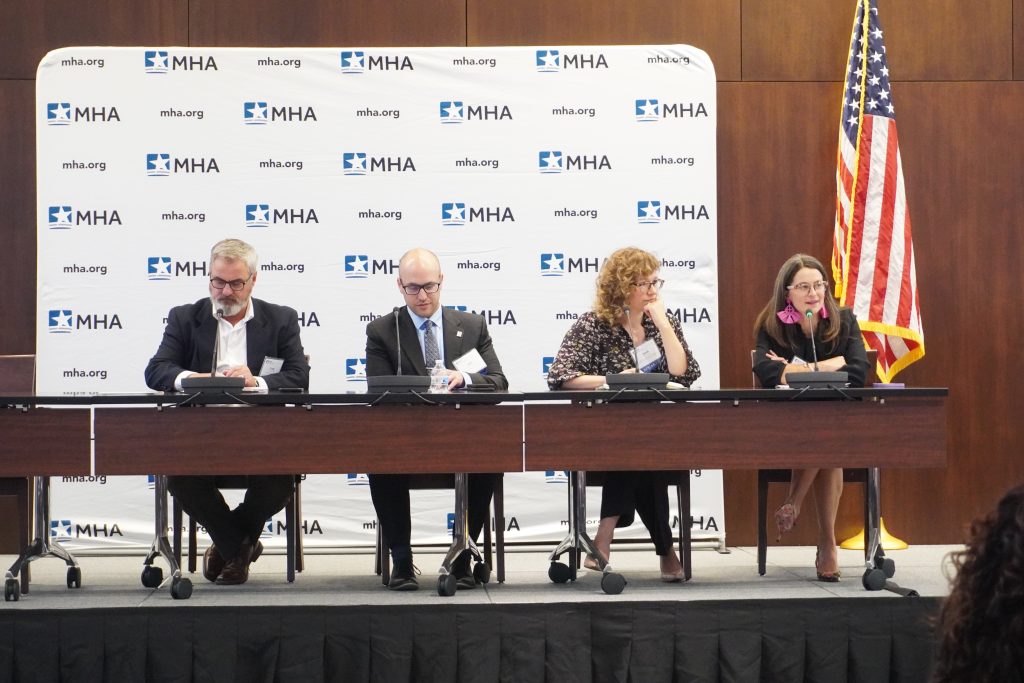
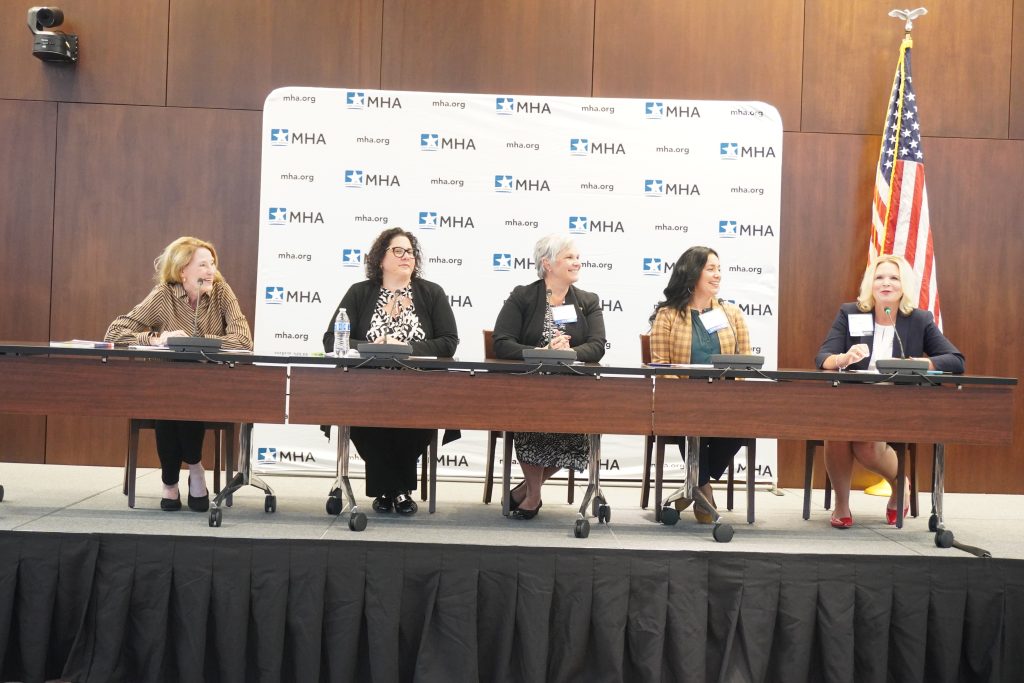
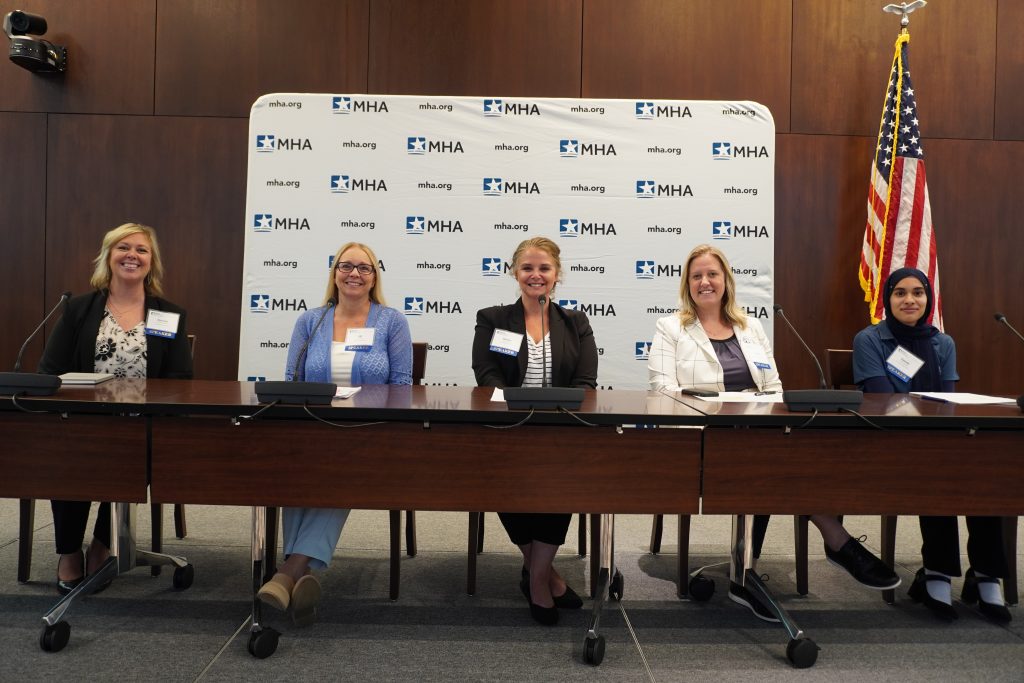
The MHA hosted nearly 150 thought leaders from healthcare, post-secondary education and workforce talent development Sept. 11 in Lansing for a discussion to help strengthen connections across the sectors focused on building the pipeline for Michigan’s future healthcare workforce.  

Leaders engaged in the day-long summit, moderated by Elizabeth Kutter, senior director, government & political affairs, MHA, which highlighted panel discussions on healthcare workforce data, partnerships and best practices between hospitals and academia, guided discussions on addressing barriers to upskilling and reskilling current the workforce, challenges and opportunities in clinical placements and early career attraction. Each panel brought incredible knowledge and expertise to the topic areas, spurring robust conversations between panelists and attendees.

The event began with reviewing data indicating that more than 48,000 jobs in healthcare will be necessary in the next 10 years. That data highlighted the need to gather this diverse stakeholder group to push new, creative solutions to career attraction, educational enrollment and attainment, career readiness and retention. Colby Cesaro, vice president, Independent Colleges and Universities, moderated the panel comprised of John Karasinski, senior director, communications, MHA; Craig Donahue, CEO, Michigan Health Council; and Sarah Szurpicki, director, Michigan office of Sixty by 30.

Following the discussion, participants spent time sharing partnership best practices. Russ Kavalhuna, president, Henry Ford College; Don MacMaster, president, Alpena Community College; John Kaczynski, executive director of external governmental affairs, Saginaw Valley State University; Kelley McMillian, senior director of professional nursing practice, Corewell Health; and Brandy Johnson, president, Michigan Community College Association, shared how to develop direct partnerships between hospitals and post-secondary institutions, how to bring new programs to rural Michigan and how to structure a successful academic and healthcare employer partnership.

Over lunch, the group participated in a guided discussion led by Ryan Hundt, CEO, Michigan Works! and Christi Taylor, director of talent initiatives, Detroit Regional Chamber. The discussion encouraged attendees to network while discussing guided prompts on barriers to upskilling, reskilling and recruiting talent from within existing employee bases.

Following the guided networking lunch, the group dove deeply into the challenges academic institutions and hospitals alike are facing in undergraduate and graduate nursing clinical rotation placements. Immersive in-person clinical education is imperative to nursing licensure and long-term success. Without it, students lack preparedness for bedside practice, contributing to concerns about nursing turnover. This topic area teed up further need to specifically convene on ways to disrupt the current placement framework. Amy Brown, chief nursing officer, MHA, lead the  panel of experts featuring Cynthia McCurren, dean of the school of nursing UM-Flint; Amy Stahley, dean of the college of health professions, Davenport University; Maria Vitale, administrative manager of students of nursing and physician assistant studies, Corewell Health; and Deborah Lopez, clinical liaison, UM Health-Sparrow.

The event concluded with Mark Burley, state director, HOSA Michigan, leading a discussion with Christin Tenbusch, director, care experience and organizational development, Covenant Healthcare; Jill Jarvis, manager, clinical development and education, Covenant HealthCare; Ashlee Offord, Corewell Health Lakeland GROWTH Internship Program; Jamie Jacobs, Michigan College Access Network; and HOSA’s state student director Zainab Ahmed. The group focused on how to attract younger generations to healthcare careers and career pathways, with conversations on impactful paid internship programs, early healthcare career exposure and the role leaders play in ensuring positive recognition of the profession.

Members with questions about the event or interest in future engagements are encouraged to contact Elizabeth Kutter at the MHA.

New Drug Linked to Overdose Deaths Across Michigan

The Michigan Department of Health and Human Services (MDHHS) is warning Michigan residents and healthcare providers about medetomidine, a new drug identified in overdose deaths across the state.

Medetomidine is a veterinary tranquilizer, similar to xylazine, that can cause adverse effects including slowed heart rate, low blood pressure and decreases in brain and spinal cord activity. It is not approved for use in people.

Three deaths in Michigan have been reported with involvement of medetomidine, all identified via the Swift Toxicology of Opioid Related Mortalities project at the Western Michigan University Homer Stryker M.D. School of Medicine, who began testing for medetomidine in January 2024. Deaths have occurred in Berrien, Ingham and Wayne counties. All three decedents also tested positive for fentanyl.

The usage of this drug brings concerns due to:

  • Medetomidine can cause central nervous system depression and death.
  • Like xylazine, medetomidine is not reversed by medications such as naloxone or Narcan.
  • Unlike xylazine, testing strips are not yet available to detect this particular drug.

Healthcare providers, local substance use disorder organizations and harm reduction agencies are urged to follow MDHHS recommendations.

The Michigan Poison & Drug Information Center provides details on the drug and shares that the effects of medetomidine are reportedly more potent, selective and longer acting than those associated with xylazine.  

Due to most hospital laboratories not having real time medetomidine toxicology testing, clinicians are urged to rely on clinical presentation, signs/symptoms, lab work and diagnostic results.

Members with questions may contact Gary Roth, DO, FACOS, FCCM, FACS or Amy Brown MSN, RN, NE-BC at the MHA.