

MHA Monday Report Oct. 14, 2024

Legislation Impacting Hospitals Advances in State Legislature

A variety of bills impacting hospitals were introduced and discussed in the state legislature during the week of Oct. 7. Gov. Whitmer signed Public Act 132 of 2024, which updates statutory framework for the …


Baxter IV Solutions Shortage Updates

The MHA continues to support Michigan hospitals in response to the Baxter IV solutions shortage that began the week of Sept. 29. Baxter International Inc. temporarily closed its North Cove manufacturing plant in Marion, N.C., …


Reimbursement for Age-Friendly Quality Data Included in FY 2025 Hospital IPPS Final Rule

Included in the Centers for Medicare & Medicaid Services’ Medicare fee-for-service hospital inpatient prospective payment system (IPPS) fiscal year (FY) 2025 final rule is a reimbursement model for hospitals submitting age-friendly quality data. Hospitals …


Healthcare Leaders Discuss Regional Care at Lansing Economic Club

The Lansing Regional Chamber hosted its annual Future of Healthcare in the Lansing Region luncheon Oct. 10 as part of its monthly series of Lansing Economic Club events. This event featured a panel discussion moderated …


New Hospital Reporting Requirements for Respiratory Illness and Bed Capacity
The Centers for Medicare & Medicaid Services recently announced new respiratory disease reporting requirements for hospitals through the National Healthcare Safety Network effective Nov. 1. These requirements replace the previous “Hospital COVID-19 Data” reporting requirements …


MHA Webinar Outlines Strategies to Strengthen Healthcare Worker Well-being

The MHA and the MHA Keystone Center will host the MHA Health Foundation webinar Implementing Evidence-Informed Strategies to Normalize Help-Seeking and Strengthen Wellbeing from 4:30 to 5:30 p.m. Dec 4. This webinar is dedicated to …


MHA Race of the Week – Michigan Supreme Court
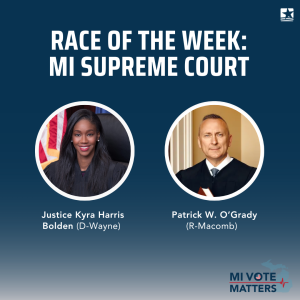
The MHA’s Race of the Week series highlights the most pivotal statewide races for the 2024 General Election. The series will provide hospitals and healthcare advocates with the resources they …


MHA Podcast Explores Why Voting Matters to Healthcare in Michigan

The MHA released a new episode of the MiCare Champion Cast featuring Laura Appel, executive vice president of government relations & public policy, MHA, exploring why voting in the 2024 General Election is critical to …


Keckley Report

What is the Medicare Advantage?

“On October 15, the open enrollment period for Medicare begins running through December 7 for coverage starting in January 2025. In this period, 67 million Medicare eligible seniors can review features of Medicare plans offered in their area, switch from traditional Medicare to a Medicare Advantage (MA) plan (or vice versa), change their MA selection and add/change their Medicare Part D prescription drug plans.

In 2024, Medicare Advantage plans enrolled 33 million seniors and Medicare paid private insurers $462 billion to pay for their care. But conditions for Medicare Advantage have changed in recent years prompting many to ask ‘what is the Medicare Advantage?’ …

Its funding comes from payroll taxes paid by employers and their employees, and those who are self-employed PLUS income taxes paid on Social Security benefits, interest earned on the Medicare trust fund’s investments and Part A premiums from people who aren’t eligible for premium-free Part A. …”

Paul Keckley, Oct. 7, 2024


Laura AppelMHA in the News

The MHA received media coverage the week of Oct. 7 that includes coverage on a potential national shortage of IV solutions products, physician retention and rural hospital funding. The closure of a Baxter manufacturing facility …

Reimbursement for Age-Friendly Quality Data Included in FY 2025 Hospital IPPS Final Rule

Included in the Centers for Medicare & Medicaid Services’ (CMS) Medicare fee-for-service hospital inpatient prospective payment system (IPPS) fiscal year (FY) 2025 final rule is a reimbursement model for hospitals submitting age-friendly quality data.

Hospitals will be asked to report on several measures to assess whether they are improving care for older patients in emergency departments, operating rooms and other settings.

Hospitals will need to report that they are:

  • Attesting annually to having procedures that enable patients’ healthcare goals, such as determining whether living wills and healthcare proxies are included in care plans.
  • Reviewing medication regimens and eliminating unnecessary prescriptions.
  • Implementing frailty screenings and interventions, such as for mobility or cognition.
  • Assessing social vulnerabilities, such as isolation or elder abuse.
  • Designating age-specialized leadership within hospitals.

The CMS will add the age-friendly structural measures to the FY 2025 inpatient quality reporting program reporting, which will impact Medicare payments in FY 2027.

The MHA Keystone Center has supported numerous age-friendly initiatives in recent years, including Age-Friendly Health Systems Action Communities, which implements the 4Ms framework (What Matters, Medication, Mentation and Mobility) – aligning with the proposed measures outlined by CMS.

Members seeking assistance implementing age-friendly policies and procedures should contact the MHA Keystone Center.

Members with questions about the IPPS final rule should contact Vickie Kunz at the MHA.

MHA Updates Medicaid and Medicare Enrollment Analysis

The MHA updated its analysis of Medicaid and Medicare enrollment to reflect July 2024 data. The analysis now includes program enrollment as a percentage of each county’s total population and the split between fee-for-service and managed care organizations. Just over 26% of Michigan’s total population is enrolled in Medicaid and 22% is enrolled in Medicare.

The Michigan Department of Health and Human Services recently completed the Medicaid redetermination process as required by the Consolidated Appropriations Act. July 2024 enrollment, including the Healthy Michigan Plan, is just over 2.6 million, which is down approximately 639,000 since July 2023. 67% of Medicaid beneficiaries are enrolled in one of nine managed care plans.

The impact on hospitals is unknown since many enrollees had other coverage and their services were not billed to Medicaid. Many individuals who lost coverage have subsequently reenrolled in the program, have other third-party coverage or have sought coverage on the federal marketplace.

Total Medicare enrollment is 2.26 million, with 62% of beneficiaries enrolled in a Medicaid Advantage (MA) plan and only two counties having less than 50% of total Medicare enrollment in MA plans. MA enrollment by county varies from 45% to 77%, with most counties having 55% or more of their Medicare population enrolled in an MA plan, as highlighted below.

July enrollment is spread across 48 MA plans, with up to 30 plans covering beneficiaries in several Michigan counties.

Members with enrollment questions should contact the Health Finance team at the MHA.

MHA Monday Report Aug. 12, 2024

MHA Shares State Impacts and Insights at Regional 340B Roundtable

MHA staff attended the Regional 340B Roundtable Aug. 7 in Florence, IN to join colleagues from the Indiana Hospital Association, Ohio Hospital Association, Kentucky Hospital Association and endorsed business partner, SunRx, to share best practices …


MHA Keystone Center Offers Learning Collaboratives for Peer Recovery Services

The MHA Keystone Center is partnering with the Community Foundation of Southeast Michigan to host a two-part, virtual series about peer recovery services for substance and opioid use disorders from 10 a.m. to 12 p.m. …


CMS Releases FY 2025 Final Rule for Skilled Nursing Facilities

The Centers for Medicare & Medicaid Services (CMS) recently released a final rule to update the Medicare fee-for-service prospective payment system for skilled nursing facilities for federal fiscal year (FY) 2025. Key provisions …


Kelley Cawthorne Ad


MHA Webinar Tying Person and Family Engagement to Culture Performance Deadline Approaching

One week remains before the registration deadline for the MHA webinar Tying Person and Family Engagement to Culture and Performance. Scheduled from noon to 1 p.m. Aug. 20, the webinar provides an opportunity for hospitals to …


CMS Releases FY 2025 LTCH Prospective Payment System Final Rule

The Centers for Medicare & Medicaid Services (C recently released a final rule to update the Medicare fee-for-service long-term care hospital (LTCH) prospective payment system for fiscal year 2025. Specifically, the final rule: Increases …


CMS Releases FY 2025 Hospital Inpatient Prospective Payment System Final Rule

The Centers for Medicare & Medicaid Services recently released a final rule to update the Medicare fee-for-service hospital inpatient prospective payment system for fiscal year (FY) 2025. Highlights of the final rule include: …


The Keckley Report

Big Sky is Cloudy for Hospitals

“As state hospital association leaders assemble in Big Sky, Montana this week, the environment for hospital-friendly legislation is threatening at best:

The public’s trust in hospitals has eroded. Hospital financial performance is a mixed bag: some are profitable and many aren’t. Congress thinks hospitals need more regulation to increase price transparency, require ownership disclosure, verify community benefits that justify tax exemptions and impose restrictions on hospital private equity investments. And programs through which state and federal health policies are authorized—HHS, CMS, FTC, FDA, CMMI et al—are in limbo as a result of the June 28, 2024 Chevron ruling by the Supreme Court. …

For hospitals, effective advocacy is imperative: the reservoir of good will enjoyed for decades is evaporating. Advertising “we’re there for you” is timely as rural providers need a lifeline, and public castigation of “corporate insurers and billionaire critics” necessary to rally supporters. But beyond these, two things are clear:

  • The marketplace for “hospitals” is fundamentally different than the past requiring a clearer value proposition and fresh messaging.
  • And in states, hospitals will encounter unique opportunities and challenges in plotting strategies for their future. No two are alike.

Big Sky is a symbolic locale for this week’s meeting of state health executives: the Big Sky over hospitals is cloudy.”

Paul Keckley, Aug. 5, 2024

CMS Releases FY 2025 Hospital Inpatient Prospective Payment System Final Rule

The Centers for Medicare & Medicaid Services (CMS) recently released a final rule to update the Medicare fee-for-service hospital inpatient prospective payment system (IPPS) for fiscal year (FY) 2025.

Highlights of the final rule include:

  • Increasing the standard operating rate by a net 1.7%, after budget neutrality adjustments, from $6,497.77 to $6,606.51, for hospitals that successfully comply with the CMS quality reporting program and electronic health record requirements. Hospitals that do not meet requirements for these programs are subject to a lower annual update.
  • Updating the federal capital rate by 1.3%, from $503.83 to $510.51.
  • Increasing the cost outlier threshold by 8%, from $42,750, to $46,152, to maintain the target of paying 5.1% of aggregate IPPS payments as outlier.
  • Revising core based statistical areas (CBSAs) as a result of the new Office of Management and Budget labor market delineations based on the 2020 Decennial Census.
  • Implementing a separate IPPS payment for small, independent hospitals, defined as those with 100 or fewer beds that are not part of a chain organization, to voluntarily establish and maintain a six-month buffer stock of one or more of 86 essential medicines. This separate payment will not be budget neutral.
  • Creating 12 new Medicare Severity Diagnosis Related Groups (MS-DRGs) and deleting 5 MS-DRGs, most of which are within Major Diagnostic Category 08 (Diseases of the Musculoskeletal System and Connective Tissue).
  • Establishing a new mandatory CMS Innovation Center model, Transforming Episode Accountability Model, that would provide bundled payment for five surgical procedures to hospitals in 188 selected CBSAs.
  • Using the average of FY 2019, 2020 and 2021 Worksheet S-10 uncompensated care cost (UCC) data for the UCC pool allocation, which comprises 75% of Medicare disproportionate share hospital (DSH) payments. After adjusting this pool for the percent of uninsured individuals, total DSH and UCC payments will be approximately $200 million less than FY 2024 payments.
  • Adding seven new measures, primarily focused on patient safety-related practices and outcomes to the inpatient quality reporting program, while removing five measures and modifying two existing measures, including the Hospital Consumer Assessment for Healthcare Providers and Systems survey measure.
  • Increasing the performance-based scoring threshold from 60 points to 70 points, beginning with the electronic health record reporting period in calendar year (CY) 2025, and from 70 points to 80 points in CY 2026.
  • Increasing the number of mandatory electronic clinical quality measures that hospitals must report for both the IQR and the Promoting Interoperability programs.
  • Modifying and making permanent weekly reporting by hospitals, including critical access hospitals, of acute respiratory illness data beginning Nov. 1, 2024, on confirmed infection of COVID-19, influenza and respiratory syntactical virus among hospitalized patients, hospital capacity and limited patient demographic information, including age.
  • Finalizing the proposal to separate the Antimicrobial Use and Resistance Surveillance measure into separate measures (an Antimicrobial Use Surveillance measure and an Antimicrobial Resistance Surveillance measure), beginning with the electronic health record reporting period in CY 2025.
  • Adopting severity level changes related to seven social determinants of health diagnosis codes (SDOH Z codes) that describe inadequate housing and housing instability, moving these from non-complication or comorbidity to complication or comorbidity for FY 2025.

The MHA continues to review the final rule and will provide hospitals with an updated estimated impact analysis in the next few weeks. Members with questions should contact Vickie Kunz at the MHA.

CMS Releases FY 2025 LTCH Prospective Payment System Final Rule

The Centers for Medicare & Medicaid Services (CMS) recently released a final rule to update the Medicare fee-for-service long-term care hospital (LTCH) prospective payment system (PPS) for fiscal year 2025.

Specifically, the final rule:

  • Increases the standard LTCH PPS rate by a net 2.6% from $48,117 to $49,383 for LTCHs that meet the CMS quality program reporting requirements. LTCHs that fail to meet these requirements are subject to a two percentage point reduction to the annual update.
  • Rebases the market basket to use 2022 cost report data instead of 2017.
  • Increases the high-cost outlier (HCO) threshold by 29% for standard LTCH cases from the current $59,873 to $77,048, to achieve the target of paying roughly 8% of aggregate LTCH payments as HCO payments.
  • Continues to pay cases at the site neutral rate if they fail to meet LTCH criteria.
  • Updates the cost outlier threshold for site-neutral cases to the inpatient PPS threshold finalized at $46,152, up from $42,750.
  • Revises core based statistical areas as a result of the new Office of Management and Budget labor market delineations based on the 2020 Decennial Census.
  • Updates the LTCH quality reporting program to require reporting of four new items to the LTCH Continuity Assessment Record and Evaluation Data Set, social determinant of health category. These include one item each for living situation and utilities and two items for food.
  • Modifies the Transportation assessment item to simplify response options and revise the look-back period.
  • Extends the window for admission assessments from three days to four, beginning with patients admitted on Oct. 1, 2026.

The MHA continues to review the final rule and will provide LTCHs with an updated estimated impact analysis in the next few weeks.  Members with questions should contact Vickie Kunz at the MHA.


CMS Releases FY 2025 Final Rule for Skilled Nursing Facilities

The Centers for Medicare & Medicaid Services (CMS) recently released a final rule to update the Medicare fee-for-service prospective payment system (PPS) for skilled nursing facilities (SNFs) for federal fiscal year (FY) 2025.

Key provisions include:

  • Increasing the per diem federal rate by a net 4.2% after the market basket update, productivity adjustment and other adjustments.
  • Updating the base year data used to determine the SNF market basket from 2018 to 2022.
  • Updating the wage index used under the SNF PPS to reflect data from the 2020 decennial census.
  • Increasing the labor-related share of the per diem rate from 71.1% to 72%.
  • Making technical updates to the code mappings used to classify patients under the Patient Driven Payment Model that assigns patients to clinical categories.
  • Revising the regulations to allow the CMS to impose additional financial penalties on facilities with health and safety deficiencies as identified.
  • Adopting four new patient assessment items related to health-related social needs, with SNFs required to collect and report specific data elements related to living situation, food and utilities beginning with the FY 2027 SNF quality reporting program (QRP).
  • Modifying the transportation item on the patient assessment item to simplify response options while also using a defined 12-month look-back period.
  • Adopting a data validation process for the SNF QRP beginning with the FY 2027 program.
  • Proposing operational updates to the SNF Value-Based Purchasing program, including policies regarding measure removal and review and corrections.
  • Updating the case mix methodology used to calculate the Total Nurse Staffing measure.

The MHA will provide SNFs with an updated facility-specific impact analysis and additional details on the final rule, effective Oct. 1, in the near future. Members with questions should contact Vickie Kunz at the MHA.

MHA Monday Report Aug. 5, 2024

Michigan Supreme Court Issues Ruling on Paid Sick Leave & Minimum Wage

The Michigan Supreme Court issued a ruling July 31 in Mothering Justice v. Attorney General that upholds voter initiative petitions on paid sick leave and minimum wage. Those laws, as originally enacted, will go into …


Michigan Medicaid Facility Rates Increased for Dental Procedures Under General Anesthesia

The Michigan Department of Health and Human Services issued a final policy to increase Medicaid payment rates for dental services provided to patients under general anesthesia in ambulatory surgical centers and outpatient hospitals, …


MDHHS and Michigan 211 Launches New Website for Grief and Bereavement Support

The Michigan Department of Health and Human Services (MDHHS), in partnership with Michigan 211, recently launched a new website aimed to providing support services for families who have experienced loss of a mother or infant. …


Kelley Cawthorne Ad


CMS Releases FY 2025 Final Rule for Inpatient Psychiatric Facilities

The Centers for Medicare & Medicaid Services (CMS) recently released a final rule to update the Medicare fee-for-service prospective payment system for inpatient psychiatric facilities for federal fiscal year (FY) 2025. Key provisions …


Applications Open for MI Behavioral Health Internship Stipend Program

The Michigan Department of Health and Human Services has allocated $3.5 million for the Behavioral Health Internship Stipend Program. This program will offer up to $15,000 stipends to student interns enrolled in behavioral health …


CMS Releases FY 2025 Final Rule for Inpatient Rehabilitation Facilities

The Centers for Medicare & Medicaid Services (CMS) recently released a final rule to update the Medicare fee-for-service prospective payment system for inpatient rehabilitation facilities for federal fiscal year (FY) 2025. Key provisions …


The Keckley Report

The Five Characteristics of the Blame and Shame Game in Healthcare

“The Blame and Shame Game spikes in election cycles as candidates pit themselves against their opponents. Healthcare plays its own version: last week is indicative: …

As Congress heads home for their August recess this week and Campaign 2024 intensifies, there’s no doubt healthcare issues will be prominent in local, state and national news. It’s also likely much of that coverage will be negative due to mounting cynicism about the industry’s business, consolidation, and opaque pricing and intensifying blame and shame games between hospitals and insurers, primary care and specialty physicians, PBMs and drug manufacturers, public health and healthcare delivery and others.

Blame and shame rhetoric about these tensions is not new, but its intensity is higher than ever as are the stakes. Blame and Shame is Chapter Two in most organization’s playbooks. Chapter One, the organization’s mission, vision, purpose and strategic plan is often missing and frequently premised on false assumptions. Thus, the “strategy” defaults to calling out the wrongdoings/shortcoming of adversaries and critics and little more. And their rhetoric is laced with terms for which accountability is suspect i.e. community benefit, affordability, value, quality and others. …

Here’s too much at stake to expect any inside sector to do this on its own: Blame and Shame is easier.”

Paul Keckley, July 29, 2024


News to Know 

The Primary Election is Tuesday, Aug. 6. Polls open at 7 a.m. and close at 8 p.m. Voters in line at 8 p.m. can still cast ballots. Those who missed the deadline to register online or by mail can do so in-person through Election Day with their local clerk. To check registration status, polling location or preview a ballot, visit the Michigan voter webpage.

CMS Releases FY 2025 Final Rule for Inpatient Psychiatric Facilities

The Centers for Medicare & Medicaid Services (CMS) recently released a final rule to update the Medicare fee-for-service prospective payment system (PPS) for inpatient psychiatric facilities (IPFs) for federal fiscal year (FY) 2025. Key provisions of the rule include:

  • Increasing the Electroconvulsive Therapy (ECT) payment per treatment by 71.5% from $385.58 to $661.52 for IPFs that comply with IPF quality reporting program (QRP) requirements and $648.65 for IPFs that fail to report data. The CMS believes this will improve access to ECT services.
  • Decreasing the IPF PPS federal per diem base rate by a net 2.1% after all adjustments, from $895.63 to $876.53. IPFs that fail to comply with the CMS IPF QRP requirements would be paid using a base rate of $859.48.
  • Updating the wage index using the most recent Office of Management and Budget statistical area delineations based on the 2020 Decennial Census.
  • Increasing the labor-related share from the current 78.7% to 78.8%.
  • Increasing the cost outlier threshold by 14% from the current $33,470 to $38,110 to achieve the 2% target for outlier payments, as compared to aggregate IPF payments, decreasing the number of cases that qualify for outlier payments.
  • Finalizing changes to the patient-level adjustments.
  • Maintaining the existing facility-level adjustment factors for rural location, teaching status and emergency department.
  • Changes to the IPFQR Program:
    • Finalizing the proposed adoption of the 30-Day Risk-Standardized All-Cause Emergency Department Visit following an IPF discharge measure beginning with the FY 2027 payment determination.
    • Not finalizing the proposal to require IPFs to submit patient-level data on a quarterly basis based on comments received and determining that some IPFs may be unable to meet this requirement in the proposed timeframe.
  • Summarizing comments received about the IPF PPS Patient Assessment Instrument (IPF-PAI), as required by the Consolidated Appropriations Act, 2023 and considering the comments for development of the IPF-PAI and in future rulemaking.

The MHA will provide IPFs with an updated facility-specific impact analysis and additional details on the final rule, effective Oct. 1, in the near future. Members with questions should contact Vickie Kunz at the MHA.

CMS Releases FY 2025 Final Rule for Inpatient Rehabilitation Facilities

The Centers for Medicare & Medicaid Services (CMS) recently released a final rule to update the Medicare fee-for-service prospective payment system (PPS) for inpatient rehabilitation facilities (IRF) for federal fiscal year (FY) 2025.

Key provisions of the rule include:

  • Increasing the IRF PPS payment rate by a net 2% after all adjustments, from $18,541 to $18,907. IRFs that fail to comply with the CMS IRF Quality Reporting Program (QRP) requirements are subject to a two-percentage point reduction.
  • Updating the wage index using the most recent Office of Management and Budget statistical area delineations based on the 2020 Decennial Census.
  • Increasing the labor-related share from the current 74.1% to 74.4%.
  • Increasing the cost outlier threshold by 15.5% from the current $10,423 to $12,043 to achieve the 3% target for outlier payments, as compared to aggregate IRF payments, decreasing the number of cases that qualify for outlier payments.
  • Updating the case mix group relative weights and average length of stay values using FY 2023 IRF claims and FY 2022 IRF cost report data.
  • Requiring IRFs to report four new items (beginning with patients admitted Oct. 1, 2026) using the IRF-Patient Assessment Instrument (IRF-PAI) as standardized patient assessment data elements under the social determinants of health (SDOH) category beginning with the FY 2028 IRF QRP including:
    • One item for living situation.
    • Two items for food.
    • One item for utilities.
  • Modifying the Transportation item collected in the IRF-PAI under the SDOH category beginning with patients admitted Oct. 1, 2026
  • Continuing to evaluate, refine and develop new measures for the IRF QRP to ensure Medicare patients and caregivers have meaningful information to make informed decisions.
  • Creating a five-star IRF QRP rating system to distinguish between quality of care offered by providers.

The MHA will provide IRFs with an updated facility-specific impact analysis and additional details on the final rule, effective Oct. 1, in the near future. Members with questions should contact Vickie Kunz at the MHA.