MDHHS Launches 2025 Customer Satisfaction Survey for Public Health Laboratory Partners

The Michigan Department of Health and Human Services (MDHHS) Bureau of Laboratories (BOL) is inviting public health partners to complete the 2025 Customer Satisfaction Survey by Dec. 31, 2025, to gather feedback that will help improve statewide laboratory services.

The invitation is open to all individuals who work with or rely on laboratory services. Multiple responses from each organization are encouraged, as individual perspectives help MDHHS BOL better understand the needs and experiences of public health partners.

Members with any questions may contact the MHA policy team.

State and Medical Partners Urge Michiganders to Get the COVID-19 Vaccine

To help ensure access to the COVID-19 vaccine for all residents, the Michigan Department of Health and Human Services (MDHHS), Department of Licensing and Regulatory Affairs (LARA) and Department of Insurance and Financial Services (DIFS) are working together under Gov. Whitmer’s Executive Directive 2025-7.

The state’s chief medical executive, Natasha Bagdasarian, MD, issued Standing Recommendation 2025-1 to ensure that everyone who wants a COVID-19 vaccine can access one.

The COVID-19 vaccine is recommended for the following:

  • All infants and children ages six through 23 months
  • All children ages two through 18 years with risk factors
  • All pregnant women at any point in pregnancy
  • All adults ages 18 to 50
  • All adults ages 50 and older

Vaccines are available at pharmacies, local health departments and healthcare providers’ offices and clinics.

There is no cost to most Michigan residents to receive the COVID-19 vaccine. MDHHS and DIFS continue to work to ensure coverage through insurance, including Medicaid. Questions regarding coverage may be directed to DIFS at 877-999-6442.

LARA reminds licensed health providers that Michigan law authorizes them to administer the COVID-19 vaccine under a physician’s direction, including to individuals outside the categories approved by the U.S. Food and Drug Administration. Pharmacists with collaborative-practice agreements with prescribers are also included. Members seeking additional COVID-19 vaccine recommendations may visit the MDHHS Seasonal Respiratory Viruses webpage.

Members with questions regarding the webinar or vaccine policy may contact MHA policy team.

MDHHS to Discuss 2026 Draft Rates for MichiCANS and LOCUS Assessments

The Michigan Department of Health and Human Services (MDHHS) invites qualified mental health providers to attend a MichiCANS Screener and Level of Care Utilization System (LOCUS) All Provider Draft Rate meeting scheduled from 1 – 2 p.m. ET Aug. 6. The meeting will provide important context for upcoming Medicaid policy changes and explain how draft comparison payment rates were developed for the 2026 fiscal year MichiCANS and LOCUS assessments. Providers will also have the opportunity to share feedback on the proposed rate methodology. Members are encouraged to register and attend the meeting.

Beginning in October 2025, all qualified Medicaid mental health providers contracted with Medicaid health plans (MHPs) and/or prepaid inpatient health plans (PIHPs) must begin using the MichiCANS screener for individuals under 21, or the LOCUS for those 21 and older. Providers must also follow a standardized referral process for mental health services.

Starting in October 2026, MHPs will expand coverage to include additional services for individuals with lower levels of mental health need. These services include inpatient psychiatric care, crisis residential services, partial hospitalization and targeted case management. Providers of these services should prepare to contract with both MHPs and PIHPs.

Members with questions may contact MHA Policy department at the MHA.

Federal Agencies Pause Enforcement of 2024 Mental Health Parity Rule

The Department of Labor, Health and Human Services, and the Treasury recently announced that the 2024 final rule on the Mental Health Parity and Addiction Equity Act (MPHAEA) will not be enforced, following a legal challenge by the ERISA Industry Committee (ERIC).

The 2024 rule expanded upon 2013 regulations by introducing new requirements for nonquantitative treatment limitation analyses, designed to strengthen parity between mental health and medical or surgical benefits. In January 2025, ERIC filed a suit arguing the new rule is arbitrary and unlawful.

In response, the departments asked the courts to pause enforcement and indicated they may revisit the rule through future rulemaking. Citing executive order 14219, which directs agencies to reduce regulatory burdens, the departments confirmed they will not enforce the 2024 provisions for violations occurring before a final court decision and for 18 months thereafter.

The enforcement pause applies only to the new provisions introduced in the 2024 rule. The 2013 final rule and the underlying Mental Health Parity and Addiction Equity Act statute, including amendments from the Consolidated Appropriations Act of 2021, remain in effect.

The Department of Health and Human Services is encouraging states, which are the primary enforcers of parity requirements for health insurance issuers, to adopt a similar approach. States that pause enforcement of the 2024 provisions but continue enforcing the 2013 rule and statute will not be considered out of compliance by HHS.

Members with questions may contact Lenise Freeman at the MHA.

MHA Monday Report Oct. 7, 2024

MHA Participates in Southwest Michigan Behavioral Health Healthcare Policy Forum

Southwest Michigan Behavioral Health hosted Oct. 4 the ninth annual regional healthcare policy forum in Kalamazoo. Moderated by Dr. Colleen Allen, CEO, Autism Alliance of Michigan, the forum focused on the theme of “Working Together” …


MHA Webinar Explores How Boards and Leaders Can Deploy AI Responsibly and Ethically

The MHA is hosting the webinar How Boards and Leaders Can Deploy AI Responsibly and Ethically, scheduled 4:30 – 6 p.m. ET Dec. 3 which features respected healthcare leaders in artificial intelligence (AI), healthcare operations …


Fall MI AIM Regional Training Events

The Michigan Alliance for Innovation on Maternal Health (MI AIM) is offering training events across Michigan for inpatient maternal healthcare providers. The events, scheduled from late October to November, will focus on using quality improvement …


MDHHS Releases Medicaid Doula Services Proposed Policy

The Michigan Department of Health and Human Services (MDHHS) recently released a proposed policy updating Medicaid coverage for doula services, effective Oct. 1, 2024. Key updates include increasing the number of covered doula visits to …


MHA Highlights Behavioral Health Priorities at Michigan Children and Families Summit

Lauren LaPine, senior director, legislative and public policy, MHA, participated in a discussion Oct. 3 in Grand Rapids during the Michigan Children and Families Summit hosted by the Steelcase Foundation. The summit explored the results …


MHA Race of the Week – U.S. Senate

The MHA’s Race of the Week series highlights the most pivotal statewide races for the 2024 General Election. The series will provide hospitals and healthcare advocates with the resources they …


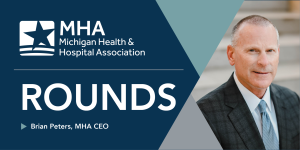
MHA Rounds graphic of Brian PetersMHA CEO Report — Protecting Access to Care Through 340B

Protecting access to high quality, affordable healthcare for all Michiganders is a key tenet of the MHA. Stated simply, the 340B drug pricing program, created by Congress in 1992, is absolutely crucial to our member …


Keckley Report

Tax Exemptions for Not-for-Profit Hospitals: Are they Worth it?

It’s a question lots of folks inside and outside of healthcare are asking these days. …

The JAMA study did not focus on a ratio; instead, it focused on quantifying the amount of state and local exemptions that should be considered by policymakers in addition to their federal exemptions.  Notably, this study quantifies wide variation in which hospitals benefit most when local, state and federal exemptions are included and proposes that policies around NFP hospital tax exemptions be delegated in part to state and local determinations (as is already the case in at least 3 states). …

The Boards and leaders in each not-for-profit hospitals must account for the tax exemptions they currently enjoy and anticipate changes that limit them in the future. These studies point clearly to that inevitability. And each must answer this question for their organization objectively: are our tax exemptions truly worth it to the communities we serve, or simply a financial maneuver to use our money elsewhere?

Paul Keckley, Sept. 30, 2024


News to Know

Members looking to support hospitals impacted by Hurricane Helene can contribute to relief efforts through the North Carolina Disaster Relief Fund and the Tennessee Hospital Association Disaster Relief Fund.

Final Rules Strengthen Access to Mental Health, Substance Use Disorder Benefits

The United States Departments of Labor, Health and Human Services and the Treasury issued a set of final rules Sept. 9 on the Mental Health Parity and Addiction Equity Act (MHPAEA) of 2008.

The rulings aim to promote equitable access to mental health and Substance Use Disorder (SUD) benefits and reduce barriers to accessing these services. They also reinforce the requirement that mental health and SUD benefits be on par with medical and surgical benefits (M/S).

If a health plan provides benefits for a mental health condition or SUD, it must provide meaningful benefits for that condition or disorder in every classification for which meaningful M/S benefits are offered. The rulings also restrict self-funded, non-federal governmental plans from opting out of providing mental health/SUD benefits. Additionally, it provides concrete factors used to determine out-of-network reimbursement rates.

The final rules also provide protection from non-quantitative treatment limitations (NQTLs) on mental health and substance use disorder benefits. NQTLs are conditions that restrict the scope of benefits, such as prior authorization requirements. The rulings prohibit insurance plans from using biased information when applying NQTLs. Issuers must also collect and assess data on the NQTLs they place and adapt accordingly if the data shows they are negatively impacting access to MH/SUD services compared to M/S benefits.

The final rules apply to:

  • Group health insurance coverage beginning on or after Jan. 1, 2025. The meaningful benefits standard, the prohibition on discriminatory factors and evidentiary standards, the relevant data evaluation requirements and the related requirements in the provisions for comparative analyses will apply beginning on or after Jan. 1, 2026.
  • Health insurance issuers offering individual health insurance coverage for policy years beginning on or after Jan. 1, 2026.

Members with questions may contact Lauren LaPine at the MHA.

Peters Appears on The Common Bridge Podcast

MHA CEO Brian Peters

MHA CEO Brian Peters joined The Common Bridge podcast for an episode published Aug. 18 to discuss various healthcare policy topics, particularly those impacting rural Michigan. Areas of focus include the Affordable Care Act, the impact of Medicaid provider taxes, clinical scope of practice, telemedicine, hospital-at-home programs, Medicare Advantage and the 340B drug pricing program.

The episode is hosted by Richard Helppie, founder of The Common Bridge. Episodes from the show focus on non-partisan policy discussions. The episode is available through Apple Podcasts and YouTube.

Peters is also quoted in a press release published Aug. 22 by the Michigan Department of Health and Human Services on the record number of Michigan hospitals who applied for the Maternal Levels of Care verification through The Joint Commission.

“We applaud each of the hospitals and their birthing teams for the time and effort they spent over recent weeks to complete the application process,” Peters. “This work signifies the dedication Michigan birthing hospitals have toward providing high quality and safe care to Michigan mothers and babies.”

Members with any questions regarding media requests should contact John Karasinski at the MHA.


MHA Submits Comments on Proposed MDHHS Medicaid Behavioral Health Policies

The MHA submitted comments to the Michigan Department of Health and Human Services (MDHHS) regarding two Medicaid proposed policies Aug. 20 pertaining to the establishment of Intensive Care Coordination with Wraparound (ICCW) and the implementation of the MichiCANS tool for Medicaid-Funded Specialty Behavioral Health Services.

The MHA outlined general support of the efforts in the two proposed policies. However, in the comment letter on ICCW establishment, the MHA requested clarification on the timeline for approval of requests, criteria used for re-evaluation or extension of services and more details on transition plans after cessation of ICCW services.

On the implementation of the MichiCANS tool, the MHA also requested clarification on the timeline for approval of ICCW requests and more details related to transition plans after the cessation of ICCW services. In addition, the MHA requested further detail on the transition process when a beneficiary ages out of relevant programs.

Members with questions may contact Lauren LaPine at the MHA.

MHA Behavioral Health Learning Series Navigates Challenges

The MHA is hosting a five-part webinar series to provide hospital staff with a deeper understanding of Michigan’s behavioral health system and the hospital’s role in connecting patients with care. These webinars are part of the MHA’s continued investment in behavioral health, a key priority in its strategic action plan and advocacy and policy efforts. The series will provide hospitals with strategies to navigate the current system, strengthen partnerships and identify innovative solutions for overcoming many challenges in management of patients with behavioral health needs.

The next webinar in the series is Wednesday, April 17 at 1 p.m.

April 17: Navigating Challenges

The webinar will address the dispute and resolution process and the voluntary and involuntary commitment process.

May 8: Innovative Strategies to Address the Behavioral Health Crisis in Michigan Hospitals – Part 1

Will offer innovative solutions that hospitals and health system partners across the state are using to manage and treat behavioral health patients.

June 12: Innovative Strategies to Address the Behavioral Health Crisis in Michigan Hospitals – Part 2

Will offer additional innovative solutions that hospitals and health system partners across the state are using to manage and treat behavioral health patients.

Registration is free and open to MHA-members only. The series will be relevant to any employee working closely with behavioral health patients who are part of the CMH/PIHP contracting process or work with community organizations to support patient’s behavioral health needs at the time of discharge.

Members with questions on the webinar series may contact Kelsey Ostergren at the MHA. Members with questions on the MHA behavioral health strategy may contact Lauren LaPine at the MHA.

MHA Behavioral Health Learning Series: Second Webinar

The MHA is hosting a five-part webinar series to provide hospital staff with a deeper understanding of Michigan’s behavioral health system and the hospital’s role in connecting patients with care. These webinars are part of the MHA’s continued investment in behavioral health, a key priority in its strategic action plan and advocacy and policy efforts. The series will provide hospitals with strategies to navigate the current system, strengthen partnerships and identify innovative solutions for overcoming many challenges in management of patients with behavioral health needs.

The next webinar in the series is Wednesday, March 13 at 1 p.m.

March 13: Building a Strong Working Relationship with Your Local PIHP and CMH

This webinar will cover PIHP master contracting process. rate setting and payment variability and requirements of the CMH system for in-state and out-of-state hospitals.

April 17: Navigating Challenges

The webinar will address the dispute and resolution process and the voluntary and involuntary commitment process.

May 8: Innovative Strategies to Address the Behavioral Health Crisis in Michigan Hospitals – Part 1

Will offer innovative solutions that hospitals and health system partners across the state are using to manage and treat behavioral health patients.

June 12: Innovative Strategies to Address the Behavioral Health Crisis in Michigan Hospitals – Part 2

Will offer additional innovative solutions that hospitals and health system partners across the state are using to manage and treat behavioral health patients.

Registration is free and open to MHA-members only. The series will be relevant to any employee working closely with behavioral health patients who are part of the CMH/PIHP contracting process or work with community organizations to support patient’s behavioral health needs at the time of discharge.

Members with questions on the webinar series may contact Kelsey Ostergren at the MHA. Members with questions on the MHA behavioral health strategy may contact Lauren LaPine at the MHA.