University of Michigan Health-Sparrow Police Authority Officer Honored with Q3 MHA Keystone Center Speak-up! Award

speak up
Q3 Speak-up! Award recipient Ronald Patterson, a police authority officer at University of Michigan Health-Sparrow pictured with Kira Carter-Robertson, chief operating officer at UM Health-Sparrow Lansing and MHA CEO Brian Peters.

The Michigan Health & Hospital Association (MHA) Keystone Center has recognized Ronald Patterson, a police authority officer at University of Michigan Health-Sparrow, as its quarterly MHA Keystone Center Speak-up! Award recipient for December.

The Speak-up! Award celebrates individuals or teams in Michigan hospitals who demonstrate an exceptional commitment to preventing harm to patients or staff. Patterson was honored for his proactive advocacy on behalf of a patient requiring additional care after being discharged from the emergency department.

While responding to a call to escort the patient out, Patterson quickly identified impairments that could compromise the patient’s safety. Recognizing the potential risk, he took immediate action, alerting the care team. As a result, the patient was readmitted and received the necessary care to ensure their safety.

“It’s an honor to be recognized for something that is truly a part of my daily commitment to ensuring patient safety,” said Patterson. “In this instance, I was simply doing what I believe anyone in my position would do—advocating for a patient who needed additional help to remain safe.”

“Ronald’s actions exemplify our mission to provide exceptional care and foster a culture of safety,” said Kira Carter-Robertson, chief operating officer at UM Health-Sparrow Lansing. “His quick thinking and compassion ensured that this patient received the care they needed. We are proud to have team members like Ronald, who go above and beyond to make a difference.”

Additional finalists for the third quarter of the 2024-25 program year included:

  • Spencer Smith, MyMichigan Medical Center Sault
  • Thomas Warner, McLaren Greater Lansing
  • Beronica Bahoura, Corewell Health Farmington Hills

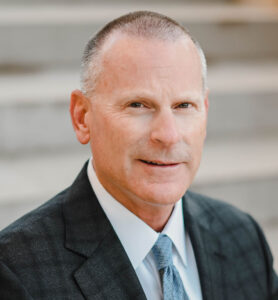
“Ronald’s actions serve as a powerful reminder that all healthcare workers share a responsibility for the safety and well-being of patients,” said MHA CEO Brian Peters. “We are pleased to celebrate his commitment to fostering a safe environment and applaud University of Michigan Health-Sparrow’s dedication to cultivating a just culture.”

More information about the MHA Keystone Center Speak-up! Award, including criteria and a nomination form, are available online.

Superior Health Quality Alliance Report Highlights Improvements in Care for Medicare Beneficiaries

The Superior Health Quality Alliance – a coalition of eight Midwest healthcare quality improvement organizations including the MHA Keystone Center – recently released a report detailing its work over the past five years as the Quality Innovation Network-Quality Improvement Organization (QIN-QIO) for Michigan, Minnesota and Wisconsin.

The report showcases several quality improvement initiatives spanning topics like chronic disease management, infection prevention and control and medication safety. The report highlights the organization’s success in reducing all-cause harm in rural, critical access and acute care hospitals serving vulnerable populations by:

  • Lowering opioid adverse drug events (ADE) by 9%.
  • Reducing anticoagulant-related and hypoglycemia-related ADEs by 46%.
  • Improving community-based care transitions, resulting in a 3% reduction of readmissions.

The organization’s efforts across all improvement areas and settings of care resulted in:

  • 268,656 harms avoided.
  • A $1.02 billion return on investment.
  • More than a 20% relative improvement rate in hospital readmissions.

Members with questions about the report or the Superior Health Quality Alliance should contact the MHA Keystone Center.

MHA Keystone Center PSO to Host Structured Communications Safe Table

The MHA Keystone Center Patient Safety Organization (PSO) is facilitating a virtual safe table from 9:30 to 11 a.m., Thursday, Jan. 23. The Structured Communication Safe Table will be led by I-PASS Patient Safety Institute.

Safe table participants will discuss how implementing structured communication models, particularly in high-risk situations like handoffs, can substantially improve safety, quality and experience outcomes.

Chief quality officers, chief safety officers, chief nursing officers, chief medical officers, vice presidents of quality, safety and risk, vice presidents of clinical transformation, nursing leaders, directors of quality improvement, directors of patient safety and performance improvement directors are encouraged to register and attend virtually.

By the end of the program, attendees will be equipped with the knowledge to:

  • Discuss the prevalence of variation in healthcare.
  • Examine how communication lapses are a primary or contributing factor in patient harm events.
  • Explain how structured handoff programs can simultaneously bolster High Reliability Organization (HRO) efforts and reduce the potential for harmful events to reach the patient.

Nursing and risk management credits are being pursued.

Members with questions may contact the MHA Keystone Center.

About MHA Keystone Center Safe Tables

Safe tables allow hospitals to share ideas with peers, engage in meaningful discussions and obtain advice to make improvements to reduce or eliminate harm. These events are unique in that they offer a legally protected, confidential environment for discussion around sensitive topics.

Upcoming Opportunities to Learn, Network and Grow in 2025

In 2025, the MHA will host the second Human Resources Conference and welcome back the MHA Keystone Center’s Safety & Quality Symposium for the first time since 2019. Both events have been developed alongside MHA members to ensure relevant content and formats. Registration information will be available after the first of the year.

The Human Resources Conference is a one-day event, held Tuesday, March 25, at the Crowne Plaza in Lansing. Attendees will participate in hands-on breakout sessions and explore ideas to modernize internal and community culture, increase job growth and create local partnerships.

The Keystone Center’s Safety & Quality Symposium on April 28 and 29 will feature industry keynote speakers and breakout sessions with topics including cybercrime downtime preparedness, improving health outcomes for all and workforce wellbeing and safety. The topics are designed to reach chief medical and nursing officers and leaders in safety, quality, risk management and other clinical and improvement areas.

More information about registration, accommodations and speakers will be available in January of 2025. Members with questions may contact the field engagement team at the MHA.

MHA Board of Trustees Considers Election Impact and Association Priorities

The MHA Board of Trustees began its Nov. 13 meeting with a review of the results from the federal election and its potential impact on key association priorities, led by Carlos Jackson and Mike Goodman with Washington D.C.-based Cornerstone Government Affairs.

The board also received a state election update and discussed the association’s advocacy strategy during lame duck, which is expected to be active due to the shift in party leadership next year from Democratic to Republican control in the Michigan House of Representatives. Opposition to government-mandated staffing ratios, preservation of Michigan’s medical liability law and protecting the 340B drug pricing program remain strong priorities during the remainder of the current session and for the year ahead.

The board reviewed and discussed the MHA 2024-2025 Strategic Action Plan, which sets the association’s priorities for the year and highlights areas needing long-term focus from the MHA and the hospital community. The plan is organized into five key pillars this year:

  • Workforce support
  • Protecting access
  • Support for mental and behavioral health
  • Creating healthy communities
  • Strengthening cybercrime/cybersecurity policy

Board member David Miller, MD, president, University of Michigan Health, executive vice dean for Clinical Affairs, UM Medical School and professor of Urology, University of Michigan Health, provided a safety story that illustrated the important role leaders play in setting an example and in modeling a culture of safety within an organization.

The board concluded with board task force reports, MHA Keystone Center and MHA Service Corporation reports, regional hospital council reports, an AHA report and an update from MHA CEO Brian Peters.

Members with questions about the actions of the MHA Board of Trustees may contact Amy Barkholz at the MHA.

Three Key Takeaways from the MHA Webinar Featuring Health Equity Regulatory Requirements

Written by Ewa Panetta, Director, Community Health Impact and Engagement

Earlier this month, the MHA, in partnership with the MHA Keystone Center, hosted a member webinar highlighting the current and future state of health equity priorities and requirements from the Centers for Medicare & Medicaid Services (CMS) and The Joint Commission (TJC) that impact acute care settings.

Accrediting and regulatory bodies are sending a clear message with the evolving requirements – health equity must be central to all quality improvement efforts. Simply put, high quality care is not attainable if care isn’t equitable.

Levering quality improvement as a tool for advancing health equity is a critical first step that helps hospitals meet the new regulatory standards, but we must move toward intentional actions that foster a culture of equity across healthcare systems.

The MHA Keystone Center created the Guide and Action Plan to Integrating CMS and TJC Health Equity and Health Disparities Requirements to provide guidance for implementing compliant health equity programming that goes above and beyond checking a box.

We collaborated with Julia Finken, senior vice president for accreditation and regulatory compliance, Patton Healthcare Consulting and Barrins & Associates, to facilitate the webinar. The purpose of the virtual meeting was to provide members with tools and resources needed to not only comply with the new quality improvement health equity requirements, but also implement robust health equity programming across their systems.

Here were the top three takeaways from the discussion:

  1. The MHA Keystone Center Health Equity Guide and Action Plan, along with supplemental modules, are valuable tools for implementing CMS/TJC compliant health equity programs. The action plan also provides hospitals with the tools necessary to track progress and document compliance across the regulatory and accrediting standards.
  2. Achieving the new health equity requirements requires embedding equity as a cornerstone of quality improvement efforts – from planning to goal development, design, interventions and measurement. Webinar participants expressed that demographic and social needs data collection and use are persistent challenges. We’ve created data resources to support members.
  3. As accreditation and regulatory requirements evolve, operationalizing the principles of health equity will require integrating equity into every aspect of care delivery and hospital operations.

I encourage members interested in learning more to watch the webinar recording.

Reimbursement for Age-Friendly Quality Data Included in FY 2025 Hospital IPPS Final Rule

Included in the Centers for Medicare & Medicaid Services’ (CMS) Medicare fee-for-service hospital inpatient prospective payment system (IPPS) fiscal year (FY) 2025 final rule is a reimbursement model for hospitals submitting age-friendly quality data.

Hospitals will be asked to report on several measures to assess whether they are improving care for older patients in emergency departments, operating rooms and other settings.

Hospitals will need to report that they are:

  • Attesting annually to having procedures that enable patients’ healthcare goals, such as determining whether living wills and healthcare proxies are included in care plans.
  • Reviewing medication regimens and eliminating unnecessary prescriptions.
  • Implementing frailty screenings and interventions, such as for mobility or cognition.
  • Assessing social vulnerabilities, such as isolation or elder abuse.
  • Designating age-specialized leadership within hospitals.

The CMS will add the age-friendly structural measures to the FY 2025 inpatient quality reporting program reporting, which will impact Medicare payments in FY 2027.

The MHA Keystone Center has supported numerous age-friendly initiatives in recent years, including Age-Friendly Health Systems Action Communities, which implements the 4Ms framework (What Matters, Medication, Mentation and Mobility) – aligning with the proposed measures outlined by CMS.

Members seeking assistance implementing age-friendly policies and procedures should contact the MHA Keystone Center.

Members with questions about the IPPS final rule should contact Vickie Kunz at the MHA.

MHA Monday Report Sept. 30, 2024

Legislation Impacting Hospitals Introduced in State Legislature

A variety of bills impacting hospitals and health systems were introduced and discussed in the state legislature during the week of Sept. 23. Senate Bill 701, introduced by Sen. Singh (D-East Lansing), updates the statutory framework for the rural and obstetrical …


NAIC Meeting Evaluates Impact of Pharmaceutical Costs on Rural Hospitals

Michigan Department of Insurance and Financial Services Director Anita Fox invited the MHA and Munson Healthcare to present to the Midwest Zone meeting of the National Association of Insurance Commissioners (NAIC) held Sept. 25. The …


CE Credits Available for Health Equity Regulatory Requirements Webinar

The MHA and the MHA Keystone Center are hosting an educational webinar from 8:30 to 9:30 a.m. Oct. 10 about the current and future state of regulatory and accrediting health equity requirements from the Centers …


2024 Election Materials Available for Michigan Hospitals

The MHA is offering election communication materials geared toward hospital staff, volunteers, patients and visitors to encourage voter participation in the 2024 general election. Additionally, the MHA elections webpage will be updated regularly with relevant …


Keckley Report

The Commonwealth Health System Study in Context: Will it Prompt Meaningful Action in the U.S.?

“Last Thursday, the Commonwealth Fund released its assessment of how the U.S. health system compares to other developed systems of the world. The title says it all: Mirror, Mirror 2024: A Portrait of the Failing U.S. Health System.

The real question prompted by the Commonwealth study is this: is the ineffectiveness of the U.S. system fixable? Private investors, operators and trade groups say yes so long as a transition is smooth and their interests are protected. Systemic change is unwelcome. Healthcare in the U.S. is an industry that does well financially so, for many politicians, pensioners and insiders, they’d prefer it be left alone.

But the majority of Americans, including the majority in the 18-million healthcare workforce, aren’t sure. They see corporate profits, executive compensation, mergers and takeovers as indicators of its corporatization and business acumen but its layoffs, cost-cutting, surprise bills and inexplicable prices as evidence the system puts profit ahead of fixing problems that matter to them.

This study is worth discussion in every Boardroom in healthcare and in every household interested in health reforms. At a minimum, It merits collaborative action led by AHA, AHIP, AMA and others to develop meaningful, long-term solutions to its flaws that subordinate their proprietary preferences for the greater good.”

Paul Keckley, Sept. 23, 2024


MHA CEO Brian Peters

MHA in the News

Detroit’s WJR 760 AM interviewed MHA CEO Brian Peters Sept. 22 for a segment on healthcare as part of “The Capital Report,” a new show focused on exploring issues happening within state politics and Michigan’s …

CE Credits Available for Health Equity Regulatory Requirements Webinar

The MHA and the MHA Keystone Center are hosting an educational webinar from 8:30 to 9:30 a.m. Oct. 10 about the current and future state of regulatory and accrediting health equity requirements from the Centers for Medicare & Medicaid (CMS) and The Joint Commission (TJC). 

Leading the discussion is Julia Finken, senior vice president for accreditation and regulatory compliance for Patton Healthcare Consulting and Barrins & Associates. With more than 25 years of healthcare expertise and nearly two decades at TJC, Finken will also walk members through the MHA Keystone Center’s Guide and Action Plan to Integrating CMS and TJC Health Equity and Health Disparities Requirements and its online learning module series. These resources were created to provide actionable strategies for implementing compliant health equity programming in an acute care setting.

At the conclusion of this activity, participants should be able to:

  • Explain priority areas across the CMS and TJC requirements.
  • Summarize compliance expectations for these new regulations.
  • Outline future health equity priorities and expectations from CMS and TJC.
  • Demonstrate how the MHA Keystone Center’s tools can assist hospitals and health systems with creating actionable strategies for advancing health equity that meet regulatory and accreditation requirements.

The webinar is eligible for nursing and social worker continuing education credits. 

Registration for the webinar is free of charge to MHA members thanks to the generosity of Alliance-HNI Health Care Services, an associate member of the MHA.

Members with questions about registration should contact the MHA Keystone Center.

MHA Monday Report Sept. 23, 2024

Speak up awardMcLaren Port Huron Nurse Receives MHA Keystone Center Speak-up! Award

The MHA Keystone Center celebrated Melissa Burgess, RN at McLaren Port Huron Hospital as its quarterly MHA Keystone Center Speak-up! Award recipient in September. The quarterly MHA Keystone Center Speak-up! …


Final Rules Strengthen Access to Mental Health, Substance Use Disorder Benefits

The United States Departments of Labor, Health and Human Services and the Treasury issued a set of final rules Sept. 9 on the Mental Health Parity and Addiction Equity Act of 2008. The rulings …


Upcoming MDHHS Maternal Health Offerings

The Michigan Department of Health and Human Services (MDHHS) Division of Maternal and Infant Health is partnering with the Michigan Perinatal Quality Collaborative yo offer its Statewide Maternal and Infant Health Data Meeting from 4 to 6 …


Latest AHA Trustee Insights Explores AI in Healthcare, Workplace Equity and Community Partnerships

The September edition of Trustee Insights, a monthly digital package from the American Hospital Association (AHA), outlines how artificial intelligence (AI) will change healthcare operations and how trustees can provide meaningful leadership and guidance. The issue …


Keckley Report

The Four Core Beliefs of Hospital-Employed Physicians

“In my report June 10, I wrote: “The major sources of physician discontent are administrative hassles and unwelcome clinical oversight that create dissonance. They conflict with a false sense of autonomy that the majority of physicians imagined when choosing medicine. Cuts to reimbursement, participation in alternative payment models and medical inflation are manifestations of a system in which ‘suits’ are intruders who make rules, exact handsome salaries, generate corporate profits and distance physicians from patient care purposely… “

This assessment remains true today. Discontent among physicians is palpable and it’s magnified by a growing sense of financial despair among many clinicians. And it poses a unique challenge to hospitals that now employ more than half of America’s physician workforce. …

The core beliefs held by employed physicians about their hospitals may not be fair, objective or accurate, but they’re no less deeply felt and impactful. Hospital boards and C suite leaders would be well-served to refresh plans accordingly.”

Paul Keckley, Sept. 16, 2024


Laura AppelMHA in the News

The MHA received media coverage the week of Sept. 16 regarding Michigan healthcare careers and what’s next for digital health. Second Wave Michigan published a story Sept. 17 on healthcare careers and the existing healthcare …