
“Luck is not chance, it’s toil; fortune’s expensive smile is earned.” — Emily Dickinson
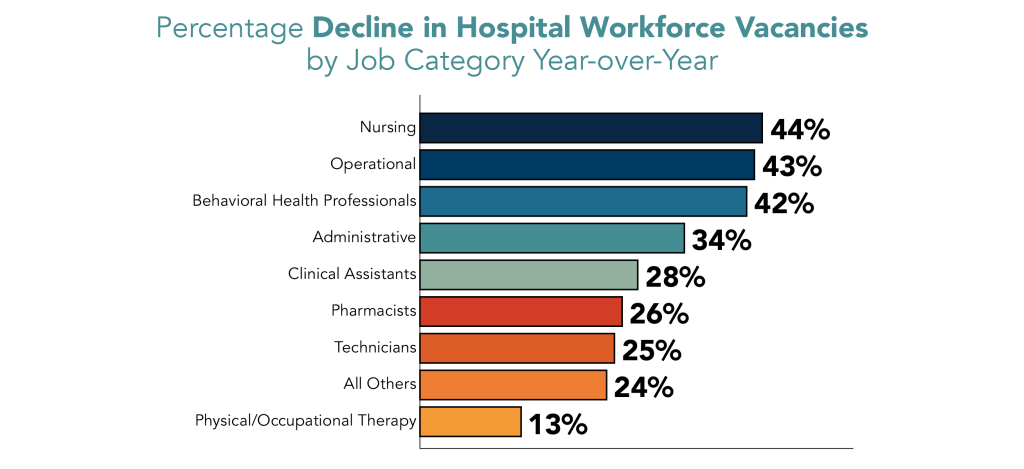
 The healthcare workforce has been one of the MHA’s strategic action priorities for the past several years. As we near completion of our 2023-2024 program year, I’m extremely pleased to see the results of the MHA’s second annual hospital workforce survey, which shows Michigan hospitals are making real progress in reducing staffing shortages. Michigan hospitals hired more than 61,000 employees in 2023, including 13,000 nurses. Overall job vacancies were reduced by 29%, while nursing vacancies dropped by 44%. These gains are seen across nearly all job categories and they’re significant, with double-digit decreases for many of them. I can tell you with certainty: our “luck” in this regard has been earned through extremely hard work.
Michigan hospitals still have 19,000 job openings, including 4,700 for nurses, so more work and investment needs to be done. However, the accomplishments of Michigan hospitals in this area shows the recruitment, retention and training tactics implemented throughout the state are working.
It starts with retaining the existing workforce, which leads to improved morale and reduced recruiting expenses. Michigan hospitals are outperforming hospitals across the country when it comes to registered nurse retention. Michigan’s turnover rate is 3.7 percentage points lower than the national average. Offering better pay, improved benefits, flexible scheduling and integration of technology to improve patient monitoring and reduce the administrative burden on nurses are examples of tactics implemented by Michigan hospitals that are making a difference.
Michigan remains an aging state, and as more people become eligible for Medicare, the demand for healthcare services will continue to grow. In response, our hospitals are very serious about expanding the talent pipeline and increasing awareness of hospital careers to students. Hospitals are expanding educational opportunities and partnerships with higher education institutions to attract more students to healthcare, including clinical positions like nursing. The MHA is assisting by leading the MI Hospital Careers public awareness campaign that targets students and professionals considering a career change to consider healthcare as a great option.
The MHA also recently published the latest results from the Economic Impact of Healthcare in Michigan report, which shows the important role hospitals have in Michigan’s workforce and economy. Healthcare remains Michigan’s largest employer of direct, private-sector jobs. Hospitals provide the largest percentage of healthcare jobs in the state, employing 217,000 full-and part-time employees. Not only are these good-paying, stable jobs, but many offer career pathways that allow employees to further develop their skills and move up the job ladder with additional certifications and/or degrees. Many of Michigan’s communities also depend on their local hospital as one of, if not their very largest, employer.
These results led our conversations last week while a team of MHA staff attended the Detroit Regional Chamber’s annual Mackinac Policy Conference, connecting with business, higher education and political leaders throughout Michigan. In addition to this public announcement, we also produced a palm card and video for event attendees to highlight our work. Our goal is to increase the awareness of the large role hospitals play in the economy and the success they’re having in welcoming new talent to their organizations.
Reducing job vacancies and staffing shortages is a marathon and not a sprint. The Michigan Legislature has played a large part in assisting hospitals, whether it be through direct worker funding or new policies, such as increased penalties for violence committed against healthcare workers or allowing community colleges to offer Bachelor of Science in Nursing degree programs in collaboration with a four-year institution. The MHA is proud to help lead many of these discussions with policymakers to find more ways to reduce barriers to healthcare careers.
Public policy, advocacy and communications are key – but we are using every tool in our toolbox to address our workforce challenges. The MHA Endorsed Business Partner (EBP) program promotes industry-leading firms, carefully vetted by the MHA, that can meet the most pressing needs of our member hospitals and health systems, and we just announced a new endorsement of AMN Healthcare as a national leader in workforce solutions. The MHA has endorsed several of AMN’s legacy brands, including Merritt Hawkins, a physician search division, for many years. As AMN brings its solutions under one brand, we proudly continue this partnership with AMN Healthcare. They are the largest workforce solutions company in the market, which allows them to serve clients more effectively across all levels of healthcare.
Economic development and workforce are not just a one-year strategy. This will continue to remain a priority for hospitals and health systems, and we’re encouraged that at this time next year, we will have a similar story to tell in the reduced number of healthcare vacancies in the state. Until then, please join us and encourage as many people as you can to consider a job in healthcare. Make no mistake: whether clinical or non-clinical, healthcare is hard work; but it truly is one of the most rewarding, mission-driven careers you can pursue.
As always, I welcome your thoughts.