MHA Keystone Center PSO Hosts Cybersecurity and Regulatory Inspection Safe Table Events

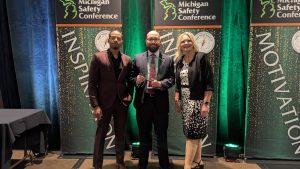
L-R: Max Kwiecien

The MHA Keystone Center Patient Safety Organization (PSO) hosted a safe table focused on Adapting Clinical Risk Management for Cybersecurity June 4 at the MHA Headquarters in Okemos. In partnership with MHA Endorsed Business Partner CyberForce|Q, the session provided practical insights into building and strengthening a cybersecurity program through effective risk management and strategic planning. Attendees explored how to identify and address cybersecurity risks, recognize gaps in current systems and incorporate cybersecurity into organizational budgets and strategic planning.

Safe tables are valuable opportunities for hospital team members to come together, share ideas with peers, engage in safety discussions and obtain advice to improve or eliminate harm. These events are unique in offering a legally protected confidential environment for discussing sensitive topics.

In addition, registration is still available for the virtual safe table Regulatory Inspections: A Strategic Approach scheduled 11:30 a.m. to 1 p.m. June 17. In partnership with the Alliance for Quality Improvement and Patient Safety, this session will guide participants in preparing for regulatory authority visits. Attendees will explore best practices for protecting and disclosing Patient Safety Work Product. The discussion will also focus on how participants can implement CMS Patient Safety Structural Measures and participate in PSOs using Patient Safety Act protections.

Members with questions may reach out to the MHA Keystone Center.

MHA Keystone Center PSO to Host Two Safe Tables in June

The MHA Keystone Center Patient Safety Organization (PSO) will host two upcoming safe table events in June focused on cybersecurity risk management and regulatory inspections. These events offer healthcare leaders an opportunity to engage in discussions to improve patient safety and reduce harm.

Adapting Clinical Risk Management for Cybersecurity Safe Table scheduled from 12:30 to 4 p.m. June 4 at the MHA Headquarters in Okemos. In partnership with MHA Endorsed Business Partner CyberForce|Q, this session will provide practical insights into building and strengthening a cybersecurity program through effective risk management and strategic planning. Attendees will explore how to identify and address cybersecurity risks, recognize gaps in current systems and incorporate cybersecurity into organizational budgets and strategic planning.

Regulatory Inspections: A Strategic Approach Virtual Safe Table scheduled 11:30 a.m. to 1 p.m. June 17 will be hosted virtually. In partnership with the Alliance for Quality Improvement and Patient Safety, this session will guide participants in preparing for regulatory authority visits. Attendees will explore best practices for protecting and disclosing Patient Safety Work Product. The discussion will also focus on how participants can implement CMS Patient Safety Structural Measures and participate in PSOs using Patient Safety Act protections.

Participants will learn to recognize regulatory risks, prepare for inspections and understand the role of structural measures in patient safety improvement.

Chief quality officers, chief nursing executives, chief medical officers, chief information services officers, directors of quality improvement, patient safety and risk management are encouraged to register for both safe tables.

Nursing and risk management credits are being pursued for both events.

What is a Safe Table?

Safe tables are valuable opportunities for hospital team members to come together, share ideas with peers, engage in safety discussions and obtain advice to improve or eliminate harm. These events are unique in offering a legally protected confidential environment for discussing sensitive topics.

Members with questions may reach out to the MHA Keystone Center.

MHA Keystone Center PSO Launches SAFER Webinar Series

The MHA Keystone Center Patient Safety Organization (PSO), in partnership with EisnerAmper, is launching a new webinar series focused on the 2025 Safety Assurance Factors for Electronic Health Record Resilience (SAFER) guidelines. The free series will help healthcare professionals strengthen patient safety practices and implement artificial intelligence (AI) responsibly within clinical systems.

Participants must register in advance and will receive a Zoom link via email upon confirmation.

The three-part series includes the following sessions:

  • Navigating the Updated 2025 SAFER Assessment scheduled from 3 to 4 p.m. May 29. Dean Sittig, co-author of the SAFER Guides will highlight recent changes to the 2025 SAFER guidelines, including new recommendations for improving the safety and responsible use of AI in healthcare.
  • Deploying a Guided Risk and Safety Program to Protect Your Patients and Providers scheduled from 3 to 4 p.m. June 16. Presenters will outline how to leverage tools such as electronic health records and AI to mitigate risks in clinical workflows. The session will cover strategies for implementing effective governance structures, including control design, testing and continuous surveillance.
  • Adopting Safe AI scheduled from 1 to 2 p.m. July 24. This session will focus on managing the AI lifecycle in healthcare. Speakers will explore how to identify potential risks and opportunities, implement AI responsibly, and maintain oversight through governance and monitoring frameworks.

The series is designed to help participants understand the 2025 SAFER Assessment updates, identify and mitigate patient safety risks, and establish safeguards to support safe AI integration.

Series participants will gain an understanding of what the 2025 SAFER Assessment updates entail and how to run a program that identifies patient safety risk, mitigates controls and implements AI with the appropriate governance structure in place.

Arvid Kumar, managing director, EisenAmper, and Dean F. Sittig, PhD, co-author of the SAFER Guides Professor Emeritus at UTHealth School of Biomedical Informatics (SBMI), will facilitate this interactive event series.

Members with questions may contact the MHA Keystone Center.

Healthcare Leaders Convene for the Return of the MHA Keystone Center Safety & Quality Symposium

MHA Safety & Quality Symposium April 28 and 29 at the Kellogg Center in East Lansing, MI. 

More than 100 healthcare professionals gathered April 28 and 29 in East Lansing for the return of the MHA Keystone Center Safety & Quality Symposium. Attendees included individuals across the continuum of care including quality, safety and risk professionals, healthcare executives and person and family advocates who engaged in two days of sessions and dialogue focused on today’s most pressing issues.

Keynote speakers included Gerald B. Hickson, MD, founding director, Vanderbilt Health Center for Patient and Professional Advocacy and current chair of the Institute for Healthcare Improvement. Hickson spoke on building systems that model respect while supporting safety and high-quality care. Steven Berkowitz, MD, founder and president, SBM Healthcare Consulting, shared insights on the growing role of artificial intelligence in healthcare, emphasizing the importance of approaching it with both enthusiasm and caution.

Breakout sessions over the day and a half event, addressed a range of topics including preparing for cyberattack-related downtimes, normalizing help-seeking to support workforce well-being, enhancing physical and situational security, strengthening caregiver support and improving access to care. The MHA Keystone Center Symposium also included the reveal of the 2025 Advancing Safe Care Award recipient.

MHA Endorsed Business Partner Tarian, led a Threat Assessment Workshop reviewing behavioral assessment models, techniques for recognizing people of concern, threats through formal and informal communication and how to counter potentially violent actions.

The event was sponsored by HPS with exhibitors from ERC Risk Solutions, i2G Systems, MED Alliance Group Inc., ModusOne Health, Novo Nordisk, Tarian and TruMed Systems.

Members with questions should contact the MHA Keystone Center.

Corewell Health Suicide Care & Prevention Team Receives MHA Advancing Safe Care Award

mha advancing safe care award
MHA CEO Brian Peters, Amy Brown, chief nursing officer, MHA and Gary Roth, chief medical officer, MHA pictured with members of Corewell Health’s Suicide Care and Prevention Team.

The MHA announced the winner of its 2025 Advancing Safe Care Award April 28, honoring Corewell Health’s suicide care and prevention team. The award was announced during the MHA Keystone Center Safety & Quality Symposium.

The MHA Advancing Safe Care Award honors healthcare teams within MHA-member hospitals that demonstrate an unwavering commitment to providing quality care, show evidence of an improved safety culture and demonstrate transparency in their efforts to improve healthcare.

Corewell Health’s behavioral health department launched the Suicide Care & Prevention Team (SPCT) to reduce patient deaths by suicide through increased screening, risk assessment and connectivity with appropriate interventions and services.

The team’s efforts have led to a reduction in suicide deaths – lower than state and national averages. While deaths by suicide were down by 0.89% in Michigan and by 2.53% nationally between 2017 and 2020, Corewell Health in West Michigan saw a 21.64% decrease. When suicide rates increased post-pandemic, deaths in Michigan and nationally were up 5.01% and 4.63% respectively from 2017 to 2023. However, Corewell Health in West Michigan maintained a slight decrease of 0.75%.

“We are so grateful for this recognition for our efforts to decrease suicide deaths,” said Natalia Szczygiel, vice president of behavioral health operations, Corewell Health. “Corewell Health in West Michigan currently administers over 1.2 million suicide screenings, 12,500 safety plans and 10,800 lethal means reduction conversations annually. We are here to care for our patients mind and body.”

The group integrated suicide prevention measures into all aspects of care throughout the system with a focus on accessible training and resources for staff interacting with patients. The SPCT spearheaded the integration of suicide risk assessments into the organization’s electronic health records system and facilitated efforts for improved suicide care workflows within the inpatient, emergency room, primary care and pediatric care settings.

Leaders across the system monitor the organization’s prevention efforts via the SPCT’s suicide prevention dashboard, which tracks screenings, assessments and support services offered.

Members may access further details about the Corewell Health Suicide Care and Prevention Team online.

MHA Keystone Center Receives Harry L. McKinley Workplace Safety Leadership Award

Clarence Rucker, senior manager, safety & quality, MHA, Adam Novak, director, safety initiatives, MHA and Amy Brown, chief nursing officer, MHA pictured during Harry L. McKinley Workplace Safety Leadership Award dinner. 

The MHA Keystone Center was honored April 15 at the Michigan Workplace Safety Conference for providing essential workplace safety resources to Michigan healthcare organizations and their staff.

The Harry L. McKinley Workplace Safety Leadership Award celebrates organizations exhibiting leadership commitment and striving for significant and sustainable results for safety excellence in the workplace.

The MHA Keystone Center has provided crucial services to hospitals, clinics, primary care offices, laboratories and urgent cares over the past four years. The more than $968,000 investment has included workplace violence gap analyses, physical security risk assessments, de-escalation and active shooter trainings and safe patient handling and mobility interventions.

The Center was also recognized for forging partnerships with academic institutions to advance healthcare workplace safety. The MHA Keystone Center serves as a founding partner of the Lawrence Technological University Healthcare Violence Reduction Center, a multidisciplinary effort to research violence in healthcare and develop innovative solutions to enhance safety and improve patient care. Additionally, the organization collaborates with Duke University’s Duke Center for the Advancement of Well-being Science to deliver workforce wellbeing services to healthcare staff across Michigan, free of charge. More than 7,000 staff have received these services, with post-intervention assessments showing a 20% reduction in emotional exhaustion over the past three years.

The efforts of the MHA Keystone Center directly contributed to the MHA’s successful efforts to pass landmark state legislation, signed by Governor Whitmer in December 2023, which increase the penalties for assaulting a healthcare worker or volunteer.

For more information about the MHA Keystone Center’s healthcare worker safety initiatives, contact Adam Novak at the MHA.

MI AIM Spring Regional Training Approaching

The Michigan Alliance for Innovation on Maternal Health (MI AIM) is offering regional training sessions for inpatient maternal health providers focused on implementing the hypertension safety bundle and addressing common challenges with implementation.

The one-hour virtual sessions will include time for discussion and collaboration among regional hospital teams following the presentation. Nurses, physicians and other maternal health inpatient clinicians are encouraged to attend and may choose from either a morning session from 8 to 9 a.m. or an evening session from 5 to 6 p.m. on April 23, 2025. There is no cost to participate, but registration is required with the links provided.

These sessions are funded by the HRSA AIM grant (A30MC49987) as a continuation of the regional trainings conducted in Fall 2024. This activity has been planned and implemented in accordance with the accreditation requirements and policies of the Accreditation Council for Continuing Medical Education (ACCME) through the joint providership of MyMichigan Health and Michigan Health & Hospital Association. MyMichigan Health is accredited by the Michigan State Medical Society to provide continuing medical education for physicians. MyMichigan Health designates this activity for a maximum of one (1) AMA PRA Category 1 Credit(s)™.

Members may contact the MHA Keystone Center for registration questions. Dominique Abram and Meagan Chuey at the Michigan Department of Health and Human Services are available for event related questions.

Deadline Nearing to Register for the MHA Keystone Center Safety & Quality Symposium

The April 18 registration deadline is quickly approaching for the MHA Keystone Center Safety & Quality Symposium, scheduled for April 28 –29, 2025, at the Kellogg Conference Center & Hotel, East Lansing.

Multiple breakout sessions, led by clinical teams researching and implementing best practices, will address key quality and safety priorities such as creating a zero-harm culture, situational awareness, reducing mental health sigma, building wellbeing, supporting family caregivers and improving data.

Kara Heck, MHA, BSN, RN-BC, CCRN, chair of the MHA Safety & Quality Committee, provides a testimonial about her decision to attend and her recommendation that colleagues do the same. The online detailed agenda outlines the numerous learning opportunities.

Numerous networking opportunities, whether in the exhibit hall, during structured lunch discussions or during evening dine-arounds, give members the chance to reconnect with leaders and build new relationships.

The symposium offers continuing education credits for physicians, nursing and social workers*. For more information about the symposium, members may contact Erica Leyko at the MHA. Questions about event registration should be directed to Janice Jones at the MHA.

*For more details, please visit the online Continuing Education Accreditation Statement.

How Policy Shapes the Patient Experience: Reflections from a Public Policy Fellow

The Institute for Healthcare Improvement (IHI) Patient Safety Congress brought together voices from across the healthcare spectrum March 9 – 11, uniting leaders, learners and advocates in a shared goal of delivering safer care to all patients. Among them was Esha Elahi, government relations & public policy fellow at the MHA, who dives into what her current role has taught her, what she learned at the IHI Conference and how those experiences are setting the tone for her next chapter in healthcare.

How has your experience as a Government Relations & Public Policy Fellow at the MHA shaped the way you interpret conversations about patient safety?

Elahi: My experience as a fellow has had a huge impact on the way I interpret and engage in conversations about patient safety. At the MHA, I’ve had the privilege of engaging with health professionals from a variety of disciplines, including doctors, nurses, social workers, administrators and policy experts. Listening to these diverse perspectives exposed me to the complexity of ensuring patient safety and all that goes on behind the scenes. It’s not just about training our frontline workers. Every person within a healthcare setting plays an important role in promoting patient safety. Likewise, for change to occur within health systems, we need multiple perspectives at the table.

How did attending the IHI Patient Safety Congress deepen or expand your understanding of the policies that influence safety in care settings?

Elahi: The IHI Patient Safety Congress helped me recognize just how critical workplace culture is in healthcare and how it directly affects patient outcomes. While healthcare systems often have protocols in place to support patient safety, I started to ask myself: what happens when someone notices a safety risk but doesn’t feel supported enough to speak up?

One session that really stuck with me was “Advancing High Reliability: The Role of Psychological Safety in Supporting Cultural Change,” led by Amjed S. Baghdadi and Amanda Laorenza. It focused on the importance of psychological safety in building high-reliability organizations; workplaces where staff feel empowered to voice concerns and stop potential harm before it happens. It echoes that everyone at a hospital plays a role in patient safety, whether you are in direct contact or not.

That session made me think more deeply about what protections exist for healthcare workers who report safety or quality concerns. At the MHA, we have initiatives like the MHA Keystone Center Speak-up! Award, which recognizes hospitals where staff take action to prevent harm through open communication. It’s one way to reduce preventable incidents caused by miscommunication or silence.

The conversations at the Congress also reminded me of the advocacy work being done at the MHA around protecting healthcare workers, including efforts to pass legislation addressing violence in healthcare settings. Policies such as Public Acts 271 and 272 of 2023 are essential; not just for staff safety, but also for maintaining high-quality care for patients.

Were there any conversations at the congress that highlighted the intersection of policy and frontline care delivery in a way that resonated with your work?

Elahi: The session “Personal Experience to Professional Expertise: Using One Case of Maternal Morbidity for Advocacy,” led by Dr. Charity S. Watkins, resonated with the efforts I’ve been involved in at the MHA. Maternal health has been a key priority for the association. Dr. Watkins shared data on the status of maternal healthcare in the United States, which has the highest maternal mortality rate among high-income countries and that 84% of maternal deaths in the U.S. are preventable. Black women giving birth are three to four times more likely to die while giving birth and twice more likely to experience a life-threatening medical event during childbirth. These facts underscore the importance of the work we’re doing at MHA to improve maternal health outcomes.

What advice would you give to other future providers about understanding the policy side of patient care?

Elahi: Whether you’ve worked in the advocacy-space before or this type of work is brand new to you, understanding the impact of policy on your practice, medicine and on patient care is crucial. If there’s an issue or topic within medicine you’re passionate about changing or improving, there’s a chance there’s some type of policy in motion. Getting involved in public policy and advocacy efforts can seem quite daunting, but you might be surprised at how natural it comes to you. Physicians are naturally inclined with a mindset of service. Scaling this up by sharing your personal stories with stakeholder groups or lawmakers to improve policy is an amazing way to service future patients and community members.

MHA Upcoming PFE Webinars Focus on Advancing Patient-Centered Care

The MHA, in conjunction with its statewide Person & Family Engagement (PFE) Advisory Council, is excited to offer the PFE Improvement Sprints, a webinar series designed to help hospitals and health systems amplify PFE efforts. The foundation for the PFE Improvement Sprint is the MHA Roadmap to Person and Family Engagement, which outlines standardized definitions, policies and practices to help leaders and staff develop or improve PFE efforts across their organization.

The first webinar, Hospital Staffing and Structures Needed to Support and Coordinate PFE Activities, will take place from noon to 1 p.m. April 30. Speakers will share examples of ways to build leadership support and engage, whether the hospital is launching a Patient and Family Advisory Council or engaging patients within different patient care units.

The second webinar, Deploying PFE Roadmap Strategies to Improve Patient Safety and Quality, Outcomes, Experiences, and Support Hospital Priorities, will take place from noon to 1 p.m. May 21. Speakers will outline how to involve patients and families in achieving better care outcomes, like understanding medications and how to involve patient advisors in fall prevention processes.

These webinars are free of charge. Chief nurse and medical executives, patient experience and relations professionals, quality and safety professionals, social work professionals, case managers and nursing staff are encouraged to register.

Questions about MHA membership or registration for the webinar series should be directed to Brenda Carr at the MHA.