MHA Podcast Welcomes New Board Chair, Explores Healthcare Priorities in Michigan

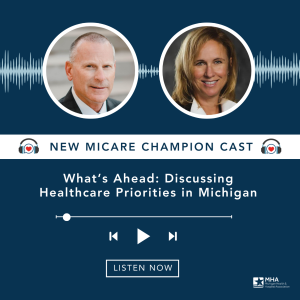
MHA Board Chair Julie Yaroch, DO, joined MHA CEO Brian Peters for an episode of the MiCare Champion Cast.

The MHA released a new episode of the MiCare Champion Cast kicking off the 2024-2025 program year discussing healthcare viability, workforce, cybersecurity, the upcoming election and more.

The episode, hosted by MHA CEO Brian Peters, features MHA Board Chair Julie Yaroch, DO, president of ProMedica Charles and Virginia Hickman Hospital. Listeners can expect to learn more about Yaroch’s journey becoming a healthcare leader, along with her aspirations for the new board and her longstanding passion for public health.

“Hospitals don’t have all the solutions,” noted Yaroch. “We can’t carry out all the directives, but we can bring people to the table. We all want to have healthy communities, and I do think we can achieve that goal, but we’ve got a lot of steps in front of us.”

Alongside Yaroch, officers of the 2024-2025 MHA Board of Trustees include Bill Manns, chair-elect; and Brittany Lavis, treasurer, among many others. With a record number of physician leaders serving, Peters and Yaroch spent time discussing healthcare priorities tied to workforce challenges and care delivery.

“In healthcare, we can’t always build it and people will come,” said Yaroch. “We have to really understand the patient population, the community and the directives of the providers. Without providers, we don’t have healthcare.”

Peters and Yaroch also spent time discussing key healthcare issues including mandated nurse staffing ratios, 340B, cybersecurity and more.

The episode is available to stream on Spotify, Apple Podcasts, SoundCloud and YouTube. Questions or idea submissions for future MiCare Champion Cast episodes can be sent to Lucy Ciaramitaro at the MHA.

MHA Podcast Explores the Role of Artificial Intelligence (AI) in Healthcare

MiCare Champion Cast graphic featuring an episode focused on the role of Artificial Intelligence (AI) in Healthcare

The MHA released a new episode of the MiCare Champion Cast exploring the role artificial intelligence (AI) plays in healthcare today and what it will look like in the future. The episode features Bruce Brandes, president of Care.ai and Monica Holmes, a PhD candidate in bioinformatics at the University of Michigan and current member of the MHA AI Task Force.

Early in the discussion, Brandes and Holmes highlighted the ways smart technologies have been used for years when it comes to data analysis, disease diagnosis, radiology, clinical documentation, language processing and more.

“For the first time – maybe in my career in healthcare – it’s obvious that the status quo is no longer an acceptable option,” said Brandes, who has over 30 years of experience in executive management and entrepreneurial thought leadership. “This is real – you need to understand it, you need to be intentional and deliberate and have a strategic plan.”

Both Brandes and Holmes emphasized throughout the episode that AI cannot replace the essential role humans play in healthcare. The goal, in most cases, is to optimize a more efficient workflow, improve healthcare quality, advance diagnostics and enhance medical research.

“On the academic side, it’s improving our ability to do better research, which leads to better insights and ultimately better health outcomes for patients when it’s translated over to the bedside,” said Holmes, who also serves on the board of Trinity Health’s Chelsea Hospital as chair of patient quality and safety.

Listeners can expect to learn more about how patients and providers are responding to AI tools (including virtual nursing) and get answers to commonly asked questions related to transparency, health equity, regulation and cybersecurity.

Care.ai, an MHA endorsed business partner, powers more human care through the first and only AI-enabled Smart Care Facility Operating Platform, which deploys smart sensors throughout care facilities. These sensors continuously and ambiently monitor clinical and operational workflows, learning from them to predict, prevent and protect; alerting and engaging care teams in real-time and improving common challenges such as fall prevention, pressure injury prevention, hand hygiene compliance, rounding adherence, automated documentation, virtual rounding, virtual sitting and more.

The episode is available to stream on Spotify, Apple Podcasts, SoundCloud and YouTube. Those interested in learning more about Care.ai or the MHA EBP program can visit the business services webpage or contact Rob Wood at the MHA. Questions or idea submissions for future MiCare Champion Cast episodes can be sent to Lucy Ciaramitaro at the MHA.

MHA Podcast Explores Benefits, Challenges of Virtual Care in Behavioral Health

The MHA released a new episode of the MiCare Champion Cast exploring how clinicians are navigating virtual care in the behavioral health space.

The episode, released during Mental Health Awareness Month, features two providers from Pine Rest Christian Mental Health Services. Dr. Heide Rollings, M.D., child and adolescent psychiatry fellowship director and Dr. Lisa Vroman Stokes, Ph.D., manager of Forest Hills Clinic and child and adolescent project coordinator, joined to share insights about the advantages and challenges of telemedicine in the behavioral health setting.

“We know that for children and adolescents – especially in rural communities – it can be really wonderful to have [telehealth] as an option,” said Dr. Rollings, who also serves as an assistant clinical professor in the division of psychiatry at Michigan State University.

Flexibility plays a big part in the new normal. Although virtual options have helped improve access, both Rollings and Stokes noted that it can’t always substitute in-person screenings and treatment. In many cases, clinicians must communicate expectations to patients early on to develop effective treatment plans within virtual and hybrid formats.

“We’re finding ourselves in a position as providers of re-educating and acclimating our patients to how they can most effectively engage and benefit from treatment,” said Dr. Stokes, who also oversees predoctoral psychology interns at Pine Rest.

As demand for behavioral healthcare services increases, staffing shortages continue to impact the workforce. In an effort to grow the talent pipeline, Pine Rest offers a variety of educational opportunities to those entering the field. This includes:

As the third-largest non-profit mental health care provider in the country, Pine Rest offers a full continuum of care for mental health and substance use disorders in West Michigan. In addition to their outpatient locations and psychiatric urgent care, the health system is also building a pediatric behavioral health center slated to open in 2026. Pine Rest was one of six organizations to receive grant funding following a $50 million appropriation from the Michigan legislature as part of the 2023 State Budget, which aimed at increasing the number of inpatient beds available for pediatric psychiatric patients across the state.


The episode is available to stream on SpotifyApple PodcastsSoundCloud and YouTube. Those interest in learning more about the services, Questions or idea submissions for future MiCare Champion Cast episodes can be sent to Lucy Ciaramitaro at the MHA.

MHA Podcast Explores Healthcare Cybersecurity with Michigan Medicine

The MHA released a new episode of the MiCare Champion Cast exploring what happens when a hospital or health system experiences a cyberattack featuring Jack Kufahl, chief information security officer at Michigan Medicine.

In his role, Kufahl is responsible for planning, developing, implementing, and maintaining information assurance activities across the academic medical center. Although the health system wasn’t majorly impacted by the Change Healthcare breach, Kufahl shared how his team responded and valuable insight on how to improve cybersecurity measures.

“I think one of the most important things any hospital or healthcare organization can do is start establishing a long-term [cybersecurity] framework so that you can measure improvement over time,” said Kufahl, noting there are many accessible resources that accommodate monetary limitations.

According to the FBI, healthcare organizations are the top target of cybercriminals across the globe and attacks have increased significantly in the last two years. On top of the significant financial burden this can cause for a hospital, many face penalties that further threaten patient access to care – especially among small and rural providers serving vulnerable communities.

“Some companies don’t have the ability to invest in cybersecurity and hard choices have to be made,” said Kufahl, who also serves as one of the incorporating officers and board members of the Michigan Healthcare Cybersecurity Council. “If you penalize the victims of a cybersecurity crime, we’re not leveraging the legislative angle to our benefit.”

Fostering partnerships and collaborating is another way Michigan Medicine stays proactive in their cybersecurity efforts. Kufahl noted that working with CyberForce|Q, an MHA Endorsed Business Partner (EBP), helps his team regularly assess security programming and stay connected with a broad network of experts across industries.

“It is really important to not be alone in cybersecurity in healthcare,” said Kufahl. “The tone and temperature of collaborating across companies has improved dramatically…that is the most meaningful fabric we can reinforce. I would encourage anyone to reach out and engage.”

The MHA is partnering with CyberForce|Q to offer the Enhancing Your Cybersecurity: Tabletop Training and Incident Response Workshop 9 a.m. – Noon May 22. The in-person event is free of charge for MHA member organizations and invitees. Throughout the workshop, attendees will explore three critical phases of a simulated cyberattack.


The episode is available to stream on Spotify, Apple Podcasts, SoundCloud and YouTube. Those interested in learning more about CyberForce|Q or the MHA EBP program can visit the business services webpage or contact Rob Wood at the MHA. Questions or idea submissions for future MiCare Champion Cast episodes can be sent to Lucy Ciaramitaro at the MHA.
MHA Podcast Explores Important Role Hospitals Play in Public Health

The MHA released a new episode of the MiCare Champion Cast during National Public Health Week to explore how hospitals are engaged in public health. Featured guests include Julie Yaroch, D.O., president of ProMedica Charles and Virginia Hickman Hospital and senior vice president of ProMedica Inpatient and Retail Pharmacy, and Frank Nagle, MBA, director of Community Impact in Michigan at ProMedica.

One of the public health issues that continues to be a priority for Michigan hospitals and health systems is food insecurity. With this in mind, Yaroch and Nagle highlight the strong impact the ProMedica Farms and Veggie Mobile are having on residents and communities by improving access to fresh, affordable produce and nutrition education.

Located on the hospital campus, ProMedica Farms includes a hoop house, outdoor garden, education center, walking trails and playground, all of which are open to the community. The Veggie Mobile, which has served 50,000 residents since 2013, is a market on wheels that travels to 17 locations throughout Lenawee County to offer residents an assortment of fresh, low-cost produce. ProMedica received a Ludwig Community Benefit award for both initiatives in 2023, which is presented annually to MHA-member organizations integrally involved in collaborative programs to improve the health and well-being of area residents.

In the episode, Yaroch and Nagle share how these efforts began while highlighting the important role hospitals play in public health alongside government agencies, educational institutions and the community.

“When you go back in history, public and medical health used to be under the same roof,” said Yaroch, who serves as current chair of the MHA Public Health Task Force. “We just need to dust things off and remember the importance of coming together preventatively rather than reactively. We need to continue to have those relationships and touch bases so that we understand each other’s role and have trust.”

Born out of a partnership with Lenawee Health Network, both the Farms and Veggie Mobile were implemented over the course of 10 years following a community health needs assessment that screens social determinants of health and identifies areas of vulnerability.

“It started small and really grew just by raising awareness, forming connections and responding to community and patient needs,” said Yaroch. As efforts expand, Nagle noted that the goal is to have these models replicated to serve communities across the country.

Both the Farms and the Veggie Mobile have had significant impact since their start. In 2011, about 5% of adults reported eating the recommended servings of fruits and vegetables. In 2022, that increased to 21%. Yaroch noted that “getting outside of the four walls of your operation” is key to making public health efforts successful.

“Really take the time to ask, what can we do better?” said Nagle. “Let’s get to the root cause of these barriers and make informed and data-driven decisions with community member input that help overcome those.”

Additional results from the Farms and Veggie Mobile collected by the hospital, include:

  • 7,300 pounds (more than three tons) of produce harvested since 2018.
  • 13,626 pounds (seven tons) of produce donated and distributed to the community since 2018 from the Farm, Gus Harrison Correctional Facility and local farmers.
  • 100 gardening, nutrition and cooking workshops have served nearly 500 community members since 2018 from the Farm and Michigan State University Extension.
  • 340+ patients screened for food insecurity who received food at discharge or at their primary care provider’s office.

The episode is available to stream on SpotifyYouTubeApple Podcasts and SoundCloud. Those interested in learning more can visit the ProMedica Farms and Veggie Mobile websites. To get involved or learn more about the MHA Public Health Task Force, contact Lauren LaPine at the MHA. To nominate a hospital or health system for future Ludwig Community Benefit awards, visit the MHA website.

MiCare Champion Cast · National Public Health Week: Learning More About ProMedica Farms and the Veggie Mobile

Questions or idea submissions for future MiCare Champion Cast episodes can be sent to Lucy Ciaramitaro at the MHA.

MHA Podcast Uplifts Importance of Submitting Adverse Event Data to Improve Patient, Staff Safety

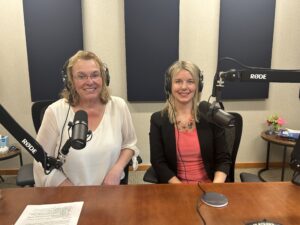
Nadine Post, MSN, RN (Left), manager of Quality and Patient Safety at MyMichigan Health, and Nicole Stefan, CNMT, MBA, CPPS, CPHRM (Right), manager of Risk Management at Trinity Health Livonia joined for the March episode of the MiCare Champion Cast.

The MHA released a new episode of the MiCare Champion Cast during Patient Safety Awareness Week to uplift why hospitals should prioritize submitting adverse event data, in addition to what can be done to improve the culture around reporting. The episode features Nadine Post, MSN, RN, manager of Quality and Patient Safety at MyMichigan Health, and Nicole Stefan, CNMT, MBA, CPPS, CPHRM, manager of Risk Management at Trinity Health Livonia.
Data is critical for advancing healthcare safety. With this in mind, the MHA Keystone Center Patient Safety Organization (PSO) collects data every day from hospitals and health systems throughout Michigan. The team assembled in June 2023 the Adverse Events Review Committee (AERC) to review adverse events and identify the root cause of medical errors. In addition to providing guidance to hospitals on a case-by-case basis, the committee aims to establish standardized practices and proactive solutions to prevent staff and patient harm.

“Data is knowledge,” said Stefan. “It allows us to see where we’re vulnerable, benchmark and prioritize what we need to work on.”

Organizational culture can often be a barrier for incident reporting. According to the Occupational Safety and Health Administration, studies of hospital-based healthcare workers found that those who perceived that their institution had a strong commitment to safety were much more likely to be compliant with standard precautions than those who did not.

“One of the components of building a culture of safety is having leaders at unit levels being active listeners so that frontline employees understand that they have executive support,” said Post, who serves as co-chair of the committee. “Psychological safety is so important,” Stefan added. “If they [frontline staff] feel safe, they will take the time to report – they will feel comfortable to.”

Those interested in the MHA Keystone Center PSO or the AERC should contact the MHA Keystone Center. Current PSO members are also encouraged to submit nominations for the quarterly Speak-up! Award to acknowledge the efforts of individuals or teams who are preventing harm to patients or fellow staff members.

The episode is available to stream on SpotifyYouTubeApple Podcasts and SoundCloud. Questions or idea submissions for future MiCare Champion Cast episodes can be sent to Lucy Ciaramitaro at the MHA.

MiCare Champion Cast · Patient Safety Awareness Week: The Important Role of Hospital Adverse Event Data

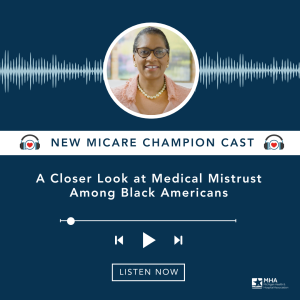
MHA Podcast Explores Impact of Medical Mistrust Among Black Americans

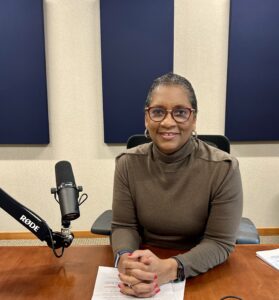
Lynn Todman, PhD, vice president of Health Equity and Community Partnerships, Corewell Health joined for the February episode of the MiCare Champion Cast.

The MHA released a new episode of the MiCare Champion Cast exploring the impact medical mistrust has on health outcomes for Black Americans featuring Lynn Todman, PhD, vice president of Health Equity and Community Partnerships for Corewell Health.

As hospitals and health systems uplift Black History Month, it’s important to acknowledge the long, complex history of medical mistrust among Black Americans that is rooted in systemic racism and countless acts of medical exploitation, unethical experimentation and mistreatment. Repairing trust between Black patients and medical providers requires honest and open dialogue about the lasting impact of injustices that have spanned centuries.

With this in mind, Todman shared further insight about the influence medical mistrust has on Black communities and what action hospital leaders and healthcare teams can take to address gaps in care.

Research has found that individuals who experience medical mistrust are less likely to adhere to treatment plans, engage in routine screenings or participate in medical trials. Mistrust can also play a role in delayed diagnoses and poorer prognoses for a patient, and higher levels of stress that can exacerbate existing health conditions.

“It’s a perfectly rational, protective behavior,” said Todman when speaking about the history of patient-provider mistrust. She notes that systemic change at the organizational, local and national levels are necessary to effectively address this reality for many Black Americans.

Todman, who holds a Masters of Science in City Planning and earned a Doctor of Urban and Regional Planning from MIT, leads efforts to align health equity activities across the integrated health system in her role at Corewell. She has years of experience in leadership and research in social and structural determinants of health, health impact assessment, urban poverty and community development.

When asked what action providers can take to address mistrust, Todman noted the importance of taking the time to listen and understand the social determinants that may influence a patient’s lifestyle, health, history and access to care.

“We’re starting to hear more around structural competency as a compliment to cultural competency to close gaps [in care],” said Todman. “Understanding people’s cultural background is important, but also understanding the structural forces that make things like housing or food less available…those things are also important.”

MiCare Champion Cast · A Closer Look at Medical Mistrust Among Black Americans

The episode is available to stream on SpotifyYouTubeApple Podcasts and SoundCloud. Questions or idea submissions for future MiCare Champion Cast episodes can be sent to Lucy Ciaramitaro at the MHA.

MHA Podcast Explores Workplace Violence Resources for Michigan Hospitals

The MHA released a new episode of the MiCare Champion Cast, which features interviews each month with experts in Michigan discussing key issues that impact healthcare and the health of communities.

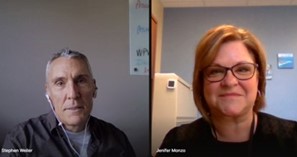
Jenifer Monzo, RN, BAS, CPHRM, director of Quality and Risk Management at McKenzie Health System and Stephen Weiler, IPEM, MEP, CPP, CPD, manager of Resiliency Services at HSS joined virtually for the January episode of the MiCare Champion Cast.

The January 2024 episode, which explores workplace violence resources for Michigan hospitals, features Jenifer Monzo, RN, BAS, CPHRM, director of Quality and Risk Management at McKenzie Health System and Stephen Weiler, IPEM, MEP, CPP, CPD, manager of Resiliency Services at HSS.

Monzo and Weiler, who share years of experience and education in healthcare safety, discuss the reality of workplace violence in hospitals. According to the U.S. Bureau of Labor, healthcare workers are about five times more likely to experience workplace violence than employees in other industries.

“What I see is that they’re getting tired, warn out, and frustrated,” said Monzo, who has a background in nursing herself. “We have a fantastic team and they’re a great support to each other…we’re doing everything we can to let them know that we’re working our best to keep them safe.”

In December 2023, Gov. Whitmer signed into law House Bills 4520 and 4521, which increase the penalties for assaulting a healthcare worker or volunteer. Now referred to as Public Acts 271 and 272 of 2023, the financial fines are doubled for those found guilty of assault towards a healthcare worker or volunteer.

To enhance workplace safety, McKenzie Health System formed a partnership with HSS through support from the MHA Keystone Center and grant funding from Blue Cross Blue Shield of Michigan. As a result, McKenzie teams are receiving tailored resources and training that address the specific needs of the system.

“Learn from your experiences and learn from your staff,” said Monzo. “Listen to what they’re concerns are and let them know what you’ve done, what you’re doing and that you’re interested in continued feedback to keep making improvements.”

Weiler details the “soup to nuts” approach taken by HSS to support hospitals like McKenzie throughout the state and country. Their offerings include in-person practical skills training and education, security and risk assessments, emergency management services and much, much more.

MHA-member hospitals interested in receiving support for safety and quality initiatives are encouraged to submit their OSHA data to the MHA Keystone Center. Members with questions about the program or consideration requirements can contact the MHA Keystone Center PSO.

The episode is available to stream on SpotifyYouTubeApple Podcasts and SoundCloud. Questions or idea submissions for future MiCare Champion Cast episodes can be sent to Lucy Ciaramitaro at the MHA.

MiCare Champion Cast · Addressing Workplace Violence in Michigan Hospitals

HSS, an MHA Endorsed Business Partner (EBP), is a leader in healthcare, airport, and government facility security – as well as emergency and aggression management training, security systems integration, and medical equipment management services. To learn more and to request to be considered to become an EBP, contact the MHA or MHA Business Development Consultant Brian Stevens at (972) 768-5755.