Senate Health Policy Holds Testimony on Opioid Legislation

The Senate Health Policy Committee held testimony on legislation related to treating patients with opioid use disorder during the week of June 16.

Collectively, Senate Bills (SB) 397405 make numerous changes to improve coverage and access for Michiganders to receive treatment for opioid use disorder. SBs 397, 400, 401, 402 and 403 specifically apply commercial insurer and Medicaid coverage modifications to reduce delays and remove additional barriers in prescribing opioid-related treatment and dosages.

SB 398 modifies opioid treatment program requirements under the Department of Licensing and Regulatory Affairs, while SBs 404405 would require nurses to carry naloxone in select schools. Lastly, SB 399 amends the Public Health Code to specify that the term “drug paraphernalia” does not include testing products.

The MHA-supported bills now await a final vote in the Senate Health Policy Committee before moving to the full Senate chamber. The MHA Behavioral Health Integration Council reviewed and recommended changes for SBs 397, 398, 399, 400 and 402.

Members with additional questions should contact the MHA Advocacy Team.

MHA Monday Report Dec. 23, 2024

MHA Prevents Staffing Ratios and Medical Liability Changes

The MHA defeated legislation that would have established government-mandated nurse staffing ratios and legislation that would have made detrimental revisions to Michigan’s strong medical liability laws during the week of Dec. 16. The MHA opposed …


MHA Keystone Center Annual Report Features Hospital Quality and Safety Improvements

The MHA Keystone Center recently released its 2023-24 Annual Report, which demonstrates the organization’s commitment to advancing the safety and quality of care alongside Michigan hospitals. The report showcases MHA Keystone Center-led patient and workforce …


speak upUniversity of Michigan Health-Sparrow Police Authority Officer Honored with Q3 MHA Keystone Center Speak-up! Award

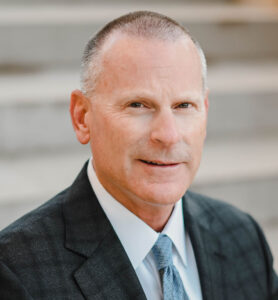
The MHA Keystone Center has recognized Ronald Patterson, a police authority officer at University of Michigan Health-Sparrow, as its quarterly MHA Keystone Center Speak-up! Award recipient for December. The Speak-up! …


Obtaining Beyfortus Through the VFC Program

Through an ongoing partnership with the Michigan Department of Health & Human Services, Michigan birthing hospitals are reminded to enroll as a Vaccine for Children (VFC) Specialty Provider in order to administer the respiratory …


Superior Health Quality Alliance Report Highlights Improvements in Care for Medicare Beneficiaries

The Superior Health Quality Alliance – a coalition of eight Midwest healthcare quality improvement organizations including the MHA Keystone Center – recently released a report detailing its work over the past five years as the …


MHA Offers Webinar on Creating Peer Recovery Coach Programs

The MHA will host the webinar Building Effective Peer Recovery Coach Programs in Hospitals Feb. 12 from 8:30 – 9:30 a.m. to help hospitals create hospital-based peer recovery coach programs, providing background information and …


Keckley Report

Health System Transformation: The Mandate is Clear but Insider Pushback is Strong

“The murder of UnitedHealth Group executive Brian Thompson (aka BT) December 4 and prosecution of his alleged killer Luigi Mangione in Pennsylvania and New York will be in the media spotlight for months to come. The 26-year-old data scientist’ antipathy toward the health industry will be the sidebar in most coverage. …

Our system is fragmented by design, opaque by habit, resistant to change and considers criticism by outsiders unfair or ill-informed. Success and incentives in most healthcare organizations are based on short-term financial performance. Transparency is a threat and innovation is incremental. In the vast majority, Boards are rarely more than rubber stamps for management as long as “the numbers are hit.”

Tension between payers and providers, investor-owned and not-for-profit ownership and preventive health and specialty care has calcified and Executives are promoted as celebrities. In the process, the public’s attention is drawn to the industry where ministry and mission appear subordinate to corporatization and profit. …

That’s not the future. The public expects more and they’re tired of industry pushback and excuses.”

Paul Keckley, Dec. 16, 2024


News to Know

  • The MHA offices will be closed and no formal meetings will be scheduled Dec. 24 – Jan. 1, 2025.
  • Due to the holidays, Monday Report will not be published Dec. 30 and Jan. 6 and will resume its normal schedule Jan. 13.
  • The December edition of Trustee Insights, the AHA’s monthly digital package, highlights resources on key topics such as quality and safety priorities, social determinants of health, board diversity, behavioral health integration and financial performance.
  • In 2025, the MHA will host the second Human Resources Conference and welcome back the MHA Keystone Center’s Safety & Quality Symposium for the first time since 2019

MHA CEO Brian Peters

MHA in the News

MHA CEO Brian Peters joined Michigan’s Big Show Dec. 16 to discuss the 340B drug pricing program and legislation that would have safeguarded the program. Peters joined guest host Mel Seifert and discussed Senate Bill …

MHA Monday Report Dec. 16, 2024

340B Hospital Protections Advance, Medical Liability Blocked During Busy Lame Duck

Various healthcare bills, including increased 340B protections for healthcare providers, received attention by the Michigan Legislature during the week of Dec. 9. Senate Bill 1179, sponsored by Sen. Sam Singh (D-East Lansing) and which …


mha advancing safe care awardNominations Open for 2025 Advancing Safe Care Award

The MHA is accepting nominations for its annual Advancing Safe Care Award to recognize Michigan hospitals that are tackling issues daily to make care safer and more dependable. Eligible nominees include teams from hospitals across the state …


MHA Keystone Center PSO to Host Structured Communications Safe Table

The MHA Keystone Center Patient Safety Organization (PSO) is facilitating a virtual safe table from 9:30 to 11 a.m., Thursday, Jan. 23. The Structured Communication Safe Table will be led by I-PASS Patient Safety Institute. …


MHA and Partners Host Section 1557 Webinar Addressing Language Services

The MHA hosted the Section 1557 Readiness Workshop Dec. 10 with MHA Endorsed Business Partner (EBP) AMN Language Services as part of the ongoing effort to advance the health of individuals and communities. This session …


Upcoming Opportunities to Learn, Network and Grow in 2025
In 2025, the MHA will host the second Human Resources Conference and welcome back the MHA Keystone Center’s Safety & Quality Symposium for the first time since 2019. Both events have been developed alongside MHA …


2025 MHA Healthcare Leadership Academy Approved for More Than 30 Credit Hours

The MHA is pleased to offer its popular Healthcare Leadership Academy in 2025. 32 credit hours are available for physicians, nurses and healthcare executives. In partnership with Executive Core and Grand Valley State University, two …


Keckley Report

In Healthcare, Most think We’re Shrewd and They’re Screwed

“The majority accept that operators in every sector of healthcare apply business practices intended to optimize their organization’s finances. Best practices for every insurer, hospital, drug/device manufacturer and medical practice include processes and procedures to maximize revenues, minimize costs and secure capital for growth/innovation. But in healthcare, the notion of profit remains problematic: how much is too much? and how an organization compensates its leaders for results beyond short-term revenue/margin improvement are questions of growing concern to a large and growing majority of consumers. …

The bottom line: the public is paying attention to business practices in healthcare. The death of Brian Thompson opened the floodgate for criticism of health insurers and the U.S. healthcare industry overall. It cannot be ignored. The public thinks industry folks are shrewd operators and they’re inclined to conclude they’re screwed as a result.”

Paul Keckley, Dec. 9, 2024


MHA CEO Brian Peters

MHA in the News

The MHA received media coverage the week of Dec. 9 on Senate Bill 1179, which would protect access to affordable prescription drugs and healthcare services through the 340B Prescription Drug Pricing Program. The bill was …

Behavioral Health Bills Advance, Other Bills Discussed in State Legislature

Several bills impacting healthcare and hospitals were advanced through committees in the state Senate during the week of Oct. 28.

The Senate Health Policy Committee unanimously approved Senate Bills (SB) 916 – 918, led by Sen. Hertel (D-Saint Clair Shores). The bills would expand the availability of Assisted Outpatient Treatment (AOT) in Michigan. AOT has been proven to decrease the number of individuals involved in the criminal justice system with behavioral health needs and can decrease the pressure on emergency departments for issues related to behavioral health. The bills expand the healthcare providers eligible to provide testimony for AOT and adds a new mechanism to divert individuals charged with misdemeanor offenses to AOT. The MHA supports the legislation as it awaits a vote of the full Senate.

Additionally, the Senate Regulatory Reform Committee took testimony on Senate Bills 651 – 654, led by Sen. Singh (D-East Lansing). The bills are spearheaded by the Keep Michigan Kids Tobacco Free Alliance and would create new licensing for establishments that sell tobacco products while enhancing the penalties on those retailers for selling to individuals under age 21. The legislation also removes punitive penalties on youth to reduce barriers for those who are seeking help for nicotine addiction. The MHA supports the legislation to improve Michigan’s public health as it awaits a vote of the committee.

Members with questions on state legislation can contact Elizabeth Kutter at the MHA.

Legislature Advances MHA Supported Policy Bills; Budgets Move Through Senate

The Michigan Senate advanced their chamber budgets for the upcoming fiscal year during the week of May 13. The Senate’s budget recommendations for the Department of Health and Human Services continues vital funding for Medicaid, rural and critical access hospitals, obstetrical services and the Healthy Michigan Plan. Additionally, the Senate passed budget includes funding to provide reimbursement for peer recovery coaches in the hospital setting to enhance substance use disorder services, as well as funding to support hospital achievement of Maternal Levels of Care verification through the Joint Commission.

Several MHA supported bills also moved through the committee process and onward to the governor’s desk. The House Health Policy Committee voted in favor of revising the disposal requirements for appropriately contained sharps. Senate Bill 482, sponsored by Sen. Kristen McDonald Rivet (D-Bay City), allows for sharps containers to remain in use until they are ¾ filled but for no longer than 18 months from the date of first sharps disposal into the container. This is a significant revision from the current law, which requires disposal every 90 days, regardless of if the container is underutilized. The MHA is supportive of this legislation and brought this idea to the legislature following feedback from the MHA membership.

The House Tax Policy Committee voted to report House Bill (HB) 5394, sponsored by Rep. Felcia Brabec (D-Pittsfield Twp.). HB 5394 requires appropriate information sharing to fully effectuate the organ donor registry and implementing new policies allowing for individuals to identify themselves as an organ donor on their tax returns. The MHA supports this legislation and continues to support opportunities to improve Michigan’s organ donation processes.

In addition, the Senate approved HBs 4131, 4213, 4579 and 4580, which provide payment parity for telehealth services and protections for telemedicine access. The bills support a provider’s ability to serve patients and protect in-person visits that are vital to health outcomes. The MHA supported bills are now headed to the governor’s desk to be signed into law.

Members with questions may contact Elizabeth Kutter at the MHA.