Hospitals Help: Mackinac Straits Retail Pharmacy Serves as a Lifeline in Northern Michigan

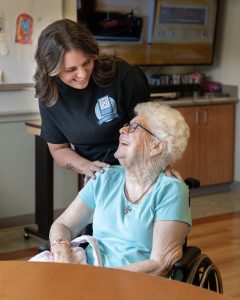
Mackinac Straits Health System opened its retail pharmacy in St. Ignace.

Mackinac Straits Health System opened its retail pharmacy in St. Ignace following valuable feedback from the community.

Previously, the community lacked access to pharmacy services on weekends and holidays. This created additional barriers to care, requiring patients to travel in excess of 60 to 100 miles round trip to the next closest pharmacy.

Now, the retail pharmacy continues to prosper and provides a lifeline for rural communities in the Straits area, filling over 56,000 prescriptions annually.

The 340B program has allowed the health system to promote discounted medications, enhanced vaccination offerings and specialty care services. Created by Congress more than 30 years ago, the 340B program helps hospitals and community health centers stretch their limited resources further without using any state taxpayer dollars.

“The 340B program directly benefits patients by allowing us to stretch scarce federal resources to offer critical services including additional pharmacy access and personalized prescription delivery to those who have limited means of transportation on Mackinac Island and beyond,” said Karen Cheeseman, president and chief executive officer, Mackinac Straits Health System.

Those interested in learning more about the program can visit the 340B webpage. To read more positive hospital stories, check out more Hospitals Help webpage and the 2025 Community Impact Report.

Members with questions may contact Lucy Ciaramitaro at the MHA.

Hospitals Help: Grant Drives Maternal Safety Innovation at MyMichigan Health

Simulation training helps care teams prepare for rare, high-risk events by allowing them to practice clinical decision-making and collaboration in a safe environment. Through an equipment grant distributed by the MHA Keystone Center with funding support from UnitedHealthcare, MyMichigan Health is strengthening hands-on learning to improve readiness for rare but life-threatening maternal emergencies.

Using MamaBirthie simulators provided through the grant, MyMichigan Health recently partnered with Maternal 911 to host a training focused on responding to Amniotic Fluid Embolism (AFE). The session brought together nurses, midwives and physicians from its Midland and Alma birthing units to practice rapid, coordinated response strategies, including an OB zone approach that clarifies team roles to ensure critical steps are not missed during high-risk events.

“These simulations give us the chance to practice responding to uncommon complications we hope never happen, but need to be prepared for,” said Tonia Vanwieren B.S.N., R.N., system nursing director of maternal child and women’s health, MyMichigan Health. “Having the equipment and time to train together builds confidence and helps us respond quicker when every second matters when an emergency arises.”

The MHA Keystone Center works alongside the Michigan Alliance for Innovation (MI AIM) on Maternal Health to equip Michigan birthing hospitals with practical tools that strengthen clinical readiness, build confident care teams and improve outcomes for mothers and babies across Michigan.

Members with questions about MI AIM or other maternal health quality improvement offerings should reach out to Naomi Rosner at the MHA Keystone Center. For more information and hospital stories, check out the 2025 Community Impact Report. Members with questions may contact Lucy Ciaramitaro at the MHA.

Hospitals Help: Munson Healthcare, Community Partners Offer Free Family Support Program

Marina, a Healthy Futures participant, with her family and newborn son.

Healthy Futures is a free family support program that helps answer questions and assists families in finding services and resources in the community. The program, which has no eligibility requirements, is a collaboration between Munson Healthcare, local health departments and healthcare providers across 31 counties in the northern Michigan region.

The main goals of the program are around increasing access to care, immunization education and breastfeeding support services. The program includes newsletters and texts sent by Munson, phone calls and home visits by a public health nurse in the community.

After struggling with breastfeeding her newborn daughter, one patient enrolled in the program and accepted a home visit, which resulted in a life-saving diagnosis and treatment for postpartum preeclampsia, a condition that can be fatal if left untreated.

“Today, I’m alive, healthy, and here to enjoy my daughter, son and family because Healthy Futures stepped in at the right time,” said Marina, a Healthy Futures participant. “They helped me breastfeed, taught me how to boost my milk supply, monitored my baby’s weight, checked in on my mental health…and after almost five months, they’re still checking on me and my baby.”

To learn more about the program, visit Munson Healthcare’s website. To read more positive hospital stories, check out more Hospitals Help webpage and the 2025 Community Impact Report. Members with questions may contact Lucy Ciaramitaro at the MHA.

Hospitals Help: MyMichigan Clinics Improve Access to Timely Care

MyMichigan Health established the Continuing Care Clinics in 2023 to serve residents across its 26-county service region who lack timely access to primary care physicians. These clinics are pivotal during critical health transitions, offering responsive care after hospital discharges, emergency department visits, stays in long-term care facilities or while patients await new primary care providers.

The multidisciplinary team of clinicians at MyMichigan Health create personalized care plans that help patients successfully transition home and reduce the risk of readmission.

Through the Continuing Care Clinics model, MyMichigan Health has demonstrated significant success in reducing poor health outcomes. Patients receiving care exhibit a lower risk of readmission compared to those at other, similar clinics. This achievement is credited to the multidisciplinary team of clinicians who develop personalized care plans, assisting patients in successfully transitioning home while minimizing readmission risks.

Additionally, patients receive referrals for preventive care screenings, further promoting community wellness. The Continuing Care Clinics collaborate with community partners to enhance patients’ access to essential resources including food, transportation and medication. These efforts empower patients to manage their health more effectively and improve recovery.

“Through partnerships with food centers, transportation services and pharmacies, we’ve improved patient access to essential resources like free food, transportation and medication,” said Steve Frazier, MHA, BA, RN, ACN-RN, director of quality and patient safety, MyMichigan Health. “These interventions help patients manage their health, reduce the risk of readmissions and improve overall health outcomes. Additionally, the clinics connect patients without a primary care provider to care, ensuring continuous support and reducing gaps in preventative care.”

For more information and hospital stories, check out the 2025 Community Impact Report. Additionally, this work earned MyMichigan Health a 2025 Ludwig Community Benefit Award. Members with questions may contact Lucy Ciaramitaro at the MHA.

News to Know – March 24, 2025

New to Know
  • New to KnowIn order to continue sharing with key stakeholders the important impact hospitals make to their communities, the MHA invites members to share examples of strong community impact programming through a brief surveySubmissions can include efforts big or small that are improving the overall health, wellness and quality of life of patients and communities. Throughout the year, these programs will be featured on the MiCareMatters website and shared across MHA digital platforms. For more information, members may contact Lucy Ciaramitaro at the MHA.
  • The Michigan Alliance for Innovation on Maternal Health (MI AIM) is offering regional training sessions April 23 for inpatient maternal health providers focused on implementing the hypertension safety bundle and addressing common challenges with implementation. The one-hour sessions will include time for discussion and collaboration among regional hospital teams following the presentation. Nurses, physicians and other maternal health inpatient clinicians are encouraged to attend and may choose from either a morning session from 8 to 9 a.m.or an evening session from 5 to 6 p.m.. There is no cost to participate, but registration is required with the links provided. Members may contact the MHA Keystone Center for registration questions. Dominique Abram and Meagan Chuey at the Michigan Department of Health and Human Services are available for event related questions.

News to Know – March 10, 2025

New to Know
  • New to KnowThe MHA Human Resources Conference is quickly approaching on March 25, 2025 from 8:30 a.m. to 3:30 p.m. at the Crowne Plaza Lansing. Members must register by March 14 to network with colleagues, learn best practices and earn 5.25 credit hours for the SHRM-CP® or SHRM-SCP®.  Members with questions about registration may contact Brenda Carr at the MHA. Questions regarding the conference should be directed to Erica Leyko at the MHA.
  • In order to continue sharing with key stakeholders the important impact hospitals make to their communities, the MHA invites members to share examples of strong community impact programming through a brief surveySubmissions can include efforts big or small that are improving the overall health, wellness and quality of life of patients and communities. Throughout the year, these programs will be featured on the MiCareMatters website and shared across MHA digital platforms. For more information, members may contact Lucy Ciaramitaro at the MHA.

Hospitals Help: Learning More About Street Medicine Oakland

The MHA released a new episode of the MiCare Champion Cast featuring Laura Ortiz, MD, Emergency Medicine Provider at Corewell Health William Beaumont University Hospital, exploring a collaborative effort that’s enhancing access to care for all communities.

The program, known as Street Medicine Oakland, is a collaborative effort between Corewell Health William Beaumont University Hospital and Oakland University William Beaumont School of Medicine that delivers free medical care to those experiencing homelessness in Oakland County.  

During the episode, Ortiz explains how the program came to be, how it works and the strong, positive impact it’s having on patients, providers and medical students.

“If you don’t see the barriers and what patients are experiencing, you can’t understand how hard it is to do what seems like a simple thing like calling your doctor or finding transportation,” said Ortiz, who serves as the assistant medical director for the program.

Unsheltered populations face higher rates of chronic illness, mental and behavioral health conditions, substance use disorder and emergency department admissions. With this in mind, Street Medicine Oakland is focused on addressing barriers to care and tackling medical mistrust.

Ortiz, who also serves as the director of faculty development and the hospital’s medical education fellowship, shares how being involved in Street Medicine Oakland has changed her approach to care delivery in the hospital.

“[This work] reminds you why you got into medicine,” said Ortiz. “Getting to help people, learn people stories, see what their life is like…it’s very meaningful and makes me a better doctor.”

Street Medicine Oakland received an MHA Ludwig Community Benefit Award in 2024 and was recently featured in the 2024 MHA Community Impact Report. Those interested in sharing hospital programming in Michigan that is having a strong community impact are encouraged to contact Lucy Ciaramitaro at the MHA.

The episode is available to stream on Apple PodcastsSpotifySoundCloud and YouTube.

Dr. Ortiz received her bachelor’s degree from Kalamazoo College and is a graduate of the charter class of Oakland University William Beaumont School of Medicine. She completed her residency in Emergency Medicine at Indiana University where she served as chief resident in her final year. She completed a medical education fellowship at Corewell Health William Beaumont University Hospital, culminating in a Master of Health Professions Education from the University of Michigan.

News to Know – Feb. 24, 2025

New to Know

In order to continue sharing with key stakeholders the important impact hospitals make to their communities, the MHA invites members to share examples of strong community impact programming through a brief surveySubmissions can include efforts big or small that are improving the overall health, wellness and quality of life of patients and communities. Throughout the year, these programs will be featured on the MiCareMatters website and shared across MHA digital platforms. For more information, members may contact Lucy Ciaramitaro at the MHA.

News to Know – Feb. 17, 2025

New to Know
  • MHA Endorsed Business Partner CorroHealth and the American Hospital Association will host the webinar Strategies to Strengthen Hospital Financial Health Amid Payer Pressures 2 p.m. ET Feb. 20 to share proven strategies and real world insights into combating payer denial tactics and how to protect hospitals. Speakers will review a case study with Mercy Health to explore effective payer strategies. There is no cost to register. Members with questions may contact Laura Penton at CorroHealth or Rob Wood at the MHA.
  • In order to continue sharing with key stakeholders the important impact hospitals make to their communities, the MHA invites members to share examples of strong community impact programming through a brief surveySubmissions can include efforts big or small that are improving the overall health, wellness and quality of life of patients and communities. Throughout the year, these programs will be featured on the MiCareMatters website and shared across MHA digital platforms. For more information, members may contact Lucy Ciaramitaro at the MHA.
  • MHA offices will be closed Monday, Feb. 17 in observance of President’s Day.

MHA Monday Report Sept. 30, 2024

Legislation Impacting Hospitals Introduced in State Legislature

A variety of bills impacting hospitals and health systems were introduced and discussed in the state legislature during the week of Sept. 23. Senate Bill 701, introduced by Sen. Singh (D-East Lansing), updates the statutory framework for the rural and obstetrical …


NAIC Meeting Evaluates Impact of Pharmaceutical Costs on Rural Hospitals

Michigan Department of Insurance and Financial Services Director Anita Fox invited the MHA and Munson Healthcare to present to the Midwest Zone meeting of the National Association of Insurance Commissioners (NAIC) held Sept. 25. The …


CE Credits Available for Health Equity Regulatory Requirements Webinar

The MHA and the MHA Keystone Center are hosting an educational webinar from 8:30 to 9:30 a.m. Oct. 10 about the current and future state of regulatory and accrediting health equity requirements from the Centers …


2024 Election Materials Available for Michigan Hospitals

The MHA is offering election communication materials geared toward hospital staff, volunteers, patients and visitors to encourage voter participation in the 2024 general election. Additionally, the MHA elections webpage will be updated regularly with relevant …


Keckley Report

The Commonwealth Health System Study in Context: Will it Prompt Meaningful Action in the U.S.?

“Last Thursday, the Commonwealth Fund released its assessment of how the U.S. health system compares to other developed systems of the world. The title says it all: Mirror, Mirror 2024: A Portrait of the Failing U.S. Health System.

The real question prompted by the Commonwealth study is this: is the ineffectiveness of the U.S. system fixable? Private investors, operators and trade groups say yes so long as a transition is smooth and their interests are protected. Systemic change is unwelcome. Healthcare in the U.S. is an industry that does well financially so, for many politicians, pensioners and insiders, they’d prefer it be left alone.

But the majority of Americans, including the majority in the 18-million healthcare workforce, aren’t sure. They see corporate profits, executive compensation, mergers and takeovers as indicators of its corporatization and business acumen but its layoffs, cost-cutting, surprise bills and inexplicable prices as evidence the system puts profit ahead of fixing problems that matter to them.

This study is worth discussion in every Boardroom in healthcare and in every household interested in health reforms. At a minimum, It merits collaborative action led by AHA, AHIP, AMA and others to develop meaningful, long-term solutions to its flaws that subordinate their proprietary preferences for the greater good.”

Paul Keckley, Sept. 23, 2024


MHA CEO Brian Peters

MHA in the News

Detroit’s WJR 760 AM interviewed MHA CEO Brian Peters Sept. 22 for a segment on healthcare as part of “The Capital Report,” a new show focused on exploring issues happening within state politics and Michigan’s …