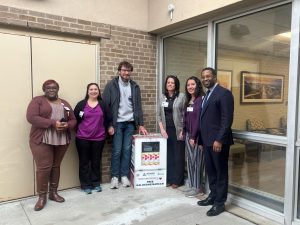
In response to the opioid epidemic, four Trinity Health hospitals — Livonia, Oakland, Livingston and Ann Arbor — launched a regional initiative to expand access to Narcan (naloxone), a lifesaving medication that reverses opioid overdoses. Through the installation of free Narcan vending machines, these hospitals are providing 24/7 access to a critical resource that can restore breathing and prevent fatal outcomes during overdose emergencies.
At Trinity Health Oakland, community health workers play a pivotal role in the success of this initiative. Their deep connections within the community enabled strategic placement of the vending machine in a high-need area and guidance on outreach and education efforts. They also lead training sessions for staff and residents to increase awareness, reduce stigma and build confidence in overdose response.
Since its installation in March 2025, the unit has played a critical role in potentially saving 76 lives — a powerful testament to the importance of accessible intervention tools and community engagement. At the other Trinity Health Southeast Michigan hospitals — Livonia, Livingston and Ann Arbor — the Narcan vending machines were deployed through the efforts of community health and well-being directors, who identified key locations and coordinated implementation to ensure broad access across the region. By removing barriers to access and empowering individuals with the tools and knowledge to respond to opioid overdoses, the program is saving lives and improving well-being across Southeast Michigan.
“This work is deeply personal,” said Chiquita Berg, MD, MBA, FACOG, vice president of community, health and well-being, Trinity Health Michigan. “I’ve seen the heartbreak that substance use disorder brings and I’ve also seen the strength it takes to recover. At Trinity Health Michigan, we’re committed to meeting people with compassion, not judgment. Through bold leadership and trusted partnerships, we’re creating pathways to healing and sending a clear message: every life is worth saving, and every person deserves a future filled with hope.”
To read more positive hospital stories, check out more Hospitals Help webpage and the 2025 Community Impact Report. Members with questions may contact Lucy Ciaramitaro at the MHA.