
MHA Monday Report Sept. 29, 2025

House Health Policy Hears Testimony on 340B Legislation

The House Health Policy Committee took up recently introduced legislation addressing 340B contract pharmacy arrangements during the week of Sept. 22. House Bill 4878, sponsored by Rep. Curt VanderWall (R-Ludington), was recently introduced and …


U.S. Senate Approves SUPPORT Act Reauthorization to Address Opioid and Mental Health Crisis

The U.S. Senate passed the SUPPORT for Patients and Communities Reauthorization Act of 2025 on Sept. 18. The bill would provide more resources for preventing and treating addiction and mental illness. It passed the U.S. …


Vault Verify’s Role in HR Automation Featured in Podcast
MHA Endorsed Business Partner Vault Verify was recently featured on the RPI Tech Connect podcast episode “From Manual to Measurable: How UMMS Streamlined HR with RPI and Vault Verify.” Rebecca Hielke from the University of …


MHA Keystone Center PSO Hosts Human Errors and Design Thinking Safe Table
Registration is open for the MHA Keystone Center Patient Safety Organization (PSO) Human Errors and Design Thinking Safe Table. The event will be held from 10 a.m. to 3 p.m. on Oct. 1 at the …


Catching Up on All Things Healthcare with Tina Freese Decker

The MHA released a new episode of the MiCare Champion Cast exploring state and federal healthcare priorities with Tina Freese Decker, MHA, MSIE, FACHE, president & CEO, Corewell Health and 2025 chair of the American …


Keckley Report
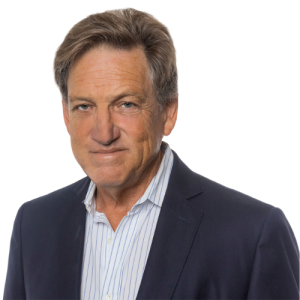
Responding to Trump Healthcare 2.0: Key Takeaways after 8 Months

“The Trump 2.0 administration is 8-months into its MAGA agenda. Summer has passed. Schools are open. Congress is in session. Campaign 2026 is underway. The economy is slowing and public sentiment is dropping.

For U.S. healthcare, it’s more bad news than good. The challenges are unprecedented. Most organizations—hospitals, medical groups, drug and device makers, infomediaries and solution providers, insurers, et al—are defaulting to lower risk bets since the long-term for the health system is unclear.

The good news is that the health system in the U.S. is big, fragmented, complex, expensive (5% CAGR spending increases thru 2034) and slow to change. It is highly regulated at local, state and federal levels, labor intense (20 million) and capital-dependent (government funding, private investment)—a trifecta nightmare for operators and goldmine for private investors who time the system for shareholders effectively. And it operates opaquely: business practices are hidden from everyday users and bona-fide measures of its effectiveness not widely applied or accepted. …

Trump Healthcare 2.0 is not transformational: it is transactional. It aims to simplify the system and facilitate changes certain to disrupt the status quo. Its locus of control, is Main Street USA. not Pennsylvania Ave, in DC.”

Paul Keckley, Sept. 21, 2025


New to Know

News to Know

  • More than 50 Michigan hospitals are coming together to improve outcomes in maternal health, behavioral health and chronic disease through new community benefit collaboratives.
  • The MHA Human Resources (HR) & Workforce Council met Sept. 25 to discuss current HR priorities and review its role in advancing the mission of the MHA and the role of human resource leaders.
  • MHA Endorsed Business Partner (EBP) SunRx is hosting a 340B Regulatory Brief webinar Nov. 4 at 2 p.m. EDT with Bharath Krishnamurthy, health policy & analytics, American Hospital Association.
  • The American Hospital Association (AHA) is accepting applications for the AHA’s 2026 Dick Davidson NOVA Award.


 

MHA Keystone Center PSO Hosts Human Errors and Design Thinking Safe Table

Registration is open for the MHA Keystone Center Patient Safety Organization (PSO) Human Errors and Design Thinking Safe Table. The event will be held from 10 a.m. to 3 p.m. on Oct. 1 at the MHA Headquarters in Okemos.

This safe table event introduces human factors in healthcare, exploring how human errors occur and how Human Factors Engineering design principles can reduce their impact.

At the end of the program, attendees will be able to:

  • Explain the evolution of traditional safety approaches.
  • Understand the purpose of proactive and reactive safety processes.
  • Integrate new frameworks within existing ones.

The Safe Table is free of charge for MHA Keystone PSO members and lunch is provided.

Chief quality officers, chief safety officers, chief nursing officers, chief medical officers, vice presidents of quality, safety and risk, vice presidents of clinical transformation, directors of quality improvement and directors or managers of patient safety and performance improvement are encouraged to attend.

Nursing and risk continuing education credits and Continuing Medical Education credits are being pursued.

Members with questions may reach out to the MHA Keystone Center PSO.

MHA Keystone Center PSO Launches SAFER Webinar Series

The MHA Keystone Center Patient Safety Organization (PSO), in partnership with EisnerAmper, is launching a new webinar series focused on the 2025 Safety Assurance Factors for Electronic Health Record Resilience (SAFER) guidelines. The free series will help healthcare professionals strengthen patient safety practices and implement artificial intelligence (AI) responsibly within clinical systems.

Participants must register in advance and will receive a Zoom link via email upon confirmation.

The three-part series includes the following sessions:

  • Navigating the Updated 2025 SAFER Assessment scheduled from 3 to 4 p.m. May 29. Dean Sittig, co-author of the SAFER Guides will highlight recent changes to the 2025 SAFER guidelines, including new recommendations for improving the safety and responsible use of AI in healthcare.
  • Deploying a Guided Risk and Safety Program to Protect Your Patients and Providers scheduled from 3 to 4 p.m. June 16. Presenters will outline how to leverage tools such as electronic health records and AI to mitigate risks in clinical workflows. The session will cover strategies for implementing effective governance structures, including control design, testing and continuous surveillance.
  • Adopting Safe AI scheduled from 1 to 2 p.m. July 24. This session will focus on managing the AI lifecycle in healthcare. Speakers will explore how to identify potential risks and opportunities, implement AI responsibly, and maintain oversight through governance and monitoring frameworks.

The series is designed to help participants understand the 2025 SAFER Assessment updates, identify and mitigate patient safety risks, and establish safeguards to support safe AI integration.

Series participants will gain an understanding of what the 2025 SAFER Assessment updates entail and how to run a program that identifies patient safety risk, mitigates controls and implements AI with the appropriate governance structure in place.

Arvid Kumar, managing director, EisenAmper, and Dean F. Sittig, PhD, co-author of the SAFER Guides Professor Emeritus at UTHealth School of Biomedical Informatics (SBMI), will facilitate this interactive event series.

Members with questions may contact the MHA Keystone Center.

Registration Open for Safe Table on Just Culture

The MHA Keystone Center Patient Safety Organization (PSO) is hosting a Just Culture Safe Table from 12:00 to 4 p.m., Thursday, Sept. 19 at the MHA headquarters in Okemos, MI. The peer-led discussion about Just Culture best practices will be facilitated by Trinity Health.

At the end of the discussion, participants will be able to:

  • Describe the tenets of a Just Culture.
  • Articulate the rationale for a replicable system of workplace justice across all values.
  • Appreciate the change management process that yields a Just Culture.
  • Learn about processes and desirable outcomes from peers and individuals who lead and benefit from a Just Culture.

Chief quality officers, chief safety officers, chief nursing officers, vice presidents of quality, safety, and risk, vice presidents of clinical transformation, nursing leaders, directors of quality improvement and safety improvement, senior administrative and clinical leaders, board members, frontline managers and human resource professionals are encouraged to register.

Registration for the safe table is free of charge for MHA Keystone Center PSO members and includes lunch beforehand at 11:30 a.m.

Nursing and risk management credits are being pursued.

Members with questions may contact the MHA Keystone Center.

About MHA Keystone Center Safe Tables

Safe tables allow hospitals to share ideas with peers, engage in meaningful discussions and obtain advice to make improvements to reduce or eliminate harm. These events are unique in that they offer a legally protected, confidential environment for discussion around sensitive topics.