
MHA Monday Report Nov. 17, 2025

Notable Healthcare Legislation Clears House, Senate Committees
Legislation on physician assistant licensure compact agreements, international medical school graduates, hospital price transparency measures and medical debt collection advanced in the Michigan House and Senate during the week of Nov. 10. In the House …


CMS Releases CY 2026 Physician Fee Schedule Final Rule

The Centers for Medicare & Medicaid Services (CMS) recently released a final rule to update the physician fee schedule for calendar year (CY) 2026. Highlights of the final rule include: Implementing the one-time 2.5% …


Congressmen Bergman Supports Save America’s Rural Hospitals Act

U.S. Rep. Jack Bergman (R-MI) recently co-sponsored H.R. 3684, the Save America’s Rural Hospitals Act of 2025, which would strengthen financial stability and access to care for rural hospitals and healthcare providers across the country. …


MHA Board of Trustees Shares Learnings from Ice Storm and Reviews Strategic Action Plan

The MHA Board of Trustees’ Nov. 12 meeting featured presentations from board members Ed Ness, president and CEO, Munson Healthcare; Lydia Watson, president and CEO, MyMichigan Health; and Karen Cheeseman, president and CEO, Mackinac Straits …


New MHA Infographic Showcases Rural Michigan Healthcare Impact

The MHA recently released the infographic Healthcare Impact in Rural Michigan, which highlights how critical access hospitals, sole community hospitals, rural emergency hospitals and birthing hospitals support communities across the state. The infographic highlights the …


New Endorsed Business Partner SmarterDx Provides Clinical AI to Support Financial Outcomes and Quality Scores

The MHA’s Endorsed Business Partner program promotes industry-leading firms. The EBP program connects member hospitals to solutions that alleviate pain points. The MHA recently endorsed SmarterDx, a national leader in revenue integrity solutions, offering advanced clinical …


Webinar Kicks Off MHA Health Access & Community Impact Office Hours

The MHA will host an informational webinar from noon to 12:45 p.m. Nov. 24 featuring 211, in the first session of the Health Access & Community Impact Office Hours series. The series is designed to …


Celebrating the Power — and Promise — of Rural Healthcare

As a healthcare leader, physician and someone born and raised in the Thumb of Michigan, National Rural Health Day is very personal to me, my colleagues and the communities we serve every day at Scheurer Health. …


Keckley Report

Why Healthcare Affordability is Increasingly Problematic to Working Age Populations

In what political pundits called a sweeping win by Democrats in Tuesday’s elections, affordability and costs of living emerged as the issues that mattered most to voters. It’s no surprise.

Since 2019 before the pandemic, prices have increased for American businesses and households due to inflation:

Personal Consumption Expenditures inflation which measures monthly business spending increased 3.5% annually. The Consumer Price Index, which measures monthly changes in household spending increased 3.87% annually over the same period (2019-2025).

But in the same period, prices for healthcare services–hospitals, physician services, insurance premiums and long-term care–have taken an odd turn: for businesses, they’ve decreased but for consumers, they increased. It reflects the success whereby businesses have shifted health benefits costs to employees or suspended benefits altogether, and it explains why consumers are bearing more direct responsibility for healthcare costs and are increasingly price sensitive. …

Healthcare service providers can ill afford to neglect affordability. It more than measuring medical debt, posting prices and referencing concern on websites. It’s about earning the trust and confidence of future generations through concrete actions that increase household financial security beginning with healthcare spending. …”

Paul Keckley, Nov. 9, 2025


New to KnowNews to Know

MHA members are encouraged to register for the webinar How Leading Health Systems Are Rebuilding Talent Pipelines — and Keeping Them Full Through Early Student Loan Support, led by Clasp, scheduled from 9 to 9:30 a.m. Dec. 2.


MHA in the News
9&10 News aired a story Nov. 11 about how health insurance rate increases will lead to lower health insurance enrollment, harming healthcare access. MHA CEO Brian Peters is quoted in the story expressing the need …
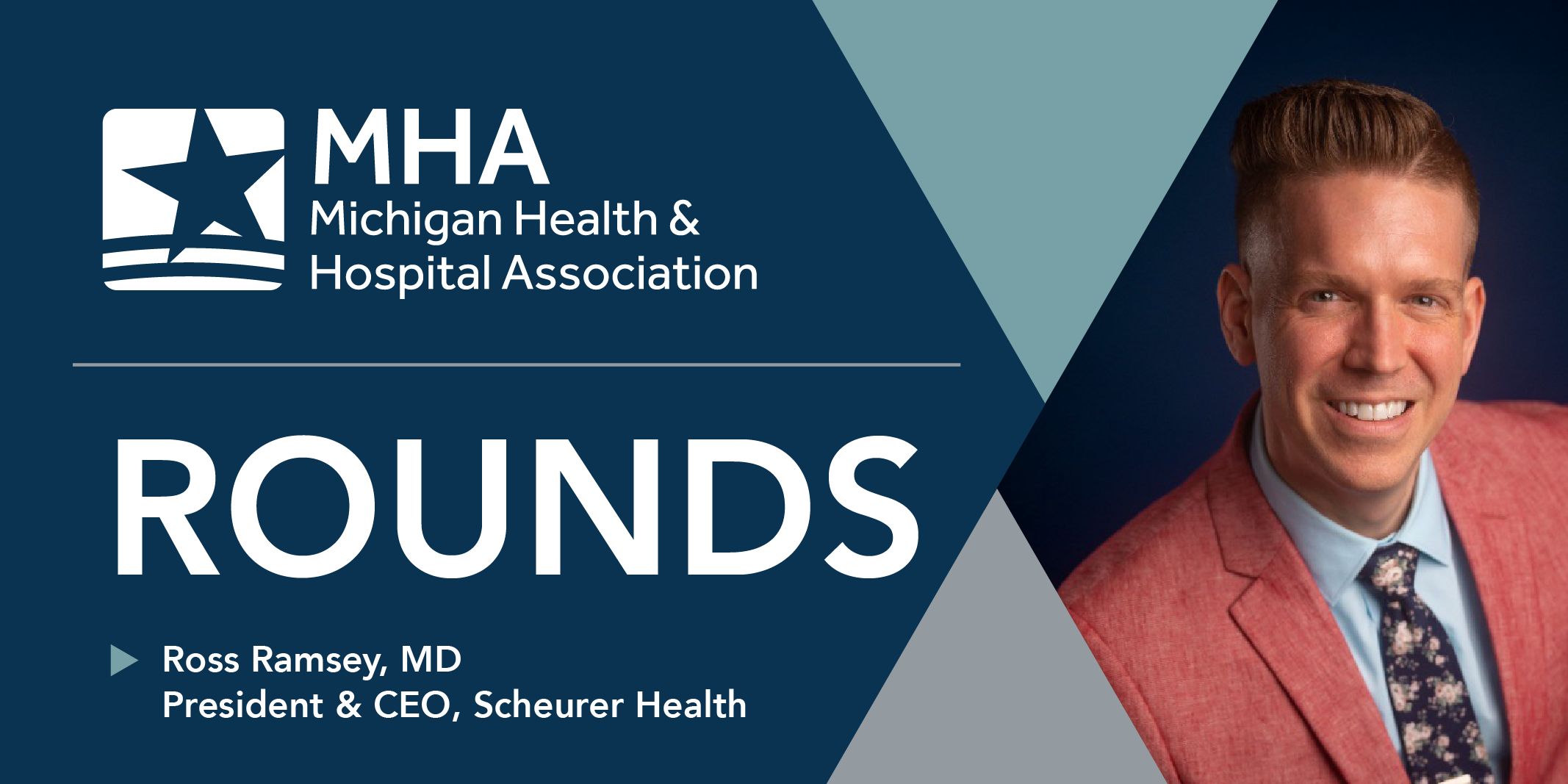
Celebrating the Power — and Promise — of Rural Healthcare

By Ross Ramsey, MD, president & CEO, Scheurer Health and MHA Small and Rural Hospital Council Chair

As a healthcare leader, physician and someone born and raised in the Thumb of Michigan, National Rural Health Day is very personal to me, my colleagues and the communities we serve every day at Scheurer Health.

When I think about what defines the “power of rural,” the first thing that comes to mind is our deep roots in the community. As it’s been said before, working in a rural hospital means that you’re likely to cross paths with a neighbor, friend or loved one – whether it’s in patient rooms or passing in the halls. That alone fosters a remarkable sense of trust and compassion that inspires me every day.

Beyond the unique connection between patients, providers and staff, the power of rural also lies in our resilience. We’re weathering financial pressures, policy changes and workforce demands that are exacerbated across rural settings. Yet, time and time again, we find innovative ways to deliver exceptional care.

At Scheurer, we strive to improve the health of our communities through the vision: “Better Health. Better Life.” Part of making this vision a reality is providing community members with the right information and resources to live healthier – because when that happens, we all benefit. We also find value in recognizing that a health system is strongest when it evolves alongside its community.

So, how are hospitals like ours evolving to meet patients where they are?

The first step is listening. Our annual Community Health Needs Assessment informs how we deliver care, where to allocate resources and how to best support our community within our four walls and beyond. Some of the key findings from our 2025 assessment include:

  • Mental health is a top concern across rural communities, exacerbated by service desserts, stigma, transportation barriers and medication costs. Moreover, the shortage of mental health providers may contribute to a workforce that has a lower level of certification and is susceptible to burnout. Substance use, which is often a co-morbidity with mental health, was the fourth highest concern among those we surveyed.
  • Recent trends show that suicide mortality remains a pressing concern across our region, with some counties experiencing rates above the state average. While a few areas are seeing slight improvements, others are facing upward trends that highlight the growing need for mental health support. These patterns drive home the importance of early intervention, access to care and reducing the stigma around seeking help.
  • Chronic diseases were among the top health issues in the community and has a major impact on the well-being of residents in Huron County. Of the 690 survey respondents, 30% indicated chronic disease was a major concern and 37% indicated it was a concern. Obesity was selected as a high priority issue, with connections to chronic diseases such as diabetes, heart disease and stroke.

While this is only a snapshot of the data, it tells an important story that reflects what many rural communities are experiencing across the state and country. We also know that rural hospitals often face challenges associated with an aging population and keeping vital maternal and infant service lines open.

In recognizing these challenges comes the next step: action. Rural hospitals are focused on solutions that enhance access to care, strengthen the workforce and improve outcomes for all. This is often possible through innovative partnerships and community-based programming, as demonstrated at Scheurer through efforts like our school-based clinics and mental health workshops.

Another way we advocate for rural communities is by continuing to call on our state and federal leaders for support. I’d be remiss not to mention the Rural Health Transformation Program, an important federal funding opportunity that has the potential to serve as a lifeline for rural hospitals to continue addressing essential workforce gaps, technology needs and more.

Being a champion of rural hospitals and healthcare is about being a part of something bigger than yourself – and for that, I’m incredibly proud to celebrate those who stand beside me on National Rural Health Day. Regardless of what lies ahead, you can count on Michigan’s rural hospitals to remain focused on people, service and quality. That’s a promise we’ll always keep.

MHA Monday Report Nov. 18, 2024

Advocacy image tileWorkforce Bills Highlight Healthcare Legislation Advanced in the State Legislature

Several workforce bills highlighted the healthcare legislation that advanced in the state legislature during the week of Nov. 11. The Senate Appropriations Committee approved Senate Bills (SBs) 406 and 407, led by Sen. Sarah Anthony (D-Lansing). The bills provide …


MHA Board of Trustees Considers Election Impact and Association Priorities

The MHA Board of Trustees began its Nov. 13 meeting with a review of the results from the federal election and its potential impact on key association priorities, led by Carlos Jackson and Mike Goodman with Washington D.C.-based Cornerstone Government …


CMS Releases 2025 Physician Fee Schedule Final Rule

The Centers for Medicare & Medicaid Services (CMS) recently released a issued a final rule to update the physician fee schedule payment system effective Jan. 1, 2025. The rule will: Reduce the PFS conversion …


MDHHS Shares 2022 Maternal and Infant Health Statistics

The Michigan Department of Health and Human Services (MDHHS) Maternal and Child Health Epidemiology Section recently led a webinar on 2022 maternal and infant health statistics for the state. Infant mortality refers to the death …


Enrollment Open for 2025 MHA Healthcare Leadership Academy

The MHA is offering its popular Healthcare Leadership Academy program in February and April 2025, with sessions at the MHA headquarters in Okemos. In partnership with Executive Core and Grand Valley State University, two power-packed …


Medical SolutionsBuilding a Culture of Retention

MHA Endorsed Business Partner Medical Solutions recently released an episode of their “Staffing Unplugged” podcast, featuring Chief Human Resources Officer Rich Thompson sharing insights on the critical role of culture in healthcare staffing. He …


Latest AHA Trustee Insights Focuses on Post-Merger Board Restructuring

The November edition of Trustee Insights, the monthly digital package from the American Hospital Association (AHA), includes CEO insights about the integration of two major health systems which resulted in stronger governance. The article explains the …


What’s Top of Mind in Rural Healthcare?

Peter Marinoff, president and CEO, Munson Healthcare’s Southern Region and MHA Small and Rural Hospital Council Chair

The following article was written by Peter Marinoff, president and CEO, Munson Healthcare’s Southern Region and MHA Small and Rural Hospital Council Chair. National Rural Health Day celebrates the remarkable efforts of hospitals, healthcare teams, …


Keckley Report

The Four Core Pillars of Trump Healthcare 2.0

“While speculation swirls around key cabinet appointments in the incoming Trump administration, much is being written about how things might change for industries and the companies that compose them. Healthcare is no exception.

Speculation about possible changes originates from media coverage, healthcare trade associations, law firms, consultancies, think tanks and academics. Their views are primarily based on Trump Healthcare 1.0 initiatives (2017-2021), presumed Trump 2.0 leverage in the U.S. Senate, House and conservative Supreme Court and a belief by the Trump-team leaders that their mandate is to lower costs for “everyday Americans” and tighten border security.

Thus, Trump Healthcare 2.0 policy changes will be extensive, leveraging legislation, executive orders, agency administrative actions, court decisions and appropriations processes to reset the U.S. health system.”

Paul Keckley, Nov. 11, 2024


News to Know

  • The Centers for Medicare & Medicaid Services (CMS) recently announced the 2025 Medicare Part A and B Premiums and Deductibles, with details available in the CMS Fact Sheet.
  • The Michigan Department of Health and Human Services has increased reimbursement rates for Behavioral Health Treatment – Applied Behavior Analysis services to improve autism treatment access for Medicaid beneficiaries.

What’s Top of Mind in Rural Healthcare?

Peter Marinoff, president and CEO, Munson Healthcare’s Southern Region and MHA Small and Rural Hospital Council Chair

The following article was written by Peter Marinoff, president and CEO, Munson Healthcare’s Southern Region and MHA Small and Rural Hospital Council Chair. National Rural Health Day celebrates the remarkable efforts of hospitals, healthcare teams, community organizations and many others who are dedicated to meeting the unique needs of rural patients and communities.

Peter Marinoff, president and CEO, Munson Healthcare’s Southern Region and MHA Small and Rural Hospital Council Chair
Peter Marinoff is president and CEO of Munson Healthcare’s Southern Region.

Every day, I have the honor and privilege of working alongside committed, mission-minded individuals who provide compassionate and patient-centered care to the communities we serve at Munson Healthcare. As I reflect on National Rural Health Day, I want to highlight some of the areas that continue to be top of mind, along with innovative efforts underway to support Michigan’s rural healthcare providers.

Workforce Support

Rural hospitals continue to face staffing shortages in primary care, specialized services and other clinical and non-clinical areas. With this in mind, we’re working to strengthen recruitment and retention efforts while prioritizing healthcare worker well-being.

One notable success from last year was working with the MHA to secure $75 million in workforce funding, which was designed and distributed with small and rural hospitals in mind. Additionally, we worked with the association to successfully advocate for legislation that modernized the scope of practice for certified registered nurse anesthetists (CRNAs) and allows Michigan hospitals to be flexible in choosing the anesthesia care model that best fits their patient and staff needs.

Protecting Access

Knowing our patient population is aging and often required to travel significant distances for care, we’ve had to find innovative ways to keep critical service lines accessible.

We have a phenomenal Ask-A-Nurse program at Munson Healthcare, which is a free, 24/7 call center staffed year-round by registered nurses that offer easy access to health-related information and triage services. I’d also be remiss not to mention our Virtual Urgent Care, which helps deliver care guidance to patients with non-life-threatening symptoms or illness.

Another tool rural providers often tap is the 340B Drug Pricing Program, a cost-savings initiative that helps eligible hospitals spread scarce resources to vulnerable patients with limited or no access to healthcare. My colleagues at Mackinac Straits utilize savings from the program to operate a 24-hour pharmacy, so I know they – along with many others – would echo the sentiment that 340B is essential to making care accessible in our rural communities.

Enhancing Mental and Behavioral Health Services

While there are gaps in mental and behavioral healthcare services across the state, more than 60% of rural Americans live in designated mental health provider shortage areas. With this in mind, we’ve continued to put our heads together to address the disparities impacting rural communities specifically. This includes:

  • Working with the MHA to advocate for an investment of $8.3 million in the 2025 fiscal year state budget to address demand for substance use disorder (SUD) services.
  • Utilizing grant funding specific to small and rural hospitals to expand access to pediatric inpatient psychiatric care.
  • Collaborating with community partners, like our Regional Community Health Opioid Initiative, to focus on efforts that address stigma, ensure safe prescribing and educate both patients and providers on SUD.
  • Advocating for legislation that adds nurse practitioners and physicians’ assistants into the mental health code in rural areas.

Strengthening Cybersecurity

Making sure rural hospitals have the tools and infrastructure to prevent cybercrime is critical in today’s world. Addressing vulnerabilities helps us avoid disruption to care, protect our data and avoid the financial and legal burdens that often fall on hospitals as a result of these crimes.

Thankfully the White House announced in June collaborative efforts aimed at strengthening cybersecurity for rural hospitals across the United States. When it comes to this issue, it’s important that the facilities with less resources are granted the tools necessary to safeguard data to the same degree as our urban counterparts.

I strongly believe what challenges us in rural healthcare is also what sets us apart. Join me in honoring National Rural Health Day by celebrating the compassionate, resilient and community-driven teams I’m inspired by every day.