2025 Michigan Caregiver Navigation Toolkit Available

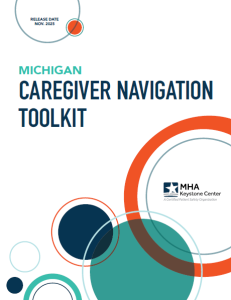
In alignment with National Caregiver Month, the MHA Keystone Center recently created the 2025 Michigan Caregiver Navigation Toolkit to support hospitals in their efforts to initiate and enhance caregiver support programming across the state.

The toolkit allows users to assess current structures to identify gaps and opportunities for improvement in caregiver support. It also provides guidance to create actionable plans for program development and expansion.

Members are encouraged to share the toolkit and accompanying modules with appropriate parties within their organization.

Printed copies of the toolkit are available upon request.

Members with questions may reach out to Joshua Suire at the MHA Keystone Center.

MHA Keystone Center PSO Hosts Virtual Care Safe Table

Registration is open for the MHA Keystone Center Patient Safety Organization (PSO) Virtual Care Safe Table in partnership with Henry Ford Health. The event will take place from 12:30 to 4 p.m. Dec. 3 at the MHA Headquarters in Okemos.

The safe table will introduce virtual care in the healthcare setting and discuss how organizations can use this model to support patient safety through proactive monitoring and early identification of patient deterioration, which can lead to faster clinical interventions and help reduce code blue events. The session will also highlight how virtual care can support bedside teams by completing tasks such as documentation and patient education, allowing in-person staff to remain focused on direct patient care. Examples of improved efficiency and care coordination will be shared throughout the discussion.

At the end of the program, attendees will be able to:

  • Identify opportunities to leverage virtual care to improve healthcare quality and safety.
  • Understand how to coordinate with IT teams to protect data during virtual care activities.
  • Describe methods to maintain safety and quality standards in both in-person and virtual settings.
  • Develop and sustain standardized nursing workflows for virtual care that align with organizational needs.

The safe table is free of charge for MHA Keystone PSO members and lunch is provided.

Chief quality officers, chief safety officers, chief nursing officers, chief medical officers, vice presidents of quality, safety and risk, vice presidents of clinical transformation, directors of quality improvement and directors or managers of patient safety and performance improvement are encouraged to register.

Nursing education credits are being pursued.

Members with questions may contact the MHA Keystone Center PSO.

MHA Keystone Board Reviews Workplace Violence Prevention and Maternal Health Efforts

The MHA Keystone Board of Directors met Nov. 12 to review ongoing work to improve safety and quality across member organizations. The meeting opened with a connect-to-purpose story shared by Keystone Board Chair Doug Dascenzo, DNP, RN, CENP, vice president of nursing operations, Henry Ford Health, which reinforced Keystone’s focus on preventing workplace violence.

The board discussed strategies to address violence in healthcare settings, including clinics and off-site locations. Members reviewed efforts to strengthen policies, training and coordinated approaches that support safer environments for healthcare workers. The discussion emphasized that workplace violence affects staff well-being, patient safety and overall organizational performance.

The board also reviewed maternal health priorities, including the MI AIM program and the framework for maternal levels of care. The overview highlighted how levels of care categorize facilities based on their ability to provide specialized maternal services, ensuring that patients receive appropriate care tailored to their clinical needs.

The board will receive a detailed presentation on Keystone initiatives related to maternal health at a future meeting. The presentation will outline opportunities for board support in advancing work to improve maternal and infant care.

The meeting reaffirmed Keystone’s commitment to addressing critical safety and quality issues through collaborative leadership and continuous improvement.

Members with questions may contact Amy Brown at the MHA.

MHA Keystone Center Annual Report Highlights Safety and Quality Initiatives

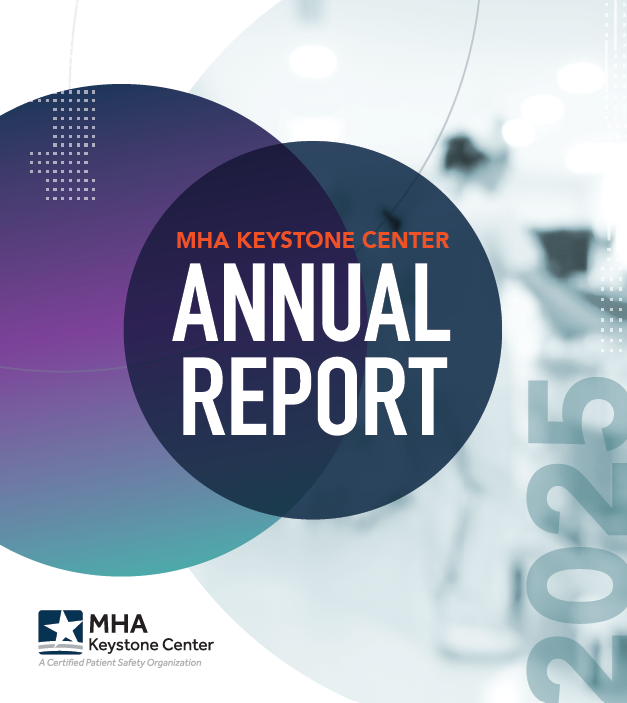
The MHA Keystone Center recently released its 2024-25 annual report, which demonstrates Michigan hospitals’ commitment to improving outcomes and advancing care. The report highlights MHA Keystone Center-led safety and quality initiatives, including:

  • A five-year collaboration with the Centers for Medicare & Medicaid Services (CMS) through Superior Health Quality Alliance, resulting in 268,656 harms avoided, a $1.02B return on investment and a 20% relative improvement rate in hospital readmissions.
  • A partnership with Lawrence Technological University to create the Healthcare Violence Reduction Center to research solutions to healthcare workplace violence.
  • The return of the MHA Keystone Center Safety & Quality Symposium, where more than 100 healthcare professionals convened to share strategies for advancing workforce resilience and patient well-being.

Printed copies are available upon request.

Members with questions about the report should contact the MHA Keystone Center.

Superior Health Recruiting Hospitals, Clinics and Nursing Homes for Quality Improvement Assistance Program

The Superior Health Quality Alliance – a coalition of eight Midwest healthcare quality improvement organizations, including the MHA Keystone Center – is actively recruiting participants for the Centers for Medicare & Medicaid Services (CMS) 13th Scope of Work.

As the CMS Quality Innovation Network – Quality Improvement Organization (QIN-QIO) for the Great Lakes Region, Superior Health will provide no-cost technical assistance to eligible providers in Illinois, Indiana, Michigan, Minnesota, Ohio and Wisconsin. This includes support for chronic disease management, behavioral health integration, patient safety, care coordination and healthcare quality — all aligned with CMS national goals.

Superior Health serves as the bridge between the important goals of the CMS and the unique needs of local communities. Drawing on decades of experience, Superior Health is dedicated to supporting clinics, nursing homes and hospitals by providing premium, hands-on quality improvement assistance to help achieve healthcare quality and safety goals for Medicare beneficiaries.

To access this assistance, complete the enrollment form to begin the enrollment process or reach out to Superior Health for more information.

Strengthening Health Literacy Through Better Communication

Byline: Gary L. Roth, DO, Chief Medical Officer, MHA

In healthcare, words can be as powerful as medicine. A patient’s ability to understand their diagnosis, treatment options or discharge instructions can directly influence their recovery and long-term health. Yet too often, communication between clinical experts and patients is clouded by medical jargon, complex explanations or information overload. Improving how we talk about health both within hospitals, in the clinic, and across our communities is a matter of safety, trust and access to care.

As October draws to a close, Health Literacy Month serves as a vital reminder that clear communication is a cornerstone of safe, high-quality care throughout Michigan’s healthcare community.

Understanding the Health Literacy Gap

Health literacy refers to a person’s ability to find, understand and use health information to make informed decisions. According to national data, nearly nine in 10 adults struggle to fully comprehend medical information shared by providers, prescription labels or public health materials. This gap leads to serious consequences: missed appointments, medication errors, preventable hospitalizations and poorer overall health outcomes.

Clinicians and health organizations tend to use technical language, while patients experience healthcare through a lens shaped by anxiety, uncertainty and varying levels of understanding. When information isn’t communicated clearly, patients and their family may nod in agreement without truly understanding, leaving them at risk once they leave the clinic or hospital.

Making Health Information Easier to Understand

Effective external communication from providers bridges the gap between the clinical world and the public. It translates complex health information into language that is clear, accurate and compassionate. As digital tools and online platforms become more common in care delivery, hospitals and healthcare systems are also rethinking how to present health information in accessible, user-friendly formats that meet patients where they are. Whether through hospital websites, community health campaigns, or discharge instructions and summaries, the goal should always be the same: ensure patients and families can understand what they need to do and why it matters.

Plain language, visuals and real-world examples can make health information easier to understand. Testing materials with actual patients before publication can also reveal confusing wording or gaps. Improving health literacy should not just be the patient’s job. Health systems, clinicians, communicators and policymakers all have a role to play in making information accessible. Statewide initiatives, including resources from the Michigan Department of Health and Human Services and the Michigan State Medical Society, are helping healthcare professionals strengthen health literacy skills and better support patients and families across care settings. Investing in education for health professionals on plain language communication and effective patient engagement will make a difference.

Strengthening Community Health Through Understanding

When patients understand their care, they are more likely to follow treatment plans, ask informed questions and take ownership of their health. When families are also engaged, they can more effectively support the patient. Effective communication builds trust, and trust builds healthier communities.

Across Michigan, hospitals are taking proactive steps to advance health literacy by simplifying patient materials, redesigning discharge instructions and training staff in clear communication techniques. These efforts reflect MHA members’ shared commitment to building understanding as the foundation of safe, high-quality care.

In healthcare, clear communication isn’t just good practice. It’s good medicine.
MI AIM Hosting Regional Quality Improvement Training Sessions in the Fall

The Michigan Alliance for Innovation on Maternal Health (MI AIM) is inviting inpatient clinicians from birthing units across Michigan to its fall regional training sessions.

The half-day trainings will be facilitated by maternal health experts who will share information regarding the national Alliance for Innovation on Maternal Health’s Severe Hypertension in Pregnancy Patient Safety Bundle, including successes and challenges with bundle implementation. The MHA Keystone Center will also provide an overview of region-specific data and MI AIM’s data dashboard.

The content for each event is being tailored to match the unique needs of each Michigan Perinatal Quality Collaborative Prosperity Region.

  • Region 1 – Northern Michigan University, Thursday, Nov. 6
  • Regions 2 & 3 – Kirtland Community College, Grayling, Thursday, Sept. 18
  • Region 4 – UM Health – West, Wednesday, Oct. 16
  • Region 5 – McLaren Bay Region, Wednesday, Oct. 1
    • Please note: This event was originally scheduled for Sept. 30 and has been rescheduled to Oct. 1.
  • Region 6 – Hurley Medical Center, Tuesday, Sept. 23
  • Regions 7 & 8 – Bronson Methodist Hospital, Tuesday, Oct. 21
  • Region 9 – Trinity Health Ann Arbor Hospital, Wednesday, Oct. 22
  • Region 10 – Trinity Health Oakland Hospital, Wednesday, Oct. 29

Members with questions may contact the MHA Keystone Center.

Free Substance Use Disorder Technical Assistance Available

The Michigan Opioid Partnership (MOP) is offering free, tailored technical assistance to help Michigan hospitals and healthcare providers improve care for patients with substance use disorders, whether they are implementing new protocols or strengthening existing ones.

Technical services include:

  • Peer-to-peer consultation with clinical experts.
  • Guidance on integrating peer recovery coaches.
  • Sample tools, templates and implementation resources.
  • Protocol review and feedback.
  • Flexible staff and residency trainings.

Trainings are flexible and can range from 15 to 60 minutes. The MOP team is available to join existing department or team meetings to provide a brief presentation or arrange a more formal standalone training.

MOP also offers online training videos that count toward the DEA 8-hour requirement on the treatment and management of patients with opioid or other substance use disorders.

Members with questions about the Michigan Opioid Partnership and the technical assistance may contact Naomi Rosner at the MHA Keystone Center.


Deadline Approaching to Qualify for MDHHS Maternal Health Quality Payments

Birthing hospitals pursuing the 2025 Michigan Department of Health and Human Services (MDHHS) Maternal Health Quality Payments must meet all requirements by July 31 to receive payments. Eligibility requirements include full participation in the Michigan Alliance for Innovation on Maternal Health (MI AIM) collaborative and The Joint Commission’s Maternal Levels of Care (MLC) Verification Program. Participating birthing hospitals will also have the costs associated with pursing MLC verification covered by the MHA Keystone Center through MDHHS funding.

The quality payments aim to strengthen maternal health quality improvement initiatives at Michigan birthing hospitals. Hospital payments will be based on the number of Medicaid-covered births and the hospital’s maternal morbidity rate. The payments will be released directly through MDHHS Medicaid to eligible birthing hospitals in September.

The MHA Keystone Center continues to offer technical support to all birthing hospitals interested in pursuing the funding. Members with questions should contact Ewa Panetta at the MHA.

Virtual Maternal Health Quality Improvement Courses Available

The Michigan Alliance for Innovation on Maternal Health (MI AIM) is offering virtual modules to support maternal health quality improvement efforts. All obstetric team members at MI AIM participating birthing hospitals are encouraged to complete the courses.

This approximately three-hour series consists of the following three modules:

MI AIM Collaborative Orientation

Focuses on criteria for each program year by highlighting requirements for birthing hospital participation, data collection and reporting, and quality improvement implementation.

MI AIM Data Overview

Walks through the KeyMetrics system, learning how to navigate the pages within the dashboard, filter between hospital, region and state data, and interpret data and graphs.

Fundamentals of Quality Improvement

Provides an exploration of the Quality Improvement Model, the Plan, Do, Study, Act cycle, instructions on conducting a GAP analysis and for crafting SMART goals.

Members with questions may visit the KeyLearnings FAQ page, or contact the MHA Keystone Center.

*Please note: Continuing education credits are not currently available. Participants requiring a certificate of completion should contact the MHA Keystone Center.