
MHA offices will be closed and no formal meetings will be scheduled Nov. 11 in honor of Veterans Day.
MHA offices will be closed and no formal meetings will be scheduled Nov. 11 in honor of Veterans Day.

Below is a summary of the projected results for Michigan’s top races that will influence healthcare following the 2024 General Election. Official state and local outcomes will be available in the coming days on the Michigan Secretary of State website.
Beyond election cycles, the MHA encourages Michiganders to stay informed on state and federal issues and engage with lawmakers on both sides of the aisle. Attend coffee hours, host facility tours and take the time to educate local decision-makers on what issues impact Michigan hospitals, staff, patients, communities and access to care.
For more information regarding election results, contact the MHA advocacy team.

The MHA Health Foundation will host the webinar Implementing Evidence-Informed Strategies to Normalize Help-Seeking and Strengthen Wellbeing from 4:30 to 5:30 p.m. Dec 4 to offer strategies for supporting the mental well-being of healthcare professionals. The webinar offers Continuing Medical Education (CME) and nursing continuing education credits.
Attendees will explore impactful resources provided by the Dr. Lorna Breen Heroes’ Foundation. Stefanie Simmons, MD, chief medical officer, Dr. Lorna Breen Heroes’ Foundation, will outline workplace policies and practices that reduce burnout and normalize help-seeking, including amending credentialing applications to remove mental health questions that are potentially stigmatizing, discriminatory or violating privacy.
Additionally, two Michigan healthcare leaders will share how their team has implemented strategies in the Impact Wellbeing™ Guide to focus on operational-level improvements for resilience.
The webinar is free of charge to MHA members. Members with questions about registration may contact Brenda Carr at the MHA.

The Centers for Medicare & Medicaid Services (CMS) recently released a final rule for the home health (HH) prospective payment system (PPS) for calendar year (CY) 2025. The rule includes updates to the Medicare fee-for-service (FFS) HH PPS payment rates based on changes by the CMS and those previously adopted by the U.S. Congress.
Highlights of the final rule, which takes effect Jan. 1, 2025, include:
The MHA will provide an updated impact analysis in the near future. Members with questions should contact Vickie Kunz at the MHA.

The MHA recently endorsed Alliance-HNI, a longtime MHA associate member, as an Endorsed Business Partner (EBP). Alliance-HNI delivers a full continuum of services, including mobile, fixed-site, comprehensive service line management and joint venture partnerships. The MHA’s EBP program promotes industry-leading firms and connects member hospitals to solutions that alleviate pain points.
Alliance-HNI is a leading provider of outsourced medical services, including radiology and oncology. They are the only Joint Commission-accredited mobile radiology company operating in Michigan and their staff for all modalities is a fully credentialed technical team. Alliance-HNI provides the following exclusive solutions to the market, unavailable through any other provider:
Alliance-HNI currently provides quality clinical services for more than 60 hospitals and healthcare partners in Michigan, including providing services to Eaton Rapids Medical Center.
“Over the years, Eaton Rapids Medical Center’s (ERMC) partnership has grown stronger with Alliance-HNI because of their commitment to our success,” said Tim Johnson, CEO of Eaton Rapids Medical Center. “Being integrated into multiple Alliance-HNI-owned CON networks has been incredibly beneficial. It has allowed ERMC to offer supplementary imaging coverage during system downtimes and manage our backlogs effectively.”
For more information about Alliance-HNI, members may contact Ryan Mysen, territory director of business development at Alliance-HNI, via email or (810) 241-1214. Members seeking information about the MHA’s EBP program may contact Rob Wood at the MHA.

Several bills impacting hospitals were discussed in state committee hearings during the week of Nov. 4.
The Michigan House Health Policy Behavioral Health subcommittee advanced several pieces of legislation to the full Health Policy Committee that intend to increase access to behavioral health services. House Bills (HBs) 5371 and 5372, led by Rep. Felicia Brabec (D-Pittsfield Township) and Rep. Phil Green (R-Watertown Township) adds Certified Community Behavioral Health Clinics (CCBHCs) to the Social Welfare Act and requires the state to adopt a policy that is in alignment with the federal requirements for CCBHCs. The inclusion of CCBHCs in the Social Welfare Act includes a requirement that the Michigan Department of Health and Human Services (MDHHS) develop a prospective payment system for funding in compliance with federal payment policies, submit any necessary waivers to implement payments and requires certification of CCBCs that meet federal requirements. The MHA continues to be involved in the development of CCBHC certification and is working closely with the MDHHS to ensure rules and implementation that improve access to additional behavioral health sites of service in Michigan.
The subcommittee also advanced to the full Health Policy Committee HB 5785 (Rep. Brabec). The bill would change the requirements for individuals pursuing a limited license to practice psychology, including increasing the supervised post graduate experience necessary to practice and allowing individuals granted a limited license the ability to practice independently within their scope.
The Senate Labor Committee received testimony on Senate Bills 962 (Sen. Cherry), 975 (Sen. Singh), 976 (Sen. Cherry) and 981 (Sen. Cavanagh), which would modernize the state’s unemployment insurance practices. The legislation makes several changes at the request of the Unemployment Insurance Agency, as well as stakeholders, including the MHA. The changes adopted and discussed include requests from the MHA to address issues identified by hospital employers, concerns identified by employee groups and updates to the state law that address recent court interpretations. The committee did not take a vote on the bills, as a second hearing is anticipated.
Members with questions on state legislation can reach out to Elizabeth Kutter at the MHA.
The Centers for Medicare & Medicaid Services (CMS) recently released a final rule to update the Medicare fee-for-service outpatient prospective payment system (OPPS) effective Jan. 1, 2025.
The final rule:
The MHA will provide an updated hospital-specific impact analysis within the next few weeks and encourages hospitals to contact Vickie Kunz with questions regarding the final rule.
The general election is Tuesday, Nov. 5. Polls open at 7 a.m. and close at 8 p.m. Voters in line at 8 p.m. can still cast ballots. The MHA strongly encourages voter participation, knowing those elected will set the stage for critical healthcare policy decisions for Michigan and the nation in the years ahead. For more information, candidate info or election resources, visit the MHA Elections webpage.
 Behavioral Health Bills Advance, Other Bills Discussed in State Legislature
Several bills impacting healthcare and hospitals were advanced through committees in the state Senate during the week of Oct. 28. The Senate Health Policy Committee unanimously approved Senate Bills (SB) 916 – 918, led by Sen. …
The MHA Legislative Policy Panel held their first meeting of the MHA program year at the MHA Capital Advocacy Center Oct. 30 to develop recommendations on legislative issues impacting Michigan hospitals. Chad Tuttle, SVP, clinical …
The MHA Service Corporation (MHASC) board met Oct. 24 to discuss healthcare market strategies to identify, diversify and grow solutions for MHA members and clients. The board retreat focused on how the MHASC can support …
Webinar Recap: Special Pathogen Response Systems of CareThe MHA hosted a webinar Oct. 23 overviewing the National Special Pathogen System (NSPS) of care. The NSPS is a tiered system with four facility levels that have increasing capabilities to care for suspected …
MHA Shares September Medicare and Medicaid Enrollment AnalysisThe MHA updated its analysis of Medicaid and Medicare enrollment based on September 2024 data. The analysis includes program enrollment as a percentage of each county’s total population and the split between fee-for-service and …
Webinar Explores AI Policy and Strategy for Boards and LeadersThe MHA will host the webinar How Boards and Leaders Can Deploy AI Responsibly and Ethically, scheduled 4:30 – 6 p.m. ET, Dec. 3. The webinar will cover a framework to govern the approach, policies and procedures …
 Looking to 2025: The Stop-Gap Actions likely on Healthcare’s 8 Most Urgent Issues
“Last week, I wrote about three predictions for healthcare regardless of next week’s the election results:
As these play out, eight major issues will get attention vis a vis stop-gap measures reflecting regulator and elected officials’ responsiveness to industry pressure and voter sentiment …
These issues are not new to healthcare: they’ve prompted endless symposia, sponsored white papers and discussion by trade associations, special interests and think tanks offering solutions beneficial to preserving their view of what’s needed. What’s new is the public’s distaste for the status quo in healthcare: in every major poll conducted since the pandemic, trust and confidence in the health system has been low and majorities have said the status quo is unsatisfactory.
Thus, stop-gap measures serve two purposes: they enable elected officials and government agency personnel to demonstrate responsiveness to important issues and they provide foundations for additional rules, laws and actions downstream. They’re a start.”
News to Know The general election is Tuesday, Nov. 5. Polls open at 7 a.m. and close at 8 p.m. Voters in line at 8 p.m. can still cast ballots. The MHA strongly encourages voter participation, knowing those …
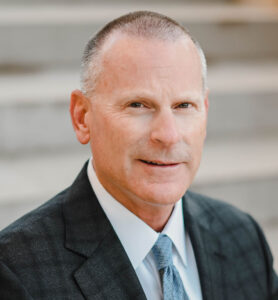
Becker’s Hospital Review published an article Oct. 31 that includes responses from MHA CEO Brian Peters and other MHA members. Becker’s asked C-suite executives from hospitals and health systems across the U.S. to share their …
Several bills impacting healthcare and hospitals were advanced through committees in the state Senate during the week of Oct. 28.
The Senate Health Policy Committee unanimously approved Senate Bills (SB) 916 – 918, led by Sen. Hertel (D-Saint Clair Shores). The bills would expand the availability of Assisted Outpatient Treatment (AOT) in Michigan. AOT has been proven to decrease the number of individuals involved in the criminal justice system with behavioral health needs and can decrease the pressure on emergency departments for issues related to behavioral health. The bills expand the healthcare providers eligible to provide testimony for AOT and adds a new mechanism to divert individuals charged with misdemeanor offenses to AOT. The MHA supports the legislation as it awaits a vote of the full Senate.
Additionally, the Senate Regulatory Reform Committee took testimony on Senate Bills 651 – 654, led by Sen. Singh (D-East Lansing). The bills are spearheaded by the Keep Michigan Kids Tobacco Free Alliance and would create new licensing for establishments that sell tobacco products while enhancing the penalties on those retailers for selling to individuals under age 21. The legislation also removes punitive penalties on youth to reduce barriers for those who are seeking help for nicotine addiction. The MHA supports the legislation to improve Michigan’s public health as it awaits a vote of the committee.
Members with questions on state legislation can contact Elizabeth Kutter at the MHA.