
Healthcare Leaders Convene for the Return of the MHA Keystone Center Safety & Quality Symposium

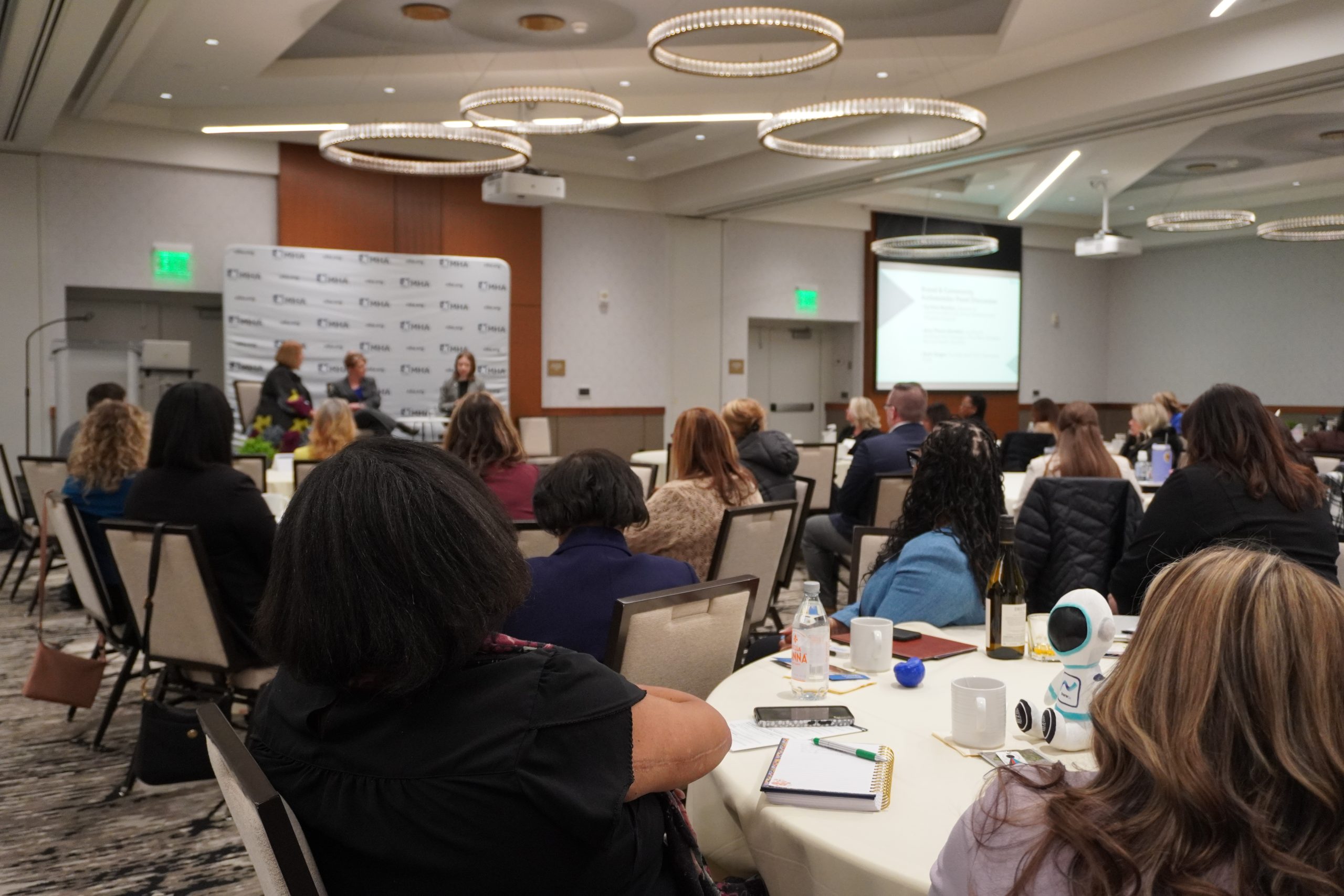
MHA Safety & Quality Symposium April 28 and 29 at the Kellogg Center in East Lansing, MI. 

More than 100 healthcare professionals gathered April 28 and 29 in East Lansing for the return of the MHA Keystone Center Safety & Quality Symposium. Attendees included individuals across the continuum of care including quality, safety and risk professionals, healthcare executives and person and family advocates who engaged in two days of sessions and dialogue focused on today’s most pressing issues.

Keynote speakers included Gerald B. Hickson, MD, founding director, Vanderbilt Health Center for Patient and Professional Advocacy and current chair of the Institute for Healthcare Improvement. Hickson spoke on building systems that model respect while supporting safety and high-quality care. Steven Berkowitz, MD, founder and president, SBM Healthcare Consulting, shared insights on the growing role of artificial intelligence in healthcare, emphasizing the importance of approaching it with both enthusiasm and caution.

Breakout sessions over the day and a half event, addressed a range of topics including preparing for cyberattack-related downtimes, normalizing help-seeking to support workforce well-being, enhancing physical and situational security, strengthening caregiver support and improving access to care. The MHA Keystone Center Symposium also included the reveal of the 2025 Advancing Safe Care Award recipient.

MHA Endorsed Business Partner Tarian, led a Threat Assessment Workshop reviewing behavioral assessment models, techniques for recognizing people of concern, threats through formal and informal communication and how to counter potentially violent actions.

The event was sponsored by HPS with exhibitors from ERC Risk Solutions, i2G Systems, MED Alliance Group Inc., ModusOne Health, Novo Nordisk, Tarian and TruMed Systems.

Members with questions should contact the MHA Keystone Center.

Michigan HR Professionals Gather at the MHA Human Resources Conference

MHA Human Resources Conference March 25, 2025 at the Crowne Plaza Hotel in Lansing.

More than 100 healthcare human resources (HR) professionals from across the state gathered at the MHA Human Resources Conference March 25 in Lansing. Attendees participated in small group discussions that developed innovative ideas focused on workplace culture and community partnerships. The conference provided a valuable opportunity for attendees to network, listen, learn and collaborate on solutions to the challenges facing Michigan hospitals and health systems.

Attendees engaged in remarks from The Advisory Board on how Michigan hospitals can reimagine the clinical care team responsibilities by leveraging technology to deploy AI tools to collect vital signs and system integration with electronic medical records to automate charting. This gives time back to the workforce, optimizes care workflows and empowers the care team.

The MHA values the presence and participation of sponsors of the HR Conference, whose support strengthened the impact of the event. Sponsors were represented by a variety of companies and organizations involved in the workforce solutions space, including AMN Healthcare, Brogan, Executive Core, LLC, HPS, Michigan Academy of Physician Associates, Michigan Health Council, Salary.com, Vault Verify and Western Governors University.

Members with questions should contact Erica Leyko at the MHA.

MHA CEO Report — Prioritizing our Workforce

MHA Rounds image of Brian Peters

“When people are financially invested, they want a return. When people are emotionally invested, they want to contribute.” – Simon Sinek 

Workforce Support and Innovation is the top priority for the MHA this program year, as identified by our board of trustees and echoed by every member hospital and health system throughout the state. This should come as no surprise, as few sectors of our Michigan economy have been more challenged in this regard. I am proud to say the MHA has tackled this challenge head-on, using every tool in our increasingly diverse association toolbox.

For our members, we know delivering exceptional care begins with hiring, developing and retaining quality talent. We also know that the demographic realities of an aging population and the associated retirements, rising stress and burnout, and increased rates of violence against healthcare workers are all contributing to retention challenges and staffing shortages. Finally, as with any daunting issue, we know the best way for us to be helpful to our members is to first tap their expertise, letting them share the details of their day-to-day experience so we can identify the most impactful solutions both inside and outside of the public policy domain. In short, we listen.

Through our MHA Human Resources & Workforce Council, we convene our HR professionals to discuss issues such as workforce development, the education and training pipeline, diversity, equity and inclusion efforts, workplace safety, and emerging technologies that can aid in the completion of clinical and non-clinical tasks. The council generates robust information sharing on best practices, as well as discussion on HR-related legislative and regulatory proposals at the state and federal level.

Our work with this council does not occur in a vacuum but is instead complemented by our continual engagement with MHA committees, councils and task forces that include chief medical officers, chief nursing officers, hospital and health system attorneys and government affairs leaders. So, what have we accomplished to date? The list is long and impressive. Just a few examples:

  • Over the past two state budget cycles, we secured $300 million in new funding for our member hospitals for the specific purpose of workforce recruitment and retention.
  • We launched the new MI Hospital Careers campaign, which has helped to shine a light on hospitals and healthcare as a viable career path for Michiganders. We also continue to partner with state universities and community colleges to ramp up health-related training programs.
  • We successfully advocated for Public Acts 271 and 272 of 2023, recently signed by Gov. Whitmer, which increase the penalties for violence committed towards healthcare workers or volunteers.
  • Our MHA Keystone Center launched the Well-B workforce well-being initiative, which has now reached thousands of hospital workers and is contributing to enhanced resiliency of our front-line caregivers.
  • Our MHA Graphic Services division designed and produced workplace safety posters, which are now prominently displayed in hospitals throughout Michigan.
  • The MHA is hosting our annual Human Resources Conference this month, which brings together chief human resource officers and leaders to collaborate, strategize and network. The conference is headlined by Kerry Ebersole Singh, the chief talent solutions & engagement officer at the Michigan Economic Development Corporation. Her presence confirms the MEDC’s recognition of the significant role healthcare plays in our state’s labor force and economic success – a fact we annually lift up in our Economic Impact of Healthcare report.
  • The MHA Service Corporation (MHASC) plays a vital role in this realm. Our HR Conference is sponsored by MHA Endorsed Business Partners AMN Healthcare and Salary.com (as well as MHA members Executive Core and HPS, and event sponsor Vault Verify), who are all involved in the workforce solutions space. The MHASC is working with partners who assist hospitals with de-escalation training and staff safety, virtual nursing programs and other emerging technologies, and more.
  • The MHASC is crucial to our work here in yet another way. The MHA Unemployment Compensation Program has a decades-long track record of success, saving millions of dollars every year for their more than 700 clients.

Everything listed is an example of proactive, positive activity. In other words, “playing offense.” Of course, one of our most significant activities in the workforce realm is an example of “playing defense” by ensuring government mandated nurse staffing ratio legislation that would significantly jeopardize patient access to care is not advanced by the state legislature. As discussed at length in a recent CEO Report, the MHA has worked very effectively to explain the complexity associated with hospital staffing and the tangible solutions that will actually address workforce shortages.

There is no silver bullet to solving healthcare’s workforce challenges. Michigan’s population is not growing and there are many market forces at play unique to healthcare. However, I’m extremely pleased by the work our own MHA staff has put forth to best position our members to achieve our workforce goals. And it couldn’t be done without the engagement from our colleagues in hospitals throughout the state who are doing all they can to ensure access to high quality care 24/7/365. Collectively, these are people who are clearly emotionally invested and making significant contributions to this worthy cause.

As always, I welcome your thoughts.