
Obtaining Beyfortus through the Vaccines for Children Program

Vaccination remains a key strategy to mitigate the impact of adverse health outcomes on patients and hospital operations during the 2024-2025 respiratory season. The MHA urges all birthing hospitals to become Vaccines for Children (VFC) specialty providers to offer Beyfortus and expand access to eligible patients ahead of the upcoming respiratory season.

Beyfortus was approved by the FDA in July 2023 for preventing RSV lower respiratory tract disease in infants. Hospitals can acquire Beyfortus through direct/private purchase or through the VFC program. However, doses obtained through the VFC program can only be administered to patients who are eligible for the VFC program.

Birthing hospitals must become a VFC enrolled provider to order Beyfortus through the program. While there are three different types of VFC participation, only two allow for administration of Beyfortus:

  1. VFC Provider (providing all ACIP recommended vaccines)
  2. VFC Specialty Provider (providing Hepatitis B & Beyfortus only)
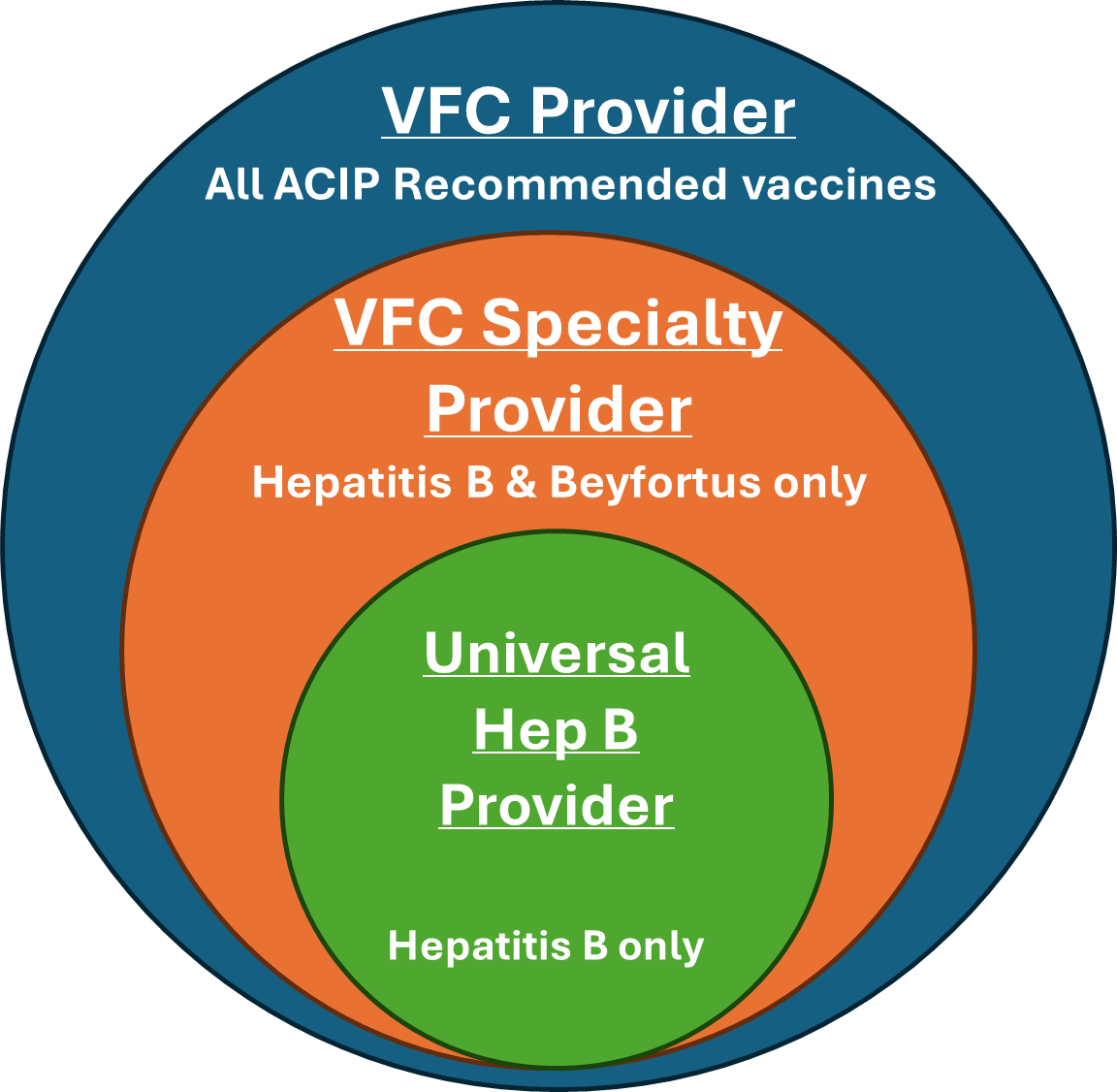
The Michigan Department of Health and Human Services (MDHHS) and the Centers for Disease Control are encouraging all birthing hospitals to become a VFC Specialty Provider to protect Michigan infants against Hepatitis B and RSV. The process to become a VFC Specialty Provider differs slightly, depending on if a hospital is participating with the VFC as a Universal Hepatitis B Provider or not at all.

The steps in the graphic below outline how birthing hospitals can become a VFC Specialty Provider:

1 – MDHHS has created a Beyfortus Eligibility Tool to help birthing facilities with this process. Use of the tool is optional, however if it is used, it should be noted in the Eligibility Screening Plan in step two.
2 – Facilities should complete the Eligibility Screening Plan and submit it to the local health department.

Members with questions may contact Kelsey Ostergren at the MHA. Questions related to VFC program enrollment can be directed to the MDHHS Division of Immunizations.

Baxter IV Solutions Shortage Updates

The MHA continues to support Michigan hospitals in response to the Baxter IV solutions shortage that began the week of Sept. 29. Baxter International Inc. temporarily closed its North Cove manufacturing plant in Marion, N.C., due to flooding caused by Hurricane Helene. As the largest IV solutions plant in the country, North Cove produces 1.5 million bags of IV solution per day and supplies 60% of the nation’s IV solutions, including critical products like saline, sterile water and peritoneal dialysis solutions.

The MHA continues to hold discussions with healthcare leaders across the state to address the ongoing shortage. These conversations allow hospitals to share insights on supply challenges and explore collaborative strategies for managing the shortage. The MHA continues to gather feedback from its members to advocate for solutions and provide updates on the evolving situation.

Baxter announced it is increasing allocation levels of its highest demand IV fluids for direct customers and distributors to 60%, effective Oct. 9. Baxter is also increasing allocation levels for high-concentration dextrose and sterile water and expects to make additional increases for certain products by early November.

The FDA issued a release Oct. 9 sharing information on temporary importation sources to help mitigate shortages for specific products. The release contains information on 19 products, with imports from Canada, China, Ireland and the UK.

The Baxter Hurricane Helene webpage continues to serve as a single source of information, providing the latest company updates about allocation plans. Updates will be provided on Mondays and Thursdays. Members are encouraged to contact Baxter for questions related to the IV solution situation, particularly if they are in dire need of product. The American Hospital Association is also maintaining a Baxter resource webpage too.

The MHA encourages Michigan residents to consult with their healthcare providers for updates on the shortage and its impact on hospital operations in their area.

Members with questions should contact Laura Appel at the MHA.

Paxlovid Emergency Use Authorization Ends March 8

The U.S. Food and Drug Administration (FDA) updated the Paxlovid Emergency Use Authorization (EUA), allowing Paxlovid that is currently in U.S. distribution to remain authorized for use through the labeled or extended expiration date, or until March 8, 2024, whichever comes first. EUA-labeled Paxlovid will no longer be authorized for emergency use after March 8.

The Paxlovid EUA will continue to authorize emergency use of Paxlovid manufactured and labeled in accordance with New Drug Application (NDA-labeled Paxlovid) for treating mild-to-moderate COVID-19 in high-risk pediatric patients (12 years of age and older) who are at high risk for progression to severe COVID-19.

Pharmacies may continue to dispense unexpired EUA-labeled Paxlovid through March 8. Any expired EUA-labeled Paxlovid and/or unused EUA-labeled Paxlovid remaining after March 8, must be returned to the manufacturer, or disposed of in accordance with federal, state and local regulations.

Patients with Paxlovid prescriptions will receive either EUA-labeled or NDA-labeled Paxlovid until March 8. After that, patients will receive NDA-labeled Paxlovid. More information about the difference in packaging between EUA-labeled and NDA-labeled Paxlovid is available on the FDA website.

Eligible patients can receive free Paxlovid through the PAXCESS Program until Dec. 31, 2024.

Members with questions  may contact Kelsey Ostergren at the MHA.