MHA Monday Report Dec. 15, 2025

Unemployment Benefit Waiver Bill Clears Senate; International Physician Legislation Advances

Legislation to waive the collection of improper unemployment benefits cleared the Michigan Senate in a unanimous vote, while bills creating a new pathway for internationally educated physicians advanced in the House during the week of …


2026 MHA Healthcare Leadership Academy Registration Now Open

The MHA is pleased to offer its popular Healthcare Leadership Academy in 2026. In partnership with Executive Core, two power-packed modules in February and May will feature leadership 360 feedback with personalized executive coaching, the …


Survey Seeks Insights on Rural Veterans’ Healthcare Needs

A needs assessment survey supported by the Michigan Center for Rural Health, the Improving Veterans Access to Healthcare and the Frontier Veterans program is seeking to identify the needs of veterans and their providers in …


MDHHS Launches 2025 Customer Satisfaction Survey for Public Health Laboratory Partners

The Michigan Department of Health and Human Services (MDHHS) Bureau of Laboratories is inviting public health partners to complete the 2025 Customer Satisfaction Survey by Dec. 31, 2025, to gather feedback that will help improve statewide …


Building Trust and Access to Key Services Addressed by MHA Health Access & Community Impact Council

The MHA Health Access & Community Impact Council held its second meeting of the program year Dec. 4, diving into priority areas outlined in the 2025-26 MHA Strategic Action Plan. Guided by co-chairs Jeremy Cannon, …


Members of the Henry Ford Health Doula Program team.

Hospitals Help: Henry Ford Health’s Hospital-Based Doula Program

To help address the alarming rate of maternal and infant mortality, Detroit-based Henry Ford Health established a hospital-based doula program in 2024 that makes a trained professional available to provide emotional, physical and educational support …


Keckley Report

Health system transformation: why outsiders want it and insiders resist

“Key Takeaways:

  • A challenging economic climate means continuing health industry profitability is unlikely.  
  • The majority of Americans want systemic changes the system’s insiders resist.
  • Longterm, inattention to structural flaws will result in an inadequate public utility that serves all but a few that can afford more. …

As a result, the health industry’s become an enemy to the population it’s pledged to serve. Institutional distrust for government, organized religion and big business now includes the health system, especially among young Americans. …”

Paul Keckley, Dec. 7, 2025


News to Know

MHA Endorsed Business Partner CorroHealth is offering an opportunity to help members get ahead of 2026 budget pressures in coding and clinical documentation improvement.


MHA in the News

Common Ground published a story Dec. 9 on the behavioral health collaborative that the MHA has launched to address postpartum depression and perinatal mood disorders. Lauren LaPine-Ray, vice president, policy and rural health, MHA, is …

Building Trust and Access to Key Services Addressed by MHA Health Access & Community Impact Council

The MHA Health Access & Community Impact Council held its second meeting of the program year Dec. 4, diving into priority areas outlined in the 2025-26 MHA Strategic Action Plan.

Guided by co-chairs Jeremy Cannon, vice president and chief nursing officer at Kalkaska Memorial Health Center; and Sharon O’Leary, chief health equity officer and medical director of Michigan Data Analytics at Trinity Health Michigan, the meeting opened with council member storyboard profiles highlighting organizational activities and programs focused on improving community health:

  • No Wrong Door: Mobilizing Michigan for Coverage – Chiquita Berg, MD, vice president, community health and well-being, shared the Trinity Health Michigan-led initiative, a coordinated statewide approach that leverages community touchpoints to support and protect Medicaid coverage.
  • Building Engagement & Community Trust – Kyrsten Newlon, director, communications & donor development, Hillsdale Hospital, highlighted communication channels and strategies used to connect with the community – build trust, combat misinformation and raise awareness of obstacles and unique circumstances faced by rural hospitals and providers.

MHA staff provided updates on association level initiatives closely linked to focus areas of the council, including:

  • The MHA’s communication and marketing strategy supporting the program year’s Strategic Action Plan.
  • An overview of association-level data sources aimed at identifying strengths and opportunities for improving data integration and building a more comprehensive understanding of regional and community health needs.
  • Recap of federal and state policies impacting health and healthcare sectors including H.R.1 impacts to Michigan, Medicaid workforce requirements and redeterminations, state budget recap and medical debt legislation.

As part of the meeting’s deep dive, council members reviewed progress of member-led workgroups established under the council’s guidance. These workgroups are developing a roadmap for scalable implementation of key strategies to advance community health across four areas: Access, Quality Improvement, Patient Experience and Community Alliance, and Care Integration. Members also engaged in sharing strategies and updates on creating resilient and adaptive regional food systems and coordinated response networks to address ongoing community needs. This discussion built on the Nov. 24 MHA Health Access & Community Impact Office Hours session featuring 211 and its role in connecting individuals with essential community services.

For more information on the MHA Council on Health Access & Community Impact, contact Ewa Panetta, director of community health impact and engagement at the MHA.

Survey Seeks Insights on Rural Veterans’ Healthcare Needs

A needs assessment survey supported by the Michigan Center for Rural Health, the Improving Veterans Access to Healthcare and the Frontier Veterans program is seeking to identify the needs of veterans and their providers in rural communities. The effort aims to improve rural enrollment, access and health for veterans and their caregivers, with a key focus on strengthening the capacity of critical access hospitals and other rural healthcare organizations to better serve rural and underserved Veterans.

Members across rural regions are encouraged to complete the brief survey by Jan. 1, 2026. Survey questions are geared toward clinicians, billing staff, community health workers, social workers, referral navigators and quality management professionals representing rural areas.

Members with questions may contact Ewa Panetta, director of community health impact and engagement at the MHA.

MHA Monday Report Dec. 8, 2025

Stop the Bleed Legislation Advances, Preadmission Screening Bill Introduced

Legislation protecting good Samaritans who apply bleeding-control techniques passed the Senate Civil Rights, Judiciary and Public Safety Committee, while a bill modifying timeline requirements for preadmission screening assessments of Medicaid patients was introduced during the …


CMS Releases 2026 Home Health PPS Final Rule

The Centers for Medicare & Medicaid Services (CMS) recently released a final rule updating the home health prospective payment system (PPS) for calendar year 2026. Highlights of the rule include: An updated 30-day …


MDHHS Launches RHTP Listserv to Share Program Updates

The Michigan Department of Health and Human Services (MDHHS) recently launched a Rural Health Transformation Program (RHTP) listserv to provide timely updates, announcements and resources related to the state’s implementation of the program. Hospitals, health …


Health Access & Community Impact Office Hours Launch

The MHA Health Access & Community Impact Office Hours series kicked off Nov. 24 with a session highlighting 211 and its role in addressing food access amid ongoing challenges related to food insecurity. Sarah Kile, …


Nominations Open for 2026 Michigan Hometown Health Hero Awards

The Michigan Public Health Week Partnership, a coalition of 13 statewide organizations that include the MHA, is seeking nominations by Friday, Dec. 19, for individuals and organizations that have contributed to improving the health and …


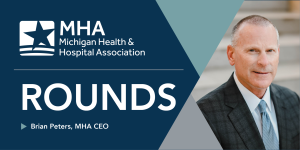
MHA Rounds graphic of Brian PetersMHA CEO Report — Dedicated to Care Every Day of the Year

During the holiday season, we look forward to annual traditions and time spent with loved ones. While many of us gather around our tables this season, we are all aware of individuals who sacrifice this special time …


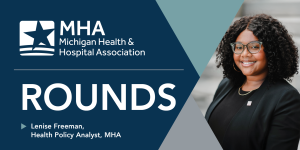
Centering Lived Experiences to Improve Maternal Care: Reflections from the Birth Experience Project

Over the past year, I supported the Birth Experience Project, a mixed-methods study examining how Black women across Michigan experience pregnancy, labor and delivery, and postpartum care. As part of this effort, I assisted in analyzing …


Keckley Report

The 10 Healthcare Headlines you Might See in 2026

“2026 is a mid-term election year. In 2016 (Trump 45 Year One), Republicans controlled 31 governorships and 68 legislative chambers. This January, the GOP will control 26 governorships and 57 legislative chambers– a 15% reduction on both. Politics is divided, affordability matters most to voters and healthcare is a high-profile target for campaigns so humility, thoughtful messaging backed by demonstrable actions will be an imperative for every healthcare organization.

2026 is a HUGE year for U.S. healthcare. The outcome is unknown.”

Paul Keckley, Nov. 23, 2025

Health Access & Community Impact Office Hours Launch

The MHA Health Access & Community Impact Office Hours series kicked off Nov. 24 with a session highlighting 211 and its role in addressing food access amid ongoing challenges related to food insecurity. Sarah Kile, director of community and partner engagement, Michigan 211, provided an overview of the 211 system, available outreach tools and what hospitals can expect when coordinating with 211 on regional needs.

The session also included remarks from the Food Bank Council of Michigan, which provides regional food bank coordination, resource management, data trend tracking and direct support, including assistance with applying for the Supplemental Nutrition Assistance Program through its statewide helpline at 1-888-544-8773.

The MHA is working to schedule a follow-up session with 211 that will highlight regional data collected from recent calls, which have seen a 200% increase in the last few weeks.

Session slides, the recording and key resources are available on the MHA Member Forum. The office hours series supports hospital teams working to better connect healthcare and community services by sharing strategies, exchanging insights and collaborating on issues affecting community health.

Members with questions may contact Ewa Panetta at the MHA.


Honoring Veterans Through Improved Access & Care Coordination

When observing Veterans Day, it’s important to recognize how healthcare organizations can meaningfully work together to improve health outcomes and address the unique needs of service members and their families.

The Battle Fought at Home

Veterans and active duty service members often return home and face challenges that directly impact their overall health and wellbeing. Faced with navigating fragmented healthcare systems while battling mental health struggles, physical injuries and/or chronic health issues – some of the most common including post-traumatic stress disorder, anxiety, depression, substance use disorder, suicidal ideation, chronic pain and traumatic brain injuries. With this in mind, advocates are calling for recognition of military service as a health indicator considering the profound impact service experience and environments can have.

While Veterans Affairs (VA) healthcare systems serve an important and specific purpose, approximately 50% of veterans seek medica care from non-VA facilities and less than 50% are connected to all of their earned benefits. Knowing this, health systems must work to improve identification and recognition of military service through integration of screening within electronic health records and coordination of care across VA and non-VA healthcare facilities.

Identifying & Supporting Veterans

Connecting veterans with the right resources starts with asking the right questions and understanding what resources exist across local communities.

  • Words Matter: “Have you or has someone close to you ever served in the military?” is the recommended screening question, as not all service members to identify as “veterans.” It also helps identify spouses and/or caregivers who may need access to resources or benefits of their own. Resource spotlight: Michigan Center for Rural Health I-REACH (Improving Veterans Access to Healthcare).
  • Integrate Standard Screening Tools: To ensure providers are asking the right questions, standardize the screening process for medical and social needs to ensure healthcare teams are equipped with an understanding of what signs and symptoms may indicate a service-related injury or health concern. Resource spotlight: PRAPARE.
  • Don’t Stop at Identification: Build awareness and education within the organization around best practices for providing care to veterans and service members. Staff trainings, local community partnerships and fostering strong relationships with local VA hospitals and networks can help connect patients to the necessary resources. Resource spotlight: Veteran Interoperability Pledge.

Additional Resources

Michigan hospitals are committed to serving the unique needs of all communities, including veterans. This is often demonstrated through tailored patient care, clinical research, strategic community benefit investments, financial assistance and tailored healthcare career pathways. Michigan hospitals have also joined the MHA in supporting legislation like the Veterans Comprehensive Prevention, Access to Care and Treatment (COMPACT) Act of 2020, which allows eligible veterans to receive emergent suicide care in any VA or non-VA facility at no cost.

The Michigan Veterans Affairs Agency and initiatives like the Michigan Center for Rural Health I-REACH (Improving Veterans Access to Healthcare) are additional resources to consider when looking to connect veterans and their families to lifesaving services and support.

Members with questions about resources and networks supporting service members are encouraged to contact Ewa Panetta, MHA.

FBCM Hosts Inaugural Michigan Food as Medicine Summit

The Food Bank Council of Michigan (FBCM) brought together over 250 healthcare, community organization, government and other key industry leaders for the state’s inaugural Food as Medicine Summit. The two-day event aimed to build cross-sector coalitions and collective investment.

The MHA served as the platinum sponsor of the event, supporting representation of impactful Food is Medicine (FIM) programs, investments and partnerships led by Michigan hospitals. Improving access to nutritious food as a form of medicine is a strategic priority for the association, aligning with its mission to invest in the health and well-being of Michigan communities.

FIM interventions are gaining national attention as an effective approach to prevent and manage chronic diseases and address food insecurity, which contribute to poor health outcomes and rising healthcare costs. The following data highlights the importance of continued investment to scale FIM interventions:

  • Approximately one million Americans die each year from diet-related diseases, driving $1.1 trillion in healthcare costs — the same amount the country spends on food.
  • 90% of the $4.9 trillion the nation spends on healthcare goes to the management of chronic diseases.
  • Michigan has among the highest rates of chronic diseases linked to poor nutrition, including diabetes, high blood pressure and heart disease. Only one in 10 Michiganders consume the recommended amount of nutritious food, often impacted by lack of access to affordable options.

Although federal Medicaid spending cuts have impacted flexibility in Medicaid rules allowing states to cover services beyond traditional medications and therapies, the Michigan Department of Health and Human Services has implemented the In Lieu of Services provision, which allows Medicaid to pay for food and nutrition services that improve health.

Key takeaways from the summit include:

Design in Partnership with Community

FIM interventions vary in scope and should reflect community needs, assets and partnership. Although implementation guidance for healthcare settings remains limited, organizations can work with community stakeholders to initiate essential FIM interventions. The U.S. Department of Health and Human Services offers a virtual toolkit with resources on community design and implementation strategies.

Integration is Key

As with other interventions and programs, investing in operational infrastructure is both challenging and a critical component to successfully implement FIM programs in healthcare settings. Common healthcare challenges include lack of electronic medical record integration for screening, referring and tracking FIM outcomes. At the community level, lack of standardized screening tools and closed-loop referral systems affects patient participation, follow-up, alignment with community stakeholders and outcome data tracking. A 2024 narrative review outlines the exploration, preparation, implementation and sustainment framework and checklist to guide improvements in FIM implementation for healthcare organizations.

Members with questions about the summit or opportunities to engage in FIM interventions may contact Ewa Panetta at the MHA.

Deadline Approaching to Qualify for MDHHS Maternal Health Quality Payments

Birthing hospitals pursuing the 2025 Michigan Department of Health and Human Services (MDHHS) Maternal Health Quality Payments must meet all requirements by July 31 to receive payments. Eligibility requirements include full participation in the Michigan Alliance for Innovation on Maternal Health (MI AIM) collaborative and The Joint Commission’s Maternal Levels of Care (MLC) Verification Program. Participating birthing hospitals will also have the costs associated with pursing MLC verification covered by the MHA Keystone Center through MDHHS funding.

The quality payments aim to strengthen maternal health quality improvement initiatives at Michigan birthing hospitals. Hospital payments will be based on the number of Medicaid-covered births and the hospital’s maternal morbidity rate. The payments will be released directly through MDHHS Medicaid to eligible birthing hospitals in September.

The MHA Keystone Center continues to offer technical support to all birthing hospitals interested in pursuing the funding. Members with questions should contact Ewa Panetta at the MHA.

MHA Monday Report Jan. 20, 2025

House Committee Advances Earned Sick Time Act Changes

The House Select Committee on Protecting Michigan Employees and Small Businesses voted unanimously to report House Bill 4002 during the week of Jan.13. The bill, introduced by Rep. Jay DeBoyer (R-Clay), makes important clarifications …


2024 MHA Community Impact ReportReport: Michigan Hospital Programming, Investments Improve Health and Well-being of Residents

The MHA released the 2024 Community Impact Report Jan. 13 highlighting how Michigan hospitals are strengthening the healthcare workforce, enhancing access to care and building community health and wellness. This report …


Workforce Webinars Available for MHA Members

The MHA is pleased to announce a series of upcoming free webinars addressing healthcare workforce issues that leverage the expertise of MHA Endorsed Business Partners to provide guidance and thought leadership for members. Registration …


mha advancing safe care awardDeadline Approaching for Advancing Safe Care Award

The MHA is currently accepting nominations for its annual Advancing Safe Care Award, which recognizes hospitals that tackle issues daily to make care safer and more dependable. Eligible nominees include teams from hospitals across the …


Newly Expanded Mobile Crisis Services Grant Application Opens

The Michigan Department of Health and Human Services recently announced a new grant opportunity to expand mobile crisis intervention services across the state. The expansion of mobile crisis services aims to increase access to …


MHA Webinar Promoting Effective Peer Recovery Coaching Programs

The MHA will host a webinar Building Effective Peer Recovery Coaching Programs in Hospitals Feb. 12 from 8:30 to 9:30 a.m. to help hospitals create hospital-based peer recovery coach programs, providing background information and …


Latest AHA Trustee Insights Outlines Trends for Industry and Governance

The January edition of Trustee Insights, the monthly digital package from the American Hospital Association (AHA), highlights the podcasts, videos, webinar and other resources available on today’s most pressing issues. The AHA released its 2025 Environmental …


Advancing Community Access to Health for All

Advancing community access to health for all Michiganders is a key focus of Gov. Whitmer and the Michigan Department of Health and Human Services, as Gov. Whitmer declared January Social Determinants of Health (SDOH) Month. …


Keckley Report

Reality Check: Is Private Equity Ownership of Hospitals the Problem?

Last week, the Senate Budget Committee released a 171-page staff report about private equity (PE) ownership of hospitals—its second in two years. This report focused on Apollo Global Management’s ownership of Brentwood, Tennessee-based Lifepoint Health, which runs the Ottumwa Regional Health Center in Iowa, and Leonard Green’s ownership of Los Angeles-based Prospect Medical, which has two Rhode Island hospitals in its portfolio. …

Attention to PE ownership of hospitals by the Senate Budget Committee is notable because it’s Bipartisan and part of a larger effort in Congress to rein in hospitals.  It’s understandable: hospitals account for 31% total healthcare spending—the biggest piece. Concern about healthcare affordability is increasing and trust in the U.S. system is sinking. Per Gallup, NORC, Pew and KFF polls, the majority of Americans are dissatisfied with the medical system and believe profit incentives are more important to insurers and hospitals than patient care. …

PE ownership is not the issue: how hospitals operate, how hospital services are designed and delivered to address clinical innovation and whole person care, and how they’re funded as many shift from traditional hospital to integrated systems of health. …

Paul Keckley, Jan. 13, 2025


News to Know

MHA offices will be closed, and no formal meetings will be scheduled Jan. 20, in honor of Martin Luther King Jr. Day.

Advancing Community Access to Health for All

Byline: Ewa Panetta, CPPS, Director of Health Equity and Experience, MHA 

Designing Community Access to Health Programs 

Advancing community health access for all Michiganders is a key focus of Gov. Whitmer and the Michigan Department of Health and Human Services, as Gov. Whitmer declared January Social Determinants of Health (SDOH) Month. This opportunity recognizes the importance of addressing social and economic factors that have a greater impact on overall health than factors like biology, behavior or medical care. Successful community health access programs require considering the most impactful SDOH in the local communities to ultimately improve health.

Step one is understanding the factors and barriers that impact the way communities and individuals experience health and healthcare. At the community level, these are referred to as social determinants (drivers) of health (SDOH), while at the individual level, they are referred to as health-related social needs (HRSNs).

It is no surprise that accreditation and regulatory bodies are including requirements and quality measurements that call on hospitals to effectively assess and understand SDOH and HRSNs, with the ultimate goal of improving the quality of care for all patients. By identifying these factors, hospitals can better understand what steps are needed to address patient level needs and inform investment in long-term solutions that improve health outcomes at the community level.

No single organization or sector has sole responsibility for addressing these factors – it takes authentic partnerships, long-term investment and designing programs that are intentional in addressing root causes of poor health outcomes. As we enter a new year, let January serve as a reflection of hospitals’ commitment to the MHA’s mission of advancing the health of all individuals and communities.

Below are resources available to help you and your organization address these factors.

Organizational Level

Assess patient and community social needs and integrate social care navigation into clinical workflows.

  • Use the Guide and Action Plan to Integrating CMS and TJC Health Equity Requirements to identify key data collection requirements across SDOH/HRSNs and design programs and interventions that address these factors. The exclusive MHA-member resource was developed to support hospitals and health systems with establishing and maintaining a program that meets The Joint Commission and CMS requirements and standards by centering quality improvement best practices to guide implementation.

Community Level

Build relationships to address local social, political and economic structures and conditions that affect health outcomes.

The MHA and the MHA Keystone Center remain committed to supporting member hospitals improve health access and to deliver safe, high-quality care! We look forward to sharing additional resources and association activities throughout the program year.