
 MHA Participates in Southwest Michigan Behavioral Health Healthcare Policy Forum
 MHA Participates in Southwest Michigan Behavioral Health Healthcare Policy Forum
Southwest Michigan Behavioral Health hosted Oct. 4 the ninth annual regional healthcare policy forum in Kalamazoo. Moderated by Dr. Colleen Allen, CEO, Autism Alliance of Michigan, the forum focused on the theme of “Working Together” …
MHA Webinar Explores How Boards and Leaders Can Deploy AI Responsibly and Ethically
 MHA Webinar Explores How Boards and Leaders Can Deploy AI Responsibly and Ethically
The MHA is hosting the webinar How Boards and Leaders Can Deploy AI Responsibly and Ethically, scheduled 4:30 – 6 p.m. ET Dec. 3 which features respected healthcare leaders in artificial intelligence (AI), healthcare operations …
Fall MI AIM Regional Training Events
The Michigan Alliance for Innovation on Maternal Health (MI AIM) is offering training events across Michigan for inpatient maternal healthcare providers. The events, scheduled from late October to November, will focus on using quality improvement …
MDHHS Releases Medicaid Doula Services Proposed Policy
 MDHHS Releases Medicaid Doula Services Proposed Policy
The Michigan Department of Health and Human Services (MDHHS) recently released a proposed policy updating Medicaid coverage for doula services, effective Oct. 1, 2024. Key updates include increasing the number of covered doula visits to …
MHA Highlights Behavioral Health Priorities at Michigan Children and Families Summit
Lauren LaPine, senior director, legislative and public policy, MHA, participated in a discussion Oct. 3 in Grand Rapids during the Michigan Children and Families Summit hosted by the Steelcase Foundation. The summit explored the results …
MHA Race of the Week – U.S. Senate
 MHA Race of the Week – U.S. Senate
The MHA’s Race of the Week series highlights the most pivotal statewide races for the 2024 General Election. The series will provide hospitals and healthcare advocates with the resources they …
MHA CEO Report — Protecting Access to Care Through 340B
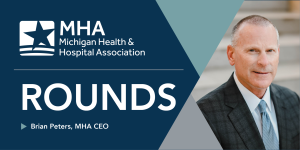 MHA CEO Report — Protecting Access to Care Through 340B
Protecting access to high quality, affordable healthcare for all Michiganders is a key tenet of the MHA. Stated simply, the 340B drug pricing program, created by Congress in 1992, is absolutely crucial to our member …
Keckley Report
 Tax Exemptions for Not-for-Profit Hospitals: Are they Worth it?
It’s a question lots of folks inside and outside of healthcare are asking these days. …
The JAMA study did not focus on a ratio; instead, it focused on quantifying the amount of state and local exemptions that should be considered by policymakers in addition to their federal exemptions. Notably, this study quantifies wide variation in which hospitals benefit most when local, state and federal exemptions are included and proposes that policies around NFP hospital tax exemptions be delegated in part to state and local determinations (as is already the case in at least 3 states). …
The Boards and leaders in each not-for-profit hospitals must account for the tax exemptions they currently enjoy and anticipate changes that limit them in the future. These studies point clearly to that inevitability. And each must answer this question for their organization objectively: are our tax exemptions truly worth it to the communities we serve, or simply a financial maneuver to use our money elsewhere?
News to Know
 News to Know
Members looking to support hospitals impacted by Hurricane Helene can contribute to relief efforts through the North Carolina Disaster Relief Fund and the Tennessee Hospital Association Disaster Relief Fund.