

The Michigan Senate unanimously passed several MHA-supported bills aimed at improving mental health treatment for individuals involved in the criminal justice system during the week of Dec. 2. Senate Bills (SB) 915 (Hertel-D), 916 (Santana-D), 917 (Irwin-D) and 918 (Wonjo-D) are designed to divert individuals with mental health issues from jail and into treatment programs.
SB 915 grants law enforcement officers the authority to take someone in for a psychiatric evaluation if they have “reasonable cause” to believe the person needs community mental health treatment. This change allows officers to act based on concerns from family members or treatment providers, rather than waiting for signs of uncontrolled mental illness. Supporters argue this will help individuals get treatment before symptoms escalate.
Similarly, SB 916 establishes a system where prosecuting attorneys, defendants or their counsel can request a mental health evaluation after misdemeanor charges are filed. If treatment is needed, the court can place the individual in an Assisted Outpatient Treatment program. Upon completion, the misdemeanor charges can be dismissed, offering an alternative to the criminal justice system. This bill aims to prioritize treatment over punishment and focuses on recovery without the pressure of legal consequences.
In addition, SB 802 (Wonjo-D) moved out of the Senate Health Policy Committee, following MHA-member testimony. This bill aims to enhance the transparency and accountability of Michigan’s behavioral health system by providing critical information on service availability and capacity.
Currently, there is no requirement for Community Mental Health (CMH) agencies to share data on treatment availability, leaving hospitals and policymakers without a clear understanding of what services are available statewide. This lack of data often leads to delays in care, especially for patients with behavioral health needs.
SB 802 addresses this concern by requiring CMH agencies to report real-time data on service capacity and availability. This will provide hospitals, healthcare providers and policymakers with better insight into service availability, helping patients access the care they need more quickly. The goal of SB 802 is to create a more transparent system, reduce wait times, improve patient outcomes, and inform decisions on expanding behavioral health services.
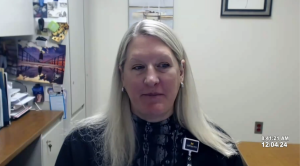
Two MHA members provided testimony to the Senate Health Policy Committee in support of SB 802; Kathy Dollard, Psy.D., L.P., director, behavioral health service line, MyMichigan Health and Bibhas Singla, MD, vice president & medicaid director of hospital & residential services, Pine Rest Christian Mental Health Services.
Dollard highlighted the lack of transparency in Michigan’s behavioral health system, particularly the absence of data-sharing requirements for CMH agencies regarding substance use disorder treatment options. She also addressed the issue of behavioral health boarding, where patients with behavioral health needs are often left waiting in emergency departments for extended periods due to a shortage of inpatient psychiatric beds or community-based services. MHA data shows that more than 150 patients experience this delay daily.

Dr. Singla highlighted the difficulty in transitioning patients from inpatient care to community-based services, particularly for Medicaid recipients. He shared the experience of a Medicaid patient in the addiction unit who struggled to find appropriate community-based care after discharge. Despite being motivated to seek help, the patient spent days calling programs across the state without success. The lack of available services and clear timelines for increasing capacity left the patient unable to access the care needed.
Dr. Singla explained that SB 802 would improve the system by requiring CMH agencies to report service availability in real-time, making it easier for healthcare providers and patients to access care. The bill was voted out of committee unanimously and will now move to the Senate floor.
Members with questions may contact Lauren LaPine at the MHA.