MDHHS Recommends Early Measles Vaccination in Select Counties and Extends RSV Immunization Season

The Michigan Department of Health and Human Services (MDHHS) is recommending early measles (MMR) vaccination for infants in select southeast Michigan counties and extending the respiratory syncytial virus (RSV) immunization season through April 30, in response to continued virus activity.

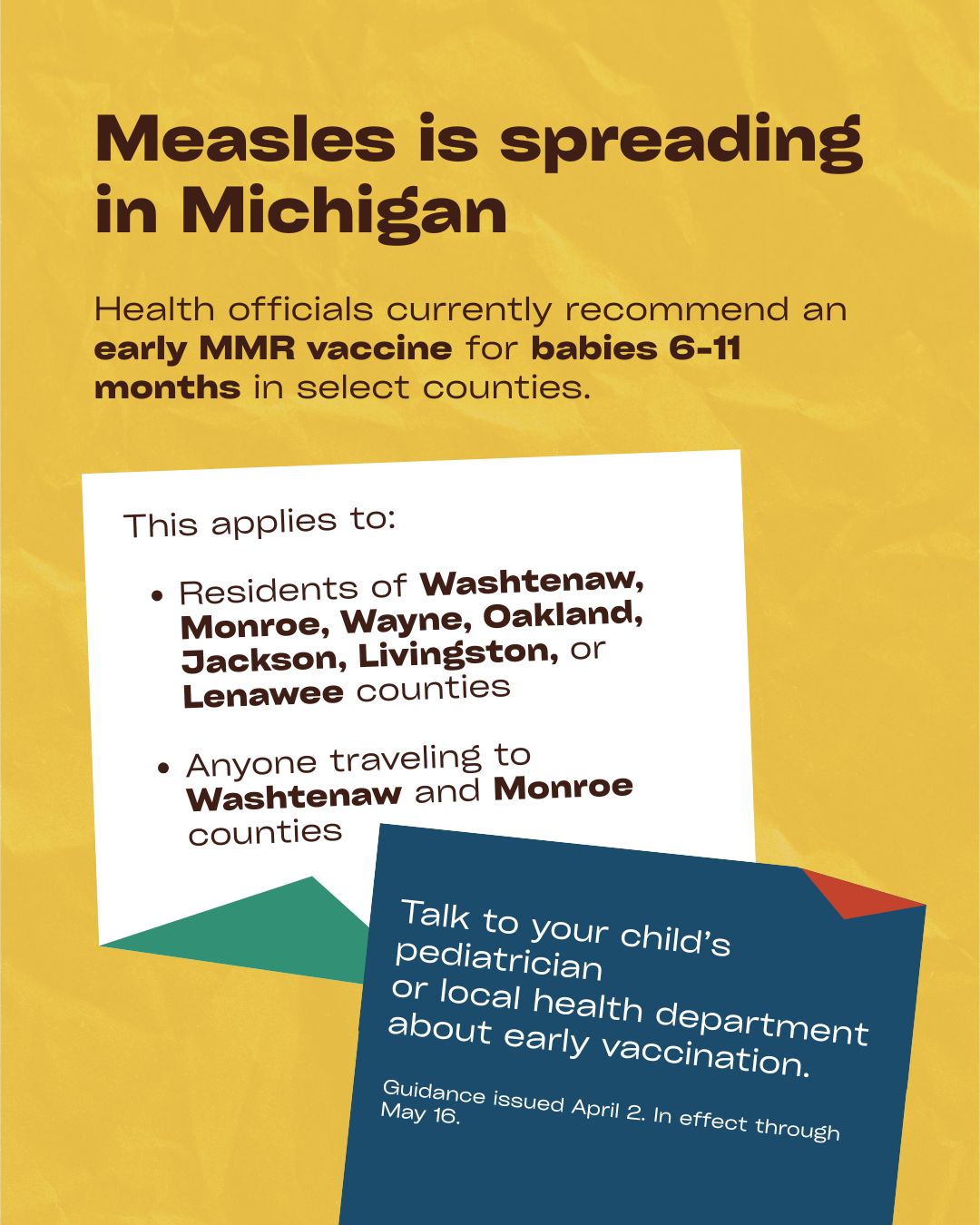
The MDHHS is responding to confirmed measles cases in Washtenaw and Monroe counties and concerns of possible community transmission. Members are encouraged to review MDHHS measles guidance and share the flyer for patients and families. An accelerated measles, mumps and rubella (MMR) dose is recommended for infants ages 6-11 months who live in or travel to Washtenaw, Monroe, Oakland, Jackson, Livingston or Lenawee counties. This recommendation is in effect through May 16.

The MMR vaccine is typically administered beginning at 12 months; infants who receive an early dose will still need to complete the standard two-dose series after their first birthday.

Separately, due to continued increases in RSV-related emergency department visits and hospitalizations among young children, the MDHHS has extended the seasonal administration of RSV monoclonal antibody (mAb) products from March 31 to April 30.

Nationally, most states are also extending the timelines for RSV immunization. Members can read coverage on RSV trends, explore resources from the Association of Immunization Managers and view their RSV season extension map.

Providers are encouraged to continue administering RSV immunizations to eligible children, including:

  • Infants ages 0-8 months who have not received a dose.
  • Certain high-risk children 8-19 months entering their second RSV season.

Guidance for use remains unchanged aside from the extended timeline, and there is no preferred recommendation between available mAb products for infants under eight months old.

Members with questions may contact Kelsey Ostergren at the MHA.
Obtaining Beyfortus through the Vaccines for Children Program

Vaccination remains a key strategy to mitigate the impact of adverse health outcomes on patients and hospital operations during the 2024-2025 respiratory season. The MHA urges all birthing hospitals to become Vaccines for Children (VFC) specialty providers to offer Beyfortus and expand access to eligible patients ahead of the upcoming respiratory season.

Beyfortus was approved by the FDA in July 2023 for preventing RSV lower respiratory tract disease in infants. Hospitals can acquire Beyfortus through direct/private purchase or through the VFC program. However, doses obtained through the VFC program can only be administered to patients who are eligible for the VFC program.

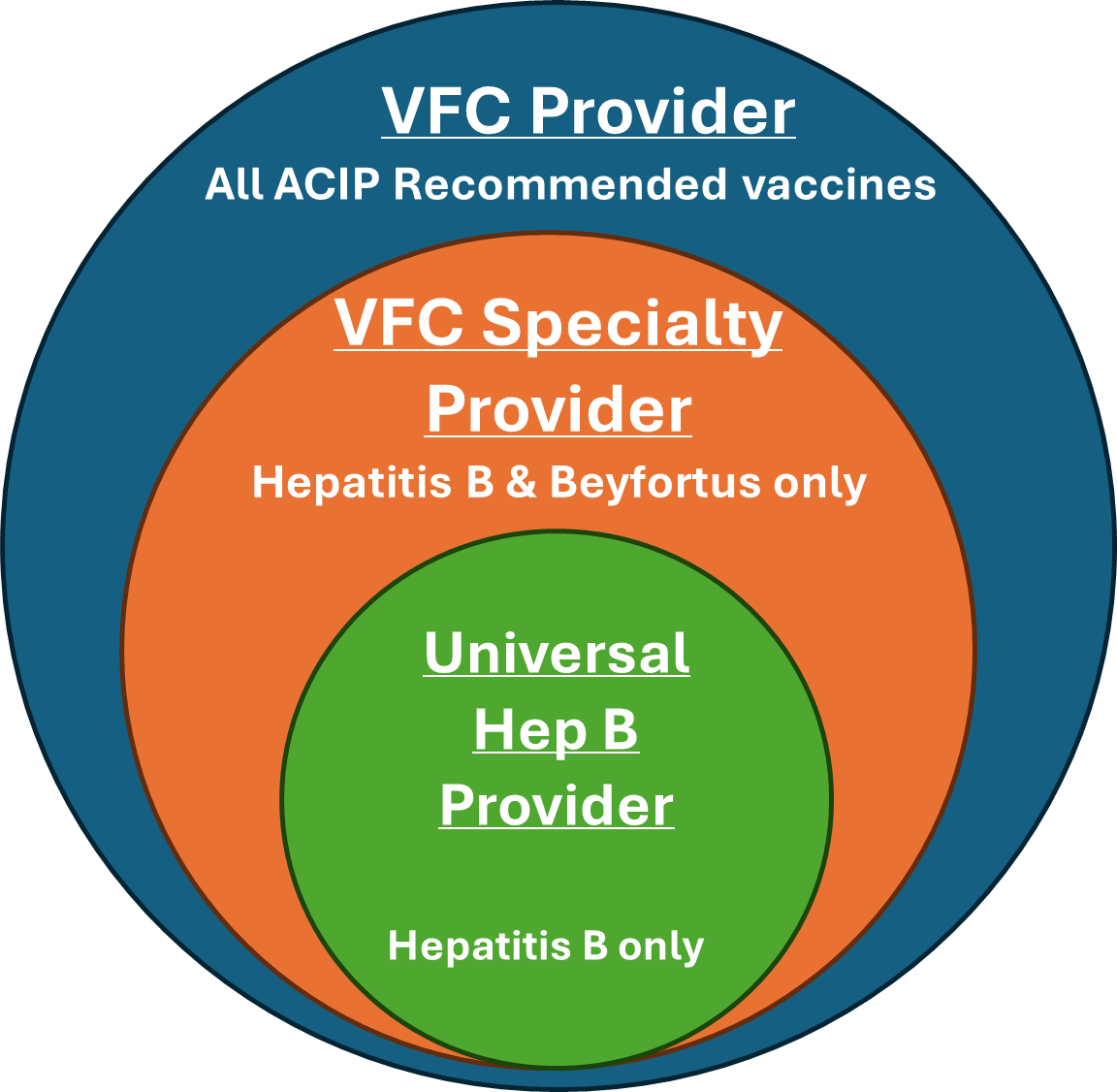
Birthing hospitals must become a VFC enrolled provider to order Beyfortus through the program. While there are three different types of VFC participation, only two allow for administration of Beyfortus:

  1. VFC Provider (providing all ACIP recommended vaccines)
  2. VFC Specialty Provider (providing Hepatitis B & Beyfortus only)

The Michigan Department of Health and Human Services (MDHHS) and the Centers for Disease Control are encouraging all birthing hospitals to become a VFC Specialty Provider to protect Michigan infants against Hepatitis B and RSV. The process to become a VFC Specialty Provider differs slightly, depending on if a hospital is participating with the VFC as a Universal Hepatitis B Provider or not at all.

The steps in the graphic below outline how birthing hospitals can become a VFC Specialty Provider:

1 – MDHHS has created a Beyfortus Eligibility Tool to help birthing facilities with this process. Use of the tool is optional, however if it is used, it should be noted in the Eligibility Screening Plan in step two.
2 – Facilities should complete the Eligibility Screening Plan and submit it to the local health department.

Members with questions may contact Kelsey Ostergren at the MHA. Questions related to VFC program enrollment can be directed to the MDHHS Division of Immunizations.