
Healthcare Advocates Honored with MHA Special Recognition Award

The MHA announced six winners of its Special Recognition Award during the Annual Membership Meeting June 26, recognizing them for extensive contributions to healthcare. Each of the winners has uniquely influenced healthcare in Michigan. The winners include T. Anthony Denton, senior vice president and chief environmental, social and governance officer, Michigan Medicine; U.S. Rep. Debbie Dingell (D-Ann Arbor); Rep. Phil Green (Watertown Township); Rep. Alabas Farhat (D-Dearborn); Nancy McKeague, executive vice president of operations, MHA; and Ruthanne Sudderth, senior vice president and chief strategy officer, MHA.

T. Anthony Denton, Michigan Medicine

Denton is a former chair of the MHA Board of Trustees and commissioner of The Joint Commission. Denton has served in many leadership capacities during his 44 years with Michigan Medicine, including chief operating officer and acting CEO. In his current role, he is the senior executive responsible for master facility planning to advance patient access to care and guides Michigan Medicine’s environmental sustainability and carbon neutrality efforts. In addition, Denton facilitates a collaborative multi-sector community health model to improve health outcomes through enhanced community presence and impact initiatives and leads assessments to inform appropriate modification of governance models across the system. Before serving in health care administration, Denton began his career in human resources. His tenure on the MHA Board of Trustees ended in 2024 after 10 years of service.

U.S. Rep. Debbie Dingell (D-Ann Arbor)

Rep. Dingell has been a healthcare champion throughout her time in Congress, currently serving as a member of the Energy and Commerce Committee, where she has led on critical issues, including affordable and accessible healthcare. Since joining Congress in 2015, Dingell has been a strong advocate for improving healthcare access for all populations. She has also been a supporter of rural emergency hospitals, the 340B program and Medicaid funding.
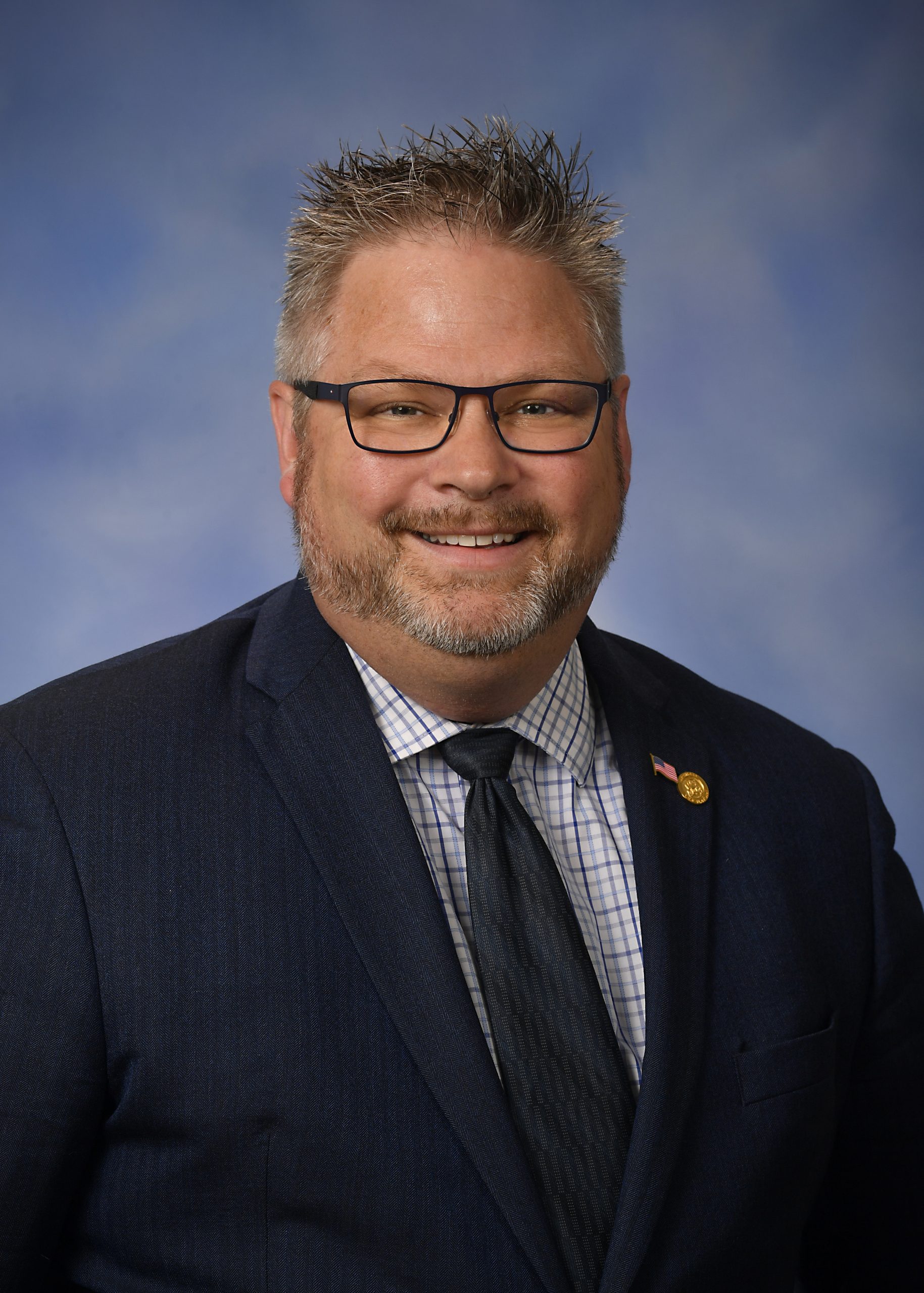
Rep. Phil Green (Watertown Township)

Since being elected to state office in 2018, Rep. Green has been an advocate for state funding that ensures Michigan residents have
access to the care they need. He introduced the interstate nurse licensure compact during the 2023-24 legislative session and helped defeat legislation that would have instituted harmful government-mandated staffing ratios. Before that, he leveraged his role on the House Appropriations Committee to provide additional funding for maternal health, Medicaid reimbursements and behavioral health. He was also one of the key leaders who secured $300 million in funding to support the recruitment, retention and training of healthcare workers in 2022 and 2023. Green currently chairs the House Appropriations Subcommittee on Public Health, serves as the vice chair on the House Appropriations Subcommittee on Medicaid and Behavioral Health, and sits on the House Appropriations Committee.
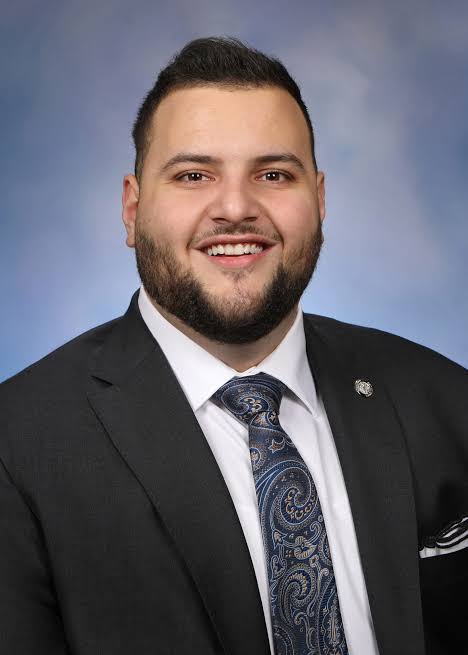
Rep. Alabas Farhat (D-Dearborn)

Rep. Farhat has been a strong advocate for healthcare and public health legislation in the state House of Representatives since being elected in 2022. He has a strong academic background in public health, having earned a bachelor’s degree in public health from the University of Michigan-Dearborn. As a legislator, Farhat has been a staunch advocate for the 340B program, as he was the lead sponsor of state-level protections for 340B covered hospitals, including testifying in support of the 340B program in the House Insurance Committee. His groundwork led to a successful vote in favor of 340B protections in the Michigan Senate this past December. Rep. Farhat also has been a champion for access to affordable prescription medications and better maternal health outcomes. He passed legislation in 2023 to ensure fair reimbursement rates for pharmacy operators under the state’s Medicaid plan.

Nancy McKeague, MHA

Nancy McKeague is retiring July 4 from her role as Chief Operating Officer for the MHA. A former member of legislative staff in both the Michigan House and Senate, she has more than 30 years of experience in government relations and non-profit association management. Specializing in labor, insurance, employment law, employee benefits and organizational development, she has been active in legislative and regulatory issues at both the state and federal levels and frequently testified as a subject matter specialist. McKeague has been a tremendous asset for hospitals and the MHA in navigating labor and workforce challenges.

Ruthanne Sudderth, MHA

Ruthanne Sudderth is the Senior Vice President and Chief Strategy Officer at the MHA. In this role, she has provided strategic planning and oversight of the MHA Service Corporation, overseen communications and marketing functions for all of MHA, led vaccine work and managed the association’s workforce development efforts. Ruthanne also led the association’s community giving efforts, overseeing the distribution of all external sponsorship dollars going to support health and wellness efforts around the state. In addition, Sudderth served as the president of the Upper Peninsula Hospital Council. Sudderth has played a key role in modernizing the association’s approach to fully embrace social media and podcasting platforms, building impactful coalitions and effectively amplifying the voice of hospitals to elected officials and key stakeholders and growing the MHA’s Endorsed Business Partner program. Sudderth is moving on to a new opportunity outside of the MHA, with her last day being July 4.

Earned Sick Time Act Officially Enacted

The Michigan Legislature held a late-night session Feb. 20 that ultimately led to amending the Earned Sick Time Act (ESTA) set to take effect at 12:01 a.m. on Feb. 21. Multiple amendments were made to House Bill 4002 before it passed the Senate with a bipartisan vote of 26-10 and received a concurrence approval vote from the House. The law is effective now, as it was granted immediate effect by the legislature, signed by Gov. Whitmer the morning of Feb. 21 and officially filed with the Office of the Great Seal.

While the new law may still present implementation challenges for hospitals, many positive changes were made, which include altering how much time must be provided by employers of various sizes and rewriting how employers must administer the law.

Important changes include:

  • Eliminating both the private right of action and the rebuttable presumption for terminated employees.
  • Explicitly allowing employers to provide all sick time hours frontloaded at the start of the year and exempting those employers from tracking accruals.
  • Allowing employers to designate paid time off as a combined paid time off/sick leave bank.
  • Requiring reporting for unforeseeable use of sick time by an employee as soon as practicable or in compliance with an employer’s policy on using sick time, if the employer notifies the employee of their policy in writing and the policy allows employees to provide notice after the employee is aware of the need to use sick time.
  • Refining the employee definition to exempt employees who are subject to policies that “allow the individual to schedule the individuals’ own working hours” and aren’t subject to a minimum number of hours per week.
  • Generally exempts salary and variable hour employees from the accrual methodology, but assumes full work weeks for those employees for the purposes of calculating earned sick time.
  • Clarifying that employers are not required to allow new employees to use their sick time within the first 120 days of employment.
  • Specifying that earned sick time is paid out at the “hourly wage or base wage” and excludes overtime, holiday pay, bonuses, commissions, etc. in the calculation.
  • Allowing employers to require reasonable documentation for earned sick time of more than three consecutive days, as well as requiring provision of the documentation within 15 days of the employer’s request.

All employers with 11 or more employees will now be required to provide 72 hours of paid time, with a 72-hour carryover cap from year to year. While media reports also include an exemption for nonprofits, the MHA is seeking clarity to understand how this may pertain to hospitals.

These positive changes were accomplished through the joint-efforts of a coalition of employers led by the Michigan Chamber of Commerce that included the MHA to support important changes to the ESTA prior to them going into effect on Feb. 21.

Unfortunately, the bill failed to address potential conflicts with federal employment laws, including the Family Medical Leave Act, the Americans with Disabilities Act and the Fair Labor Standards Act.

Members with questions about the legislation should contact Elizabeth Kutter at the MHA. Members with additional feedback about implementation may contact Nancy McKeague at the MHA.

Definitions

For the purposes of this update, important definitions from the bill include:

  • “Earned sick time” means time off from work that is provided by an employer to an employee, whether paid or unpaid, that can be used for the following purposes:
    • The employee’s mental or physical illness, injury or health condition, as well as diagnosis and treatment of such.
    • The employee’s family member’s mental or physical illness, injury or health condition, as well as diagnosis and treatment of such.
    • If the employee or employee’s family member is a victim of domestic violence or sexual assault and any care, services or legal proceedings for such circumstances.
    • Meetings at a child’s school or place of care related to the child’s health, disability or effects of domestic violence or sexual assault.
    • For the closure of an employee’s place of business due to a public health emergency.
  • “Employee” means an individual engaged in service to an employer in the business of the employer. Employee does not include any of the following:
    • An individual employed by the United States government.
    • An individual who works in accordance with the policy of an employer if both of the following conditions are met:
      • The policy allows the individual to schedule the individual’s own working hours.
      • The policy prohibits the employer from taking adverse personnel action against the individual if the individual does not scheduled a minimum number of working hours.
    • An unpaid trainee or unpaid intern.
    • An individual who is employed in accordance with the youth employment standards act.
  • “Employer” means any person, firm, business, educational institution, corporation, limited liability company, government entity or other entity that employs one or more individuals. Employer does not include the United States government.

Michigan Supreme Court Issues Ruling on Paid Sick Leave & Minimum Wage

The Michigan Supreme Court issued a ruling July 31 in Mothering Justice v. Attorney General that upholds voter initiative petitions on paid sick leave and minimum wage. Those laws, as originally enacted, will go into effect Feb. 21, 2025.

As a practical result, hospital employers should be aware of forthcoming changes to sick leave and minimum hourly wages starting in February 2025. The Improved Workforce Opportunity Wage Act, as enacted Public Act (PA) 337 of 2018, increases the state minimum hourly wage annually until 2030 and applies to all employers, regardless of size. Current estimates place the minimum hourly wage at $12.25 per hour, starting in February 2025, and reaching $15 by 2030.

The Earned Sick Time Act, as enacted PA 338 of 2018, applies to all employers and requires that an employee be provided one (1) hour of earned sick time for every 30 hours worked. That sick time may carry over year to year and allows increased usage of paid earned sick time for an employee of up to 72 hours per year. In addition, employers will be required to update their displayed informational posters on earned sick time.

Members with questions should contact Nancy McKeague at the MHA. Members with questions about Michigan’s existing laws should contact Elizabeth Kutter at the MHA.