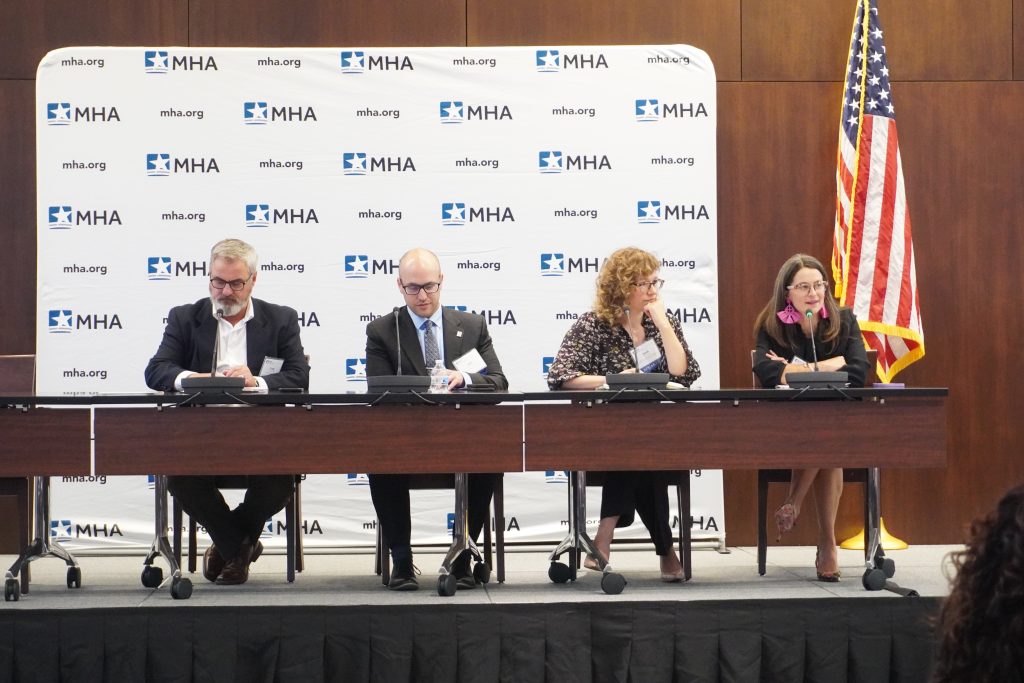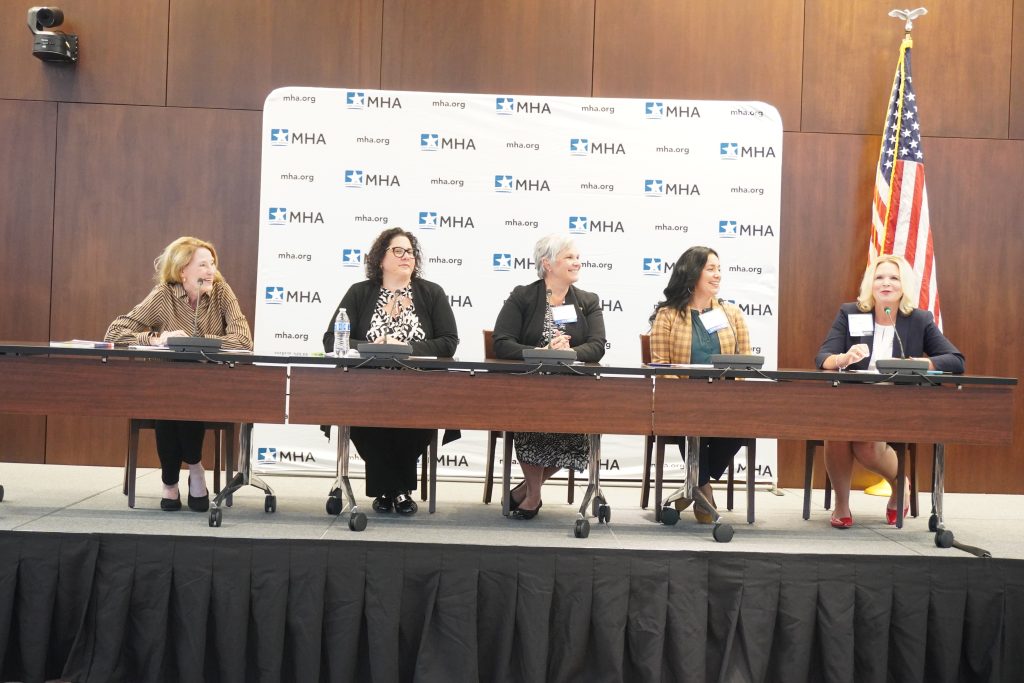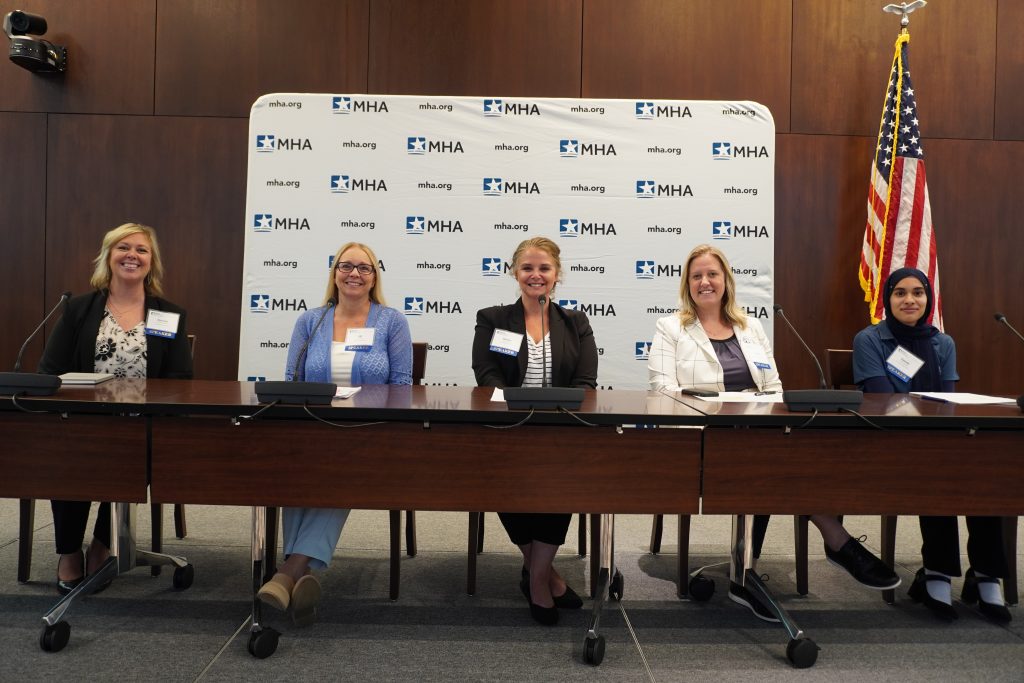

The MHA hosted nearly 150 thought leaders from healthcare, post-secondary education and workforce talent development Sept. 11 in Lansing for a discussion to help strengthen connections across the sectors focused on building the pipeline for Michigan’s future healthcare workforce.
Leaders engaged in the day-long summit, moderated by Elizabeth Kutter, senior director, government & political affairs, MHA, which highlighted panel discussions on healthcare workforce data, partnerships and best practices between hospitals and academia, guided discussions on addressing barriers to upskilling and reskilling current the workforce, challenges and opportunities in clinical placements and early career attraction. Each panel brought incredible knowledge and expertise to the topic areas, spurring robust conversations between panelists and attendees.
The event began with reviewing data indicating that more than 48,000 jobs in healthcare will be necessary in the next 10 years. That data highlighted the need to gather this diverse stakeholder group to push new, creative solutions to career attraction, educational enrollment and attainment, career readiness and retention. Colby Cesaro, vice president, Independent Colleges and Universities, moderated the panel comprised of John Karasinski, senior director, communications, MHA; Craig Donahue, CEO, Michigan Health Council; and Sarah Szurpicki, director, Michigan office of Sixty by 30.
Following the discussion, participants spent time sharing partnership best practices. Russ Kavalhuna, president, Henry Ford College; Don MacMaster, president, Alpena Community College; John Kaczynski, executive director of external governmental affairs, Saginaw Valley State University; Kelley McMillian, senior director of professional nursing practice, Corewell Health; and Brandy Johnson, president, Michigan Community College Association, shared how to develop direct partnerships between hospitals and post-secondary institutions, how to bring new programs to rural Michigan and how to structure a successful academic and healthcare employer partnership.
Over lunch, the group participated in a guided discussion led by Ryan Hundt, CEO, Michigan Works! and Christi Taylor, director of talent initiatives, Detroit Regional Chamber. The discussion encouraged attendees to network while discussing guided prompts on barriers to upskilling, reskilling and recruiting talent from within existing employee bases.
Following the guided networking lunch, the group dove deeply into the challenges academic institutions and hospitals alike are facing in undergraduate and graduate nursing clinical rotation placements. Immersive in-person clinical education is imperative to nursing licensure and long-term success. Without it, students lack preparedness for bedside practice, contributing to concerns about nursing turnover. This topic area teed up further need to specifically convene on ways to disrupt the current placement framework. Amy Brown, chief nursing officer, MHA, lead the panel of experts featuring Cynthia McCurren, dean of the school of nursing UM-Flint; Amy Stahley, dean of the college of health professions, Davenport University; Maria Vitale, administrative manager of students of nursing and physician assistant studies, Corewell Health; and Deborah Lopez, clinical liaison, UM Health-Sparrow.
The event concluded with Mark Burley, state director, HOSA Michigan, leading a discussion with Christin Tenbusch, director, care experience and organizational development, Covenant Healthcare; Jill Jarvis, manager, clinical development and education, Covenant HealthCare; Ashlee Offord, Corewell Health Lakeland GROWTH Internship Program; Jamie Jacobs, Michigan College Access Network; and HOSA’s state student director Zainab Ahmed. The group focused on how to attract younger generations to healthcare careers and career pathways, with conversations on impactful paid internship programs, early healthcare career exposure and the role leaders play in ensuring positive recognition of the profession.
Members with questions about the event or interest in future engagements are encouraged to contact Elizabeth Kutter at the MHA.