

MHA Monday Report Oct. 28, 2024

Obtaining Beyfortus through the Vaccines for Children Program

Vaccination remains a key strategy to mitigate the impact of adverse health outcomes on patients and hospital operations during the 2024-2025 respiratory season. The MHA urges all birthing hospitals to become Vaccines for Children …


Webinar Outlines Policies to Remove Stigma from Credentialing Applications

The MHA and the MHA Keystone Center will host the MHA Health Foundation webinar Implementing Evidence-Informed Strategies to Normalize Help-Seeking and Strengthen Wellbeing from 4:30 to 5:30 p.m. Dec 4. The webinar will outline how …


A Healthier Future: Improving Access for Immigrant Families in Michigan

Accessing healthcare can be a daunting experience for anyone, but it poses unique challenges for immigrants and refugees. I recently participated in a breakout session at the Michigan Association for Local Public Health Conference held in …


Keckley Report

U.S. Healthcare in 2025 and Beyond: Three Major Predictions

“With 15 days before voters decide the composition of the 119th U.S. Congress and the next White House occupant, the immediate future for U.S. healthcare is both predictable and problematic:

  1. States will be the epicenter for healthcare legislation and regulation; federal initiatives will be substantially fewer.  …
  2.  Large employers will take direct action to control their health costs. …
  3.  Private equity and strategic investors will capitalize on healthcare market conditions. …

Combined, these three predictions foretell a U.S. healthcare system that faces a significant pressure to demonstrate value. They require every healthcare organization to assess long-term strategies in the likely context of reduced funding, increased regulation and heightened attention to prices and affordability. This is problematic for insiders accustomed to incrementalism that’s protected them from unwelcome changes for 3 decades.

Announcements last week by Walgreens and CVS about changes to their strategies going forward reflect the industry’s new normal: change is constant, success if not. In 2025, regardless of the election outcome, healthcare will be a major focus for lawmakers, regulators, employers and consumers.”

Paul Keckley, Oct. 21, 2024


News to Know

  • The general election is Tuesday, Nov. 5. Polls open at 7 a.m. and close at 8 p.m. Voters in line at 8 p.m. can still cast ballots.
  • MHA endorsed business partner HSS has officially rebranded as Tarian, following its acquisition in 2022.

MHA EVP Laura Appel speaks with WOOD TV about the Baxter IV solutions shortage.

MHA in the News

The MHA received media coverage the week of Oct. 21 regarding the Baxter IV solutions shortage and the impact hospitals have in their local communities. WOOD TV aired a story Oct. 21 about the impact …
Obtaining Beyfortus through the Vaccines for Children Program

Vaccination remains a key strategy to mitigate the impact of adverse health outcomes on patients and hospital operations during the 2024-2025 respiratory season. The MHA urges all birthing hospitals to become Vaccines for Children (VFC) specialty providers to offer Beyfortus and expand access to eligible patients ahead of the upcoming respiratory season.

Beyfortus was approved by the FDA in July 2023 for preventing RSV lower respiratory tract disease in infants. Hospitals can acquire Beyfortus through direct/private purchase or through the VFC program. However, doses obtained through the VFC program can only be administered to patients who are eligible for the VFC program.

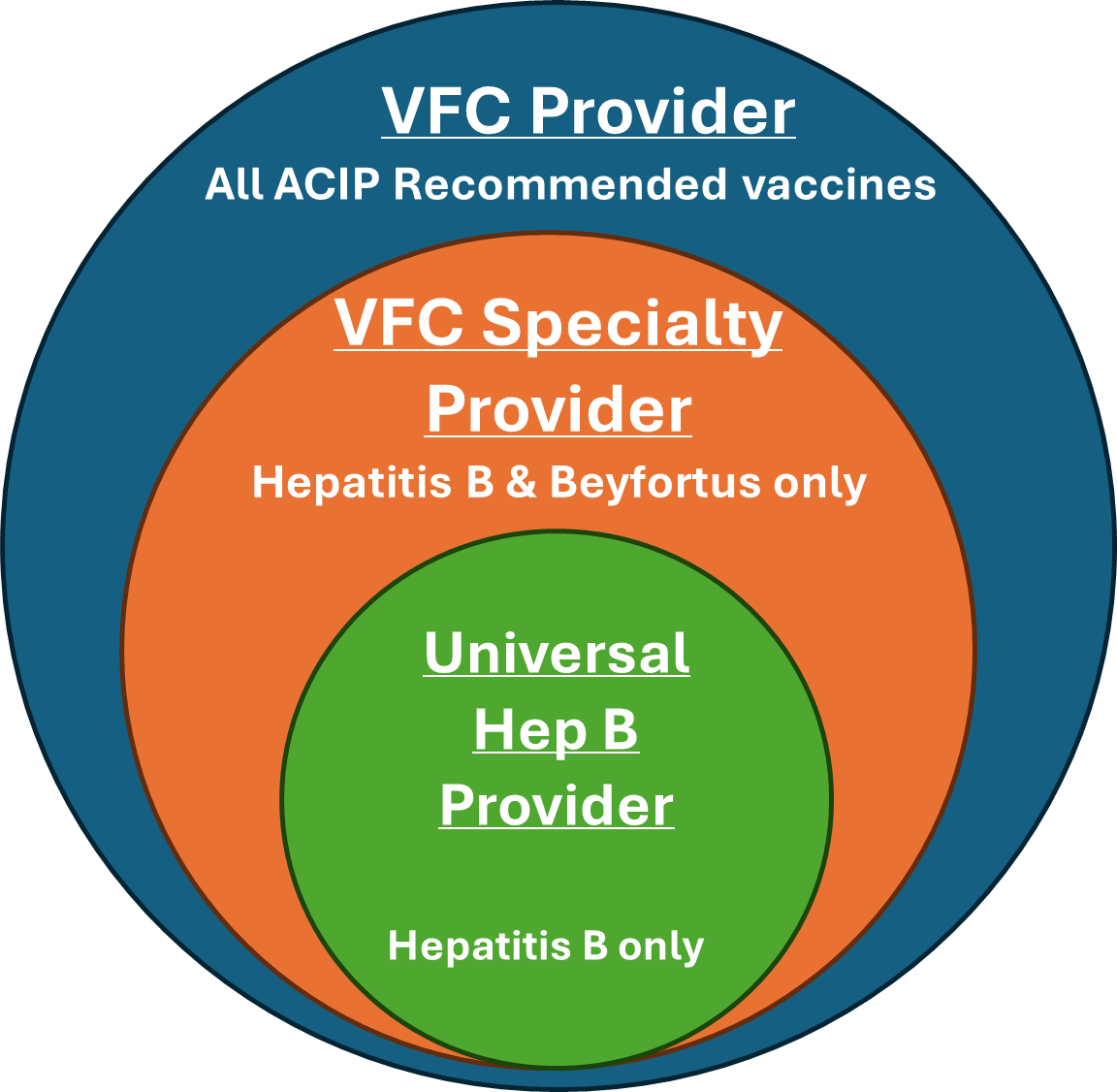
Birthing hospitals must become a VFC enrolled provider to order Beyfortus through the program. While there are three different types of VFC participation, only two allow for administration of Beyfortus:

  1. VFC Provider (providing all ACIP recommended vaccines)
  2. VFC Specialty Provider (providing Hepatitis B & Beyfortus only)

The Michigan Department of Health and Human Services (MDHHS) and the Centers for Disease Control are encouraging all birthing hospitals to become a VFC Specialty Provider to protect Michigan infants against Hepatitis B and RSV. The process to become a VFC Specialty Provider differs slightly, depending on if a hospital is participating with the VFC as a Universal Hepatitis B Provider or not at all.

The steps in the graphic below outline how birthing hospitals can become a VFC Specialty Provider:

1 – MDHHS has created a Beyfortus Eligibility Tool to help birthing facilities with this process. Use of the tool is optional, however if it is used, it should be noted in the Eligibility Screening Plan in step two.
2 – Facilities should complete the Eligibility Screening Plan and submit it to the local health department.

Members with questions may contact Kelsey Ostergren at the MHA. Questions related to VFC program enrollment can be directed to the MDHHS Division of Immunizations.

MHA CEO Report — Vaccinations & Respiratory Illness Season

MHA Rounds image of Brian Peters

“An ounce of practice is worth more than tons of preaching.” Mahatma Gandhi

The last four years have generated tremendous awareness about vaccines, but also a large public health challenge as disinformation has exploded and anti-vaccine sentiment has emerged from the fringes to become widely embraced. This likely isn’t news to any of you, but the issue is once again top of mind because this time of year is respiratory illness season, whether it be the flu, RSV and now COVID. Thankfully, we have vaccines available to blunt the severe impacts of these illnesses, but it falls on both healthcare providers and public health professionals to appropriately communicate the benefits of vaccines to our patients and the public.

The recent reports from the Centers for Disease Control and Prevention (CDC) are concerning, as they are warning providers about the low vaccination rates for each of these diseases. Flu vaccination rates are down across all age groups compared to last year, while COVID vaccine uptake is the same as last year at just 17% of adults; similarly, only 17% of adults 60 years of age and older have received an RSV vaccine.

Due to these low vaccine rates, the CDC reported Dec. 14 that over the past four weeks, hospitalizations across the country increased 200% for the flu, 51% for COVID and 60% for RSV. In Michigan, we need look no further than last year to see how a surge of RSV illness can dramatically challenge the statewide capacity of our children’s hospitals. We know more can be done and it isn’t too late for people to receive their vaccines that are proven to reduce the risk of severe illness and hospitalization.

The MHA has a long history of support for vaccinations, as we continue to work with the Alliance for Immunizations in Michigan, the Parent Information Network, I Vaccinate and others to measure, educate and promote appropriate vaccinations for all Michigan residents. I Vaccinate specifically has been a terrific statewide public awareness campaign to connect with parents on the value of making sure you keep your children up to date on their vaccinations as they grow up. The bottom line is that the safety and efficacy of numerous vaccines has been supported and documented by not only the CDC, but the World Health Organization, and many other academic and clinical organizations.

We also know healthcare personnel play a key role in limiting the spread of illness during these months. For some time, we have collaborated with the Michigan Department of Health and Human Services to encourage vaccination policies for healthcare personnel against preventable diseases, such as the flu and pertussis.

Healthcare personnel are also important messengers when it comes to vaccines. We highly encourage all patients with questions about vaccines to contact their healthcare provider. These are important decisions and healthcare providers are uniquely qualified to provide accurate information about the benefits and any potential risks associated with any treatment. They also do so with care and respect for their patients. The MHA provides additional vaccine resources to healthcare leaders on our MHA vaccinations webpage.

Since the pandemic, the MHA has engaged in numerous ways on healthcare supply chain issues. On that note, another key challenge has been the available supply of Beyfortus, the monoclonal antibody for infants to prevent severe RSV illness. The MHA has been actively collaborating with stakeholders to navigate these supply concerns, as well as to provide reimbursement clarity. The good news is we have plenty of patients wishing to have their infants immunized, but due to manufacturing and distribution issues, there simply is not enough supply for all these young children. Thankfully the Biden administration recently announced 230,000 additional doses of RSV immunizations for infants will be available this month.

Realistically, we know we won’t change declining vaccination trends overnight, in a society that is as polarized as ever. Yet, I’m hopeful that over time we will be able to turn the tides, much as healthcare providers have for over a hundred years in using this valuable tool to eradicate harmful illnesses. It all starts with individual conversations from trusted messengers, but at the end of the day, we need to practice what we preach.

As always, I welcome your thoughts.