
Resources
2025 Economic Impact of Healthcare & Hospital Workforce Survey Results

GME Fast Facts
MI Hospital Careers
Improving Recruitment, Retention and Training of Michigan’s Healthcare Workforce
Healthcare Workforce
Hospitals are one of the largest employers in many Michigan communities, collectively employing 222,000 full and part-time employees and are focused on solutions that build the healthcare workforce that patients need now and in the future. Significant investments are being made in the recruitment, retention and training of healthcare workers in Michigan. These investments are helping hospitals move in the right direction by filling the thousands of staffing vacancies in hospitals statewide.
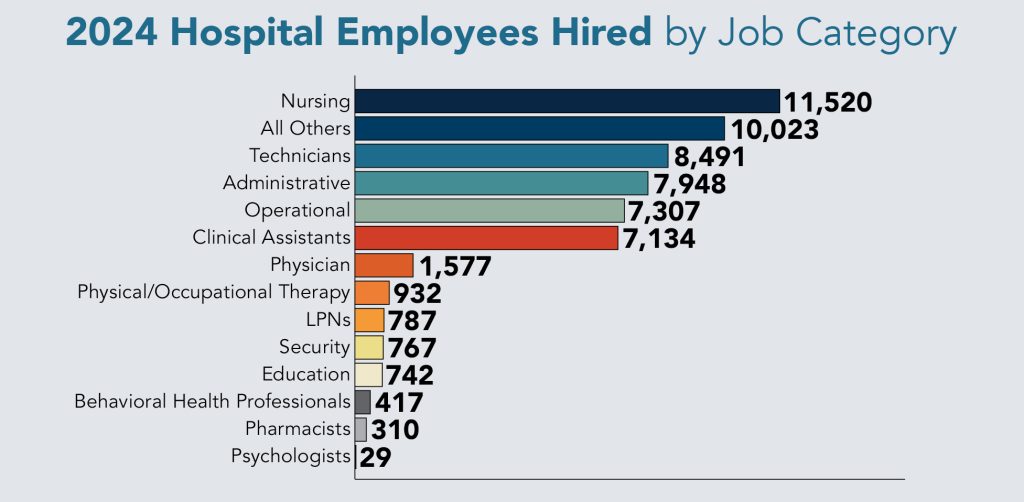
The third annual MHA member workforce survey, which represents more than 95% of the MHA membership, shows the success of Michigan hospitals as they filled nearly 58,000 positions in 2024. Michigan hospitals continue to outperform other states with a registered nurse turnover rate of 14.1%, which is 2.3 percentage points lower than the national RN turnover rate average of 16.4%. Collectively, Michigan hospitals now employ roughly 64,500 RNs.
Healthcare workers remain in high demand as Michigan hospitals have 23,000 open positions. Below are the results of the MHA 2025 Hospital Workforce Survey, including the total number of hospital job vacancies by job category in 2025 and the total number of hospital employees hired by job category in 2024.

MI Hospital Careers
Beyond the doors of your local hospital, neighbors, friends and family members from all backgrounds and industries are contributing to the lifesaving care our communities need. More than one million Michiganders work in the healthcare industry, making a combined $72.2 billion in wages, salaries and benefits. Nearly 572,000 Michigan residents hold direct patient care jobs, providing medical or supportive care to patients. An additional 502,000 Michiganders work in indirect healthcare jobs, making sure that the doctors, nurses and medical professionals have the supplies and systems necessary to provide care.
The new MI Hospital Careers campaign aims to ensure students in high school and college know about healthcare career opportunities, as well as working professionals looking for a rewarding new career. Without addressing the existing healthcare workforce shortage, Michigan residents risk losing access to quality, accessible healthcare services within their local community.
 Graduate Medical Education
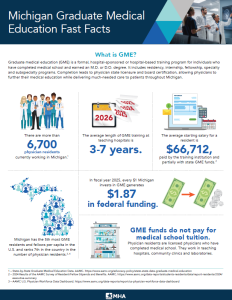
Graduate medical education (GME) is a formal, hospital-sponsored or hospital-based training program for individuals who have completed medical school and earned an M.D. or D.O. degree. It includes residency, internship, fellowship, specialty and subspecialty programs. Completion leads to physician state licensure and board certification, allowing physicians to further their medical education while delivering much-needed care to patients throughout Michigan.
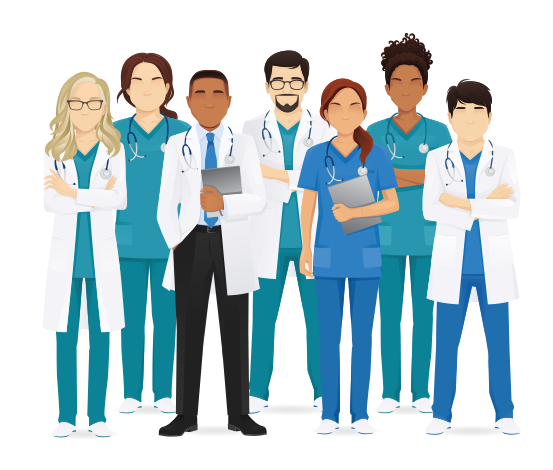
There are more than 6,700 physician residents currently working in Michigan.

The average length of GME training at teaching hospitals is 3-7 years.

The average starting salary for a resident is $66,712, paid by the training institution and partially with state GME funds.
Michigan has the 5th most GME residents and fellows per capita in the U.S. and ranks 7th in the country in the number of physician residents.

 In fiscal year 2025, every $1 Michigan invests in GME generates $1.87 in federal funding.
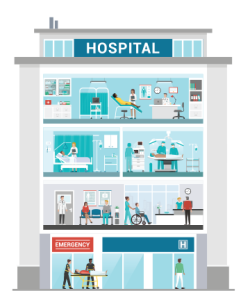
GME funds do not pay for medical school tuition. Physician residents are licensed physicians who have completed medical school. They work in teaching hospitals, community clinics and laboratories.
Workplace Safety Protections
Healthcare workers across the country are experiencing a growing rate of incidents of violence against front-line caregivers, including workers in Michigan. Since the onset of COVID-19 in the United States, data shows violence against hospital employees has markedly increased: 44% of nurses report experiencing physical violence and 68% report experiencing verbal abuse during the pandemic. Michigan hospitals are increasingly focused on ensuring the physical and psychological safety of staff and volunteers, which is vital to continue delivering the highest quality of care.
While the MHA, MHA Keystone Center and Michigan hospitals are partnering to address violence against healthcare workers through trainings and through the work of the MHA Workplace Safety Collaborative, more can be done.
Workplace Safety Posters
 Workplace Safety Posters
The MHA developed workplace safety posters for members to display throughout their facilities communicating the consequences of committing physical harm toward healthcare workers or hospital property. The informational posters are geared toward patients, families and visitors, with a couple of creative options available in two sizes. With the help of MHA Endorsed Business Partner AMN Healthcare Language Services, Spanish and Arabic versions are also available. Complimentary copies of the materials are available to MHA members by request through an online order form. Non-members may purchase materials at cost. Questions about materials may be directed to the MHA.
Nursing Scope of Practice Guidance
Many states rely on a state-level Nurse Practice Act to outline the scope of nursing practice and the professional and ethical conduct nurses must adhere to. Michigan eliminated the Nurse Practice Act in 1978 and incorporated all rules and laws regulating health personnel into a new Public Health Code, which now defines the practice of nursing in Michigan.
To help understand the difference in scope of practice between licensed practical nurses (LPN) and registered nurses (RN), the MHA developed the Understanding LPN and RN Scope of Practice resource.
This resource outlines specific job functions that RNs and LPNs can perform as defined by the Michigan Public Health Code, the Michigan Department of Licensing and Regulatory Affairs Administrative Rules of Nursing, as well as CMS Conditions of Participation for both hospitals and critical access hospitals.
The guidance may be helpful as facilities experience staffing shortages and consider redistribution of job functions to other qualified medical personnel.