MHA RACE OF THE WEEK
The MHA’s Race of the Week series highlights the most pivotal statewide races for the 2024 General Election. The series will provide hospitals and healthcare advocates with the resources they need to make informed decisions on Election Day, including candidates’ views and background.
MICHIGAN CANDIDATES FOR U.S. SENATE
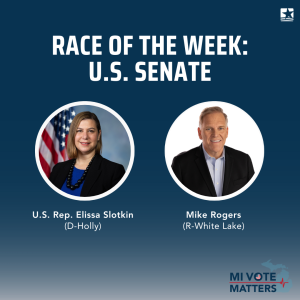
U.S. Rep. Elissa Slotkin (D-Holly) is a former national security official currently serving Michigan’s 7th Congressional District, which includes all of Ingham, Livingston, Shiawassee and Clinton counties, as well as parts of Eaton, Genesee and Oakland counties.
Like many Americans, healthcare is a deeply personal issue for Rep. Slotkin. In Congress, she worked across the aisle to help pass legislation to make prescription drug prices more transparent and fought to pass laws that capped the cost of insulin for seniors and allowed Medicare to negotiate for lower drug prices. Slotkin also worked closely with the MHA and the hospitals in her district during the COVID-19 pandemic.
Slotkin is a third-generation Michigander who believes government works best when there are two healthy parties that debate the big issues facing Americans. For more information, visit elissaslotkin.org.
Mike Rogers (R-White Lake) is a former state senator and member of the U.S. House of Representatives for Michigan’s 8th congressional district. Prior to his time in the legislature, Rogers worked as a lieutenant in the U.S. Army and a special agent with the Federal Bureau of Investigation.
Rogers, also a Michigan native, is known for his work on Michigan’s 529 College Savings Program and efforts passing legislation to help low-income families receive healthcare. Additionally, Rogers served as Chairman of the House Intelligence Committee and was a part of the House Energy and Commerce Committee.
Rogers entered the private sector in 2015 to champion small businesses before announcing in August 2023 his candidacy for the U.S. Senate. To learn more, visit rogersforsenate.com.
WHY IT MATTERS
Congress is responsible for lawmaking and budgetary decisions critical to Michigan’s healthcare community and residents. In addition to setting the course on federal funding that impacts Michigan’s Medicare and Medicaid populations, among other issues, Congress is responsible for making policy decisions that can vastly impact the delivery and access to healthcare in the state, as well as confirmation of Supreme Court nominees. Due to the major financial and policy decisions made in Washington, DC, Michigan relies on its federal officials to advocate and protect the needs of state residents, which is why electing healthcare champions to federal offices is so important.
For more information or to request 2024 Election materials, visit the MHA Election webpage or contact the MHA.