
Centering Lived Experiences to Improve Maternal Care: Reflections from the Birth Experience Project

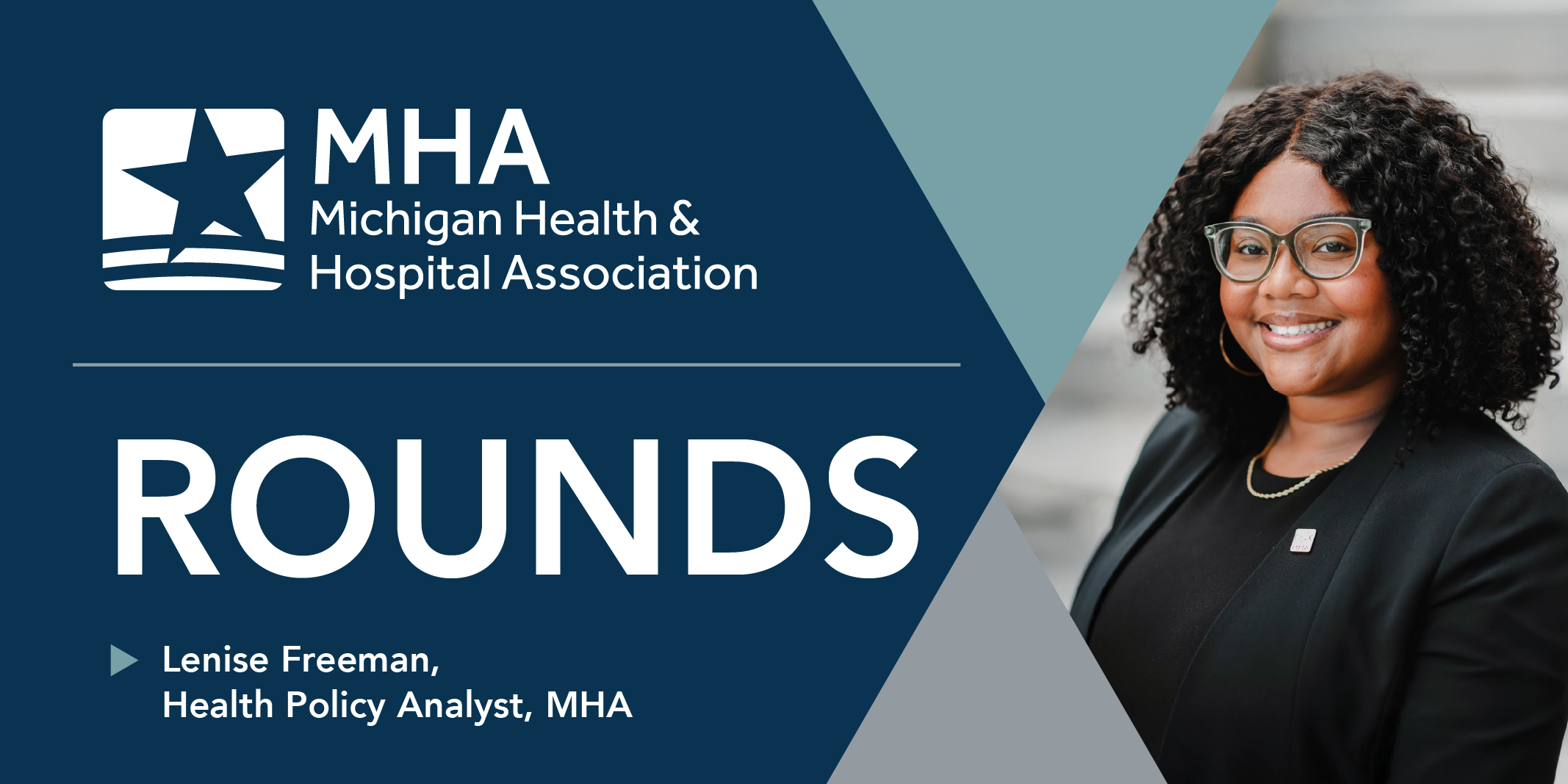
By: Lenise Freeman, health policy analyst, MHA

Over the past year, I supported the Birth Experience Project, a mixed-methods study examining how Black women across Michigan experience pregnancy, labor and delivery, and postpartum care. As part of this effort, I assisted in analyzing and coding more than 50 hours of interview and focus group data to better understand the patterns, experiences and needs that emerged across regions. This fall, I presented our findings at the 2025 American Public Health Association (APHA) Annual Meeting in Washington, D.C., where the work informed meaningful conversations about how hospitals can more effectively center the voices of Black women in maternal health improvement efforts.

The project engaged four focus groups and 37 individual interviews with women from the Midwest region, Southeast Michigan and Mid-Michigan. In partnership with the Michigan Council for Maternal and Child Health and Michigan State University’s Pediatric Public Health Initiative, our team aimed to capture mothers’ lived experiences directly and translate them into actionable insights for health systems.

Through coding and analysis, several themes surfaced consistently across all geographic areas. Women shared both positive and challenging care experiences that shaped their perceptions of safety, trust and autonomy. Many described moments when their concerns or pain were dismissed, minimized, or not addressed in a timely manner, which negatively impacted their ability to feel heard. Others emphasized how attentive listening, compassionate care and clear communication led to safer and more supportive hospital experiences.

Birth plans were another key theme. While some mothers shared that their preferences were honored, many experienced changes without adequate explanation or felt pressured into medical interventions that differed from their original plans. Across one participating region, only three of the 14 women who developed birth plans said their plans were thoroughly followed, with others noting limited options or confusion about what support the hospital could provide.

Hospital experiences varied widely. Mothers described moments of compassionate and responsive care, as well as instances where care felt rushed or impersonal due to staffing turnover, student rotations or limited coordination among providers. Some waited extended periods for updates, while others reported feeling like “just another patient,” rather than an individual with unique needs. These inconsistencies shaped how they felt supported or respected during their care.

Postpartum support was consistently identified as a gap in care. Many women reported minimal follow-up contact, limited mental health screening or unclear guidance about symptoms to monitor once they returned home. Several stated they “didn’t know what symptoms to look for,” highlighting the need for earlier, more proactive postpartum engagement.

Notably, the women in our study offered straightforward, realistic suggestions for improvement, recommendations that mirror ongoing maternal health efforts across the state. They emphasized the need for stronger communication and transparency, including more precise explanations of procedures and changes in care. They wanted birth plans reviewed and communicated across shifts—not forgotten or overridden. Many highlighted the importance of culturally responsive care and noted that they felt more comfortable advocating for themselves when staff reflected their identity or demonstrated cultural awareness. Doulas and midwives were described as critical sources of support, helping women feel heard when providers were limited or communication fell short. Women also expressed a need for more robust postpartum support, earlier follow-up visits, improved mental health screening, and accessible lactation and community-based resources.

Presenting this research at APHA reaffirmed the importance of hospitals in elevating patient voices within maternal care quality work. The themes that emerged through coding reveal both opportunities and strengths across Michigan hospitals. They also make clear the steps we can take to improve communication, strengthen autonomy and support mothers through the full continuum of care.

As Michigan continues implementing Maternal Levels of Care, advancing AIM bundles and supporting community-based maternal health initiatives, this research offers direction grounded in lived experience. I remain committed to ensuring that the insights shared through this project drive meaningful change, strengthening communication, honoring autonomy and supporting patient-centered care for every birthing person across Michigan.

Hospital Executives Recognized for Outstanding Leadership

The MHA announced the winners of its 2024 Healthcare Leadership Award June 27 during its Annual Membership Meeting. Each year, the MHA recognizes outstanding individuals who have provided exceptional leadership to healthcare organizations and to the health and well-being of the community. The 2024 recipients are Jawad Shah, MD, founder, president and CEO, Insight, Flint; and Harmony Gould, vice president of hospital & residential services, Pine Rest Christian Mental Health Services, Grand Rapids. The MHA will donate $1,000 on behalf of each award winner to the charity of their choice. These funds were provided to the MHA by the family of former MHA President H. Allen Barth.

Jawad Shah, MD, founder, president and CEO, Insight

Insight Health System has seen remarkable growth and innovation under Dr. Shah’s leadership since its inception in 2008. Starting with a humble team of four in Flint, Michigan, the organization now boasts more than 1,500 employees and extends its services across multiple states, profoundly impacting healthcare delivery and patient care.

Insight Health System manages a vast network, including the flagship Flint Medical Campus, which provides more than 216,000 patient services each year across a range of specialties such as neurosurgery, orthopedics and behavioral health. Following its acquisition and revitalization of the former Michigan Surgical Hospital, Dr. Shah spearheaded the transformation of the facility into the thriving Insight Surgical Hospital in Warren, achieving financial solvency within a year and increasing patient accounts by 520% in 2023.

The network expanded further in 2022 with the opening of Insight Dearborn, offering advanced outpatient services in orthopedics and mental health, among others. The organization’s reach also spans to Illinois and Iowa, reinforcing its mission to deliver exceptional, patient-centered healthcare.

Dr. Shah’s commitment extends beyond healthcare delivery to significant community involvement. He has been instrumental in establishing Insight Research Institute and Insight Behavioral Health Foundation. These entities recently pioneered the creation of Genesee County’s first medical-psychiatric hospital, slated to open in fall 2024, addressing urgent community needs in behavioral health.

In addition to his executive responsibilities, Dr. Shah contributes to the medical field as a Clinical Associate Professor at Michigan State University. Demonstrating his dedication to community service, he has generously directed the $1,000 monetary award to support Sylvester Broome Empowerment Village, further enriching the lives of those in the Flint area.

Harmony Gould, vice president of hospital & residential services, Pine Rest Christian Mental Health Services

Gould’s commitment to patients is unwavering and is evident from the many programs and initiatives she has led at Pine Rest, including expansion and improvement projects. She developed and led the only behavioral health unit in West Michigan accepting individuals with a COVID-19 diagnosis, which was recognized as the 2022 recipient of the MHA Advancing Safe Care Award. Gould also led the opening of the Beachwood and Lotus programs, which are two residential units built as a response to an unmet need and at the request of the Michigan Department of Health and Human Services to alleviate the need for residential care settings for adults and adolescents throughout the state. The Beechwood Unit is a 12-bed crisis residential program offered as an alternative to inpatient psychiatric hospitalization for adults. And the Lotus unit is a 25-bed intensive residential program designed to treat adolescents with complex care needs.

Additionally, Gould oversaw an expansion of Pine Rest’s Adult Partial Hospitalization Program in response to community needs and is leading the team developing a crisis stabilization unit, which is a new license in Michigan resulting from her participation in the MHA’s Behavioral Health Integration Council. She is also a key member of the Pediatric Center Oversight team at Pine Rest, which is opening the Pediatric Center of Behavioral Health in 2026. Her efforts have also put patient experience at the forefront, spearheading several initiatives that bolster patient and family input into organizational processes and practices.

Not only is she committed to patients, but she has also been highly committed to employee satisfaction and organizational stability by her involvement in launching Pine Rest’s Great Place to Work Initiative, which asks employees at any level of the organization to submit ideas for improvements and then collaborate with peers and leaders to develop plans for implementation. She is also active with Network180 to collaborate with other stakeholders to enhance crisis response protocol. And as mentioned earlier she has been a catalyst by offering invaluable insights in the strategic work of the MHA’s Behavioral Health Integration Council. At Gould’s request, the $1,000 monetary portion of the award will go to the Pine Rest Foundation, specifically for the Pediatric Center of Behavioral Health campaign.

The MHA congratulates the winners of the 2024 MHA Healthcare Leadership Award.

MDHHS Distributes Funding to Michigan Universities to Support Behavioral Health Workforce

The Michigan Department of Health and Human Services (MDHHS) recently allocated $5 million to 12 Michigan universities to provide stipends to students pursuing a Bachelor of Social Work (BSW) to Master of Social Work (MSW) degree program with a focus on behavioral health.

This initiative aims to address the growing demand for qualified professionals in the field and strengthen the pipeline of mental health practitioners in the state.

BSW students will receive a one-time stipend of $30,000 through the program. In exchange, they must commit to enrolling in a fulltime MSW degree program and agree to working for at least two years of full-time employment in public sector behavioral health in Michigan upon graduation. These stipends will enable up to 150 students to obtain their MSW degree.

The following Michigan universities received funding:

  • Andrew University
  • Eastern Michigan University
  • Grand Valley State University
  • Madonna University
  • Michigan State University
  • Northern Michigan University
  • Oakland University
  • Saginaw Valley State University
  • Spring Arbor University
  • University of Michigan
  • Wayne State University

Members with questions may contact Lauren LaPine at the MHA.

Healthcare Economic Impact Included in 2024 MBN Economic Forecast Breakfast

MHA CEO Brian Peters highlights the economic impact of healthcare in Michigan during the 2024 Economic Forecast Breakfast hosted by MBN.

The Michigan Business Network (MBN) hosted the 2024 Economic Forecast Breakfast Jan.11, which featured the inaugural release of the latest Michigan Future Business Index survey data, 2023 reviews and a look ahead on regional economic, business, healthcare, tourism and international business forecasts.

Given the healthcare sector significant role in Michigan’s economy, MHA CEO Brian Peters joined the Economic Forecast Breakfast as a presenter for the first time, highlighting the economic impact of healthcare in Michigan. Peters spoke about the mission and work of the MHA, including key strategic pillars in the 2023-2024 strategic action plan such as workforce support, hospital viability and behavioral health. Peters also discussed how working with hospitals and economic partners in the region contributes to growing the economy of Michigan. The MHA is an official partner with the MBN.

Other event presenters included Chris Holman, CEO of MBN; Mike Witt, senior vice president of Asset Management; Van Martin, president & CEO of Martin Commercial Properties; Julie Pingston, president & CEO of Choose Lansing; Steve Japinga, senior vice president of public affairs at the Lansing Regional Chamber of Commerce; Bob Trezise, president and CEO of the Lansing Economic Area Partnership; and Charles Ballard, emeritus faculty of Michigan State University Economic Department.

The MHA’s involvement in the event is an example of the association’s collaboration with economic leaders across the state of Michigan.

Members with questions about future regional economic events may contact Ruthanne Sudderth at the MHA.