
Hospitals Help: MyMichigan Clinics Improve Access to Timely Care

MyMichigan Health established the Continuing Care Clinics in 2023 to serve residents across its 26-county service region who lack timely access to primary care physicians. These clinics are pivotal during critical health transitions, offering responsive care after hospital discharges, emergency department visits, stays in long-term care facilities or while patients await new primary care providers.
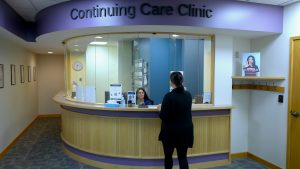
The multidisciplinary team of clinicians at MyMichigan Health create personalized care plans that help patients successfully transition home and reduce the risk of readmission.

Through the Continuing Care Clinics model, MyMichigan Health has demonstrated significant success in reducing poor health outcomes. Patients receiving care exhibit a lower risk of readmission compared to those at other, similar clinics. This achievement is credited to the multidisciplinary team of clinicians who develop personalized care plans, assisting patients in successfully transitioning home while minimizing readmission risks.

Additionally, patients receive referrals for preventive care screenings, further promoting community wellness. The Continuing Care Clinics collaborate with community partners to enhance patients’ access to essential resources including food, transportation and medication. These efforts empower patients to manage their health more effectively and improve recovery.

“Through partnerships with food centers, transportation services and pharmacies, we’ve improved patient access to essential resources like free food, transportation and medication,” said Steve Frazier, MHA, BA, RN, ACN-RN, director of quality and patient safety, MyMichigan Health. “These interventions help patients manage their health, reduce the risk of readmissions and improve overall health outcomes. Additionally, the clinics connect patients without a primary care provider to care, ensuring continuous support and reducing gaps in preventative care.”

For more information and hospital stories, check out the 2025 Community Impact Report. Additionally, this work earned MyMichigan Health a 2025 Ludwig Community Benefit Award. Members with questions may contact Lucy Ciaramitaro at the MHA.
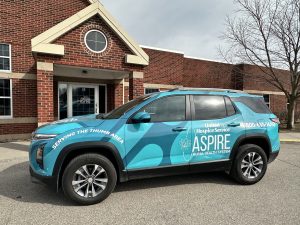

Hospitals Help: Aspire Rural Health System Offers Lifeline to Families in the Thumb

The Transitions program offers case management, referral services and specially trained Transitions volunteers to provide support, friendship, practical assistance and respite breaks for family and caregivers in the thumb region.

Transitions, offered through Aspire Rural Health System, is a free community-based program dedicated to supporting individuals with chronic or life-limiting illnesses, as well as their families, across Michigan’s thumb region. The program provides a compassionate bridge between healthcare and daily living, ensuring that no one has to navigate these challenges alone.

At the heart of Transitions is a dedicated coordinator who offers case management, referral services and personalized guidance. Specially trained Transitions volunteers extend this support by providing companionship, respite breaks for caregivers and practical assistance with everyday tasks such as light housekeeping, meal preparation and errands.

Families are also guided through advance healthcare directives and connected with community resources, helping them plan ahead and reduce stress during difficult times.

In 2024, the Transitions program supported more than 120 individuals and families to ensure patients received emotional and practical care in addition to medical treatment. These efforts not only improve quality of life but also strengthen community connections by fostering dignity, comfort and peace of mind.

“Transitions has been a lifeline for families in the thumb region,” said Angela McConnachie, co-chief executive officer, Aspire Health System. “By pairing compassionate care and resources for those who need them most, we’re able to provide relief, friendship and advocacy at a time when it matters most.”

For more information and hospital stories, check out the 2025 Community Impact Report. Members with questions may contact Lucy Ciaramitaro at the MHA.

Hospitals Help: Henry Ford Health’s Hospital-Based Doula Program

To help address the alarming rate of maternal and infant mortality, Detroit-based Henry Ford Health established a hospital-based doula program in 2024 that makes a trained professional available to provide emotional, physical and educational support before, during and after pregnancy to patients with Medicaid Health Plans. The program is believed to be the first of its kind in the country.

Members of the Henry Ford Health Doula Program team.
Members of the Henry Ford Health doula program team.

Studies suggest that care from a doula can make labor and delivery safer for pregnant people and babies. Through the program, eligible patients can request a doula at any time during their pregnancy. If an individual arrives at the hospital to deliver a baby and staff learn they’ve had little or no prenatal care, they can offer the services of an on-call doula, who provides an added layer of care during and after delivery. In its first year, nearly 200 pregnant people enrolled in the doula program.

Research conducted at Henry Ford Health after the implementation of the doula program found that those with greater social risk were more likely to engage in doula care when services were integrated and accessible, underscoring the importance of tailoring programs and outreach.

“Far too often individuals arrive at the hospital to give birth having had no prenatal care,” said Dr. D’Angela Pitts, maternal fetal medicine, Henry Ford Health. “These patients are most at-risk for complications during and after birth. That’s why we took the extra step of having doulas on call in the hospitals.”

For more information and hospital stories, check out the 2025 Community Impact Report. Members with questions may contact Lucy Ciaramitaro at the MHA.