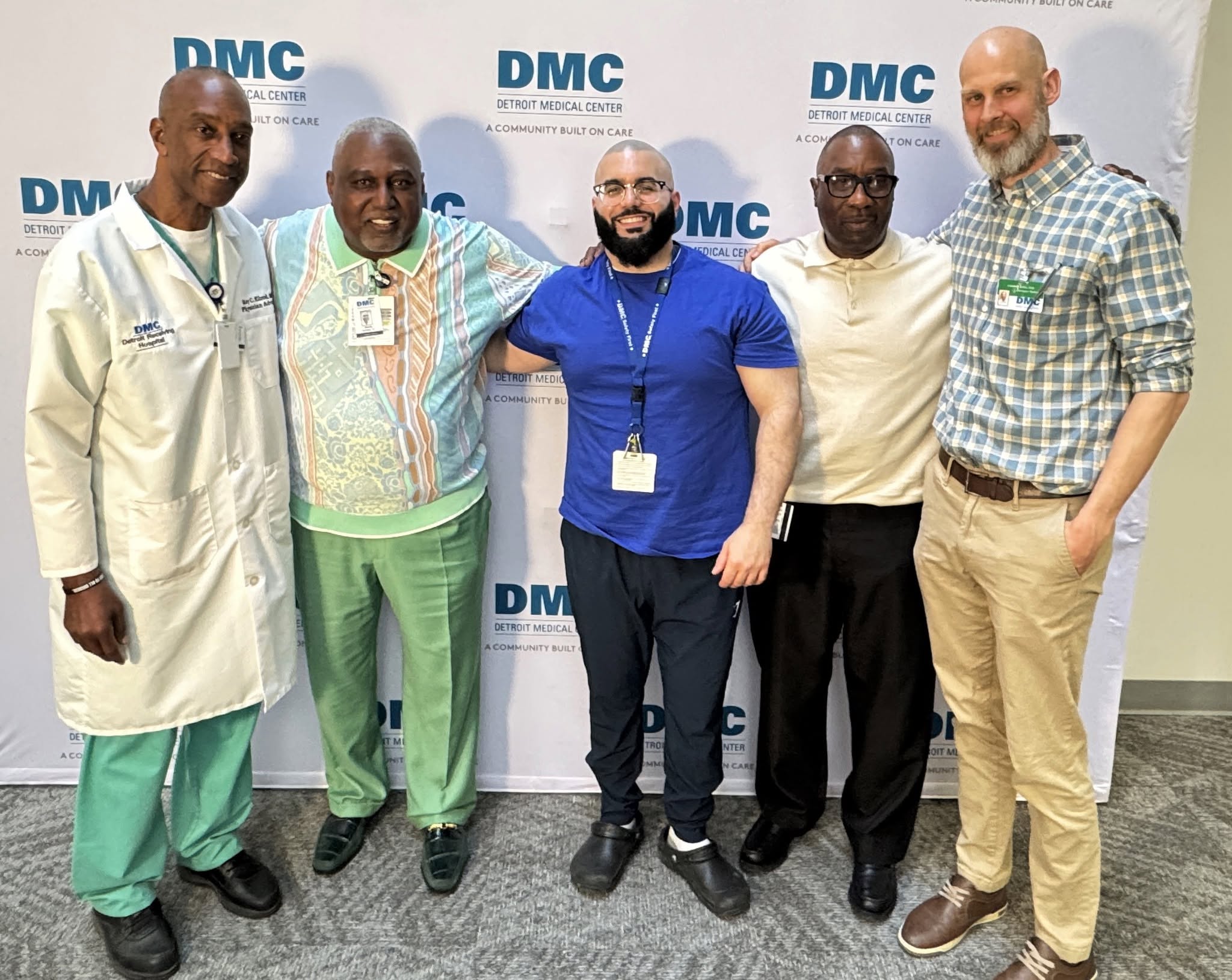
Fact Check: Drug Pricing Savings Are the Lifeline to Community Healthcare Services

Gary L. Roth, DO, Chief Medical Officer, MHA

Recent headlines have taken aim at the 340B Program – a federal drug savings initiative that serves as a lifeline to important community healthcare services. As a long-time cardiothoracic surgeon, it’s time to set the record straight on 340B.

Here’s the reality: doctors, nurses and healthcare leaders share patient’s frustration over rising healthcare costs. Michigan hospitals and health systems employ 222,000 residents, while healthcare is the largest employer in the state. We experience rising healthcare costs and premiums in lockstep with other businesses; while seeing those costs in the faces of every patient who walks through our doors and how cost can influence a person’s decision to seek care.

But attacking the 340B program is the wrong answer to a real problem.

What 340B Actually Does

The 340B program allows eligible hospitals and safety-net healthcare providers – those serving disproportionately high numbers of low-income and uninsured patients – to purchase certain outpatient drugs at reduced prices. The savings are directly reinvested into patient care: keeping rural emergency departments open, funding behavioral health services, expanding pharmacy access in underserved communities and subsidizing care for patients who cannot pay.

Hospitals located in 340B-eligible communities are reimbursed at levels below the full cost to deliver care. This federal program was created to financially support community-based healthcare services without spending any taxpayer dollars.

In Michigan, where rural hospital closures remain a persistent threat and safety-net institutions serve our most vulnerable neighbors, 340B is a lifeline to keeping healthcare close to home. For myself, who spent my career caring for critical care patients in the Greater Lansing area, 340B is a key part of supporting the healthcare we can receive in our community. I know 340B works because of my lived experience providing care because of it. Without 340B savings, some Michigan hospitals would face an impossible choice: cut lifesaving services or close their doors.

Let’s examine what these recent headlines are doing – distracting attention from the reality that drug companies are significantly driving healthcare costs. Their solution is to blame the caregivers and their hospitals that care for everyone who walks through their doors, year-round.

Drug prices in the United States have risen at rates that far outpace inflation. The cost of drugs for hospitals grew 13.6% last year, while hospital prices only increased 3.3%.

Unlike hospitals, drug companies set their own prices with virtually no regulatory check. Unlike hospitals, drug companies boast nearly 23% annual increases in revenue while still raising drug costs. Unlike hospitals, they don’t have to be open at 3 a.m. when someone’s child is struggling to breathe. Hospitals are the ones staying through the night to treat emergency aneurysms, heart attacks and strokes. I know this because I’ve treated far more than I can count.

Hospitals are always there. Always caring. Always working to advance care, regardless of ability to pay, regardless of the hour, regardless of the complexity.

This tension between drug pricing and healthcare affordability was exactly the kind of issue raised at a recent Crain’s Detroit Business Healthcare Affordability Roundtable, where Michigan hospitals and business leaders gathered to confront the systemic forces driving costs higher. The consensus was clear: meaningful reform requires looking at the full picture, including the drug supply chain, and not taking a scalpel to programs that help hospitals keep their doors open around the clock to serve the patients who need them most.

Let’s Solve the Right Problem Together

Accountability and transparency matter and the MHA support both. What I know from meeting and caring for patients is that meaningful solutions are those that impact their pocketbook without touching their healthcare services. Dismantling 340B as drug companies and their partners wish to do fails to achieve either of those outcomes. It instead pads drug company profits while risks community healthcare services.

The MHA is ready to be at the table. We invite lawmakers, business leaders, insurers and drug companies to join us in pursuing real, collaborative solutions to the cost challenges facing Michigan families.

MHA Keystone Center PSO Dashboard: Turning Safety Data into Action

The MHA Keystone Center Patient Safety Organization (PSO) Dashboard in KeyMetrics provides member hospitals with secure access to harm reporting data sourced from Press Ganey’s NextPlane platform. Designed to support patient safety improvement efforts, the dashboard offers clear snapshots of high and low performance across key harm reporting domains.

Members can use this resource to better understand trends in patient safety events, compare performance, and identify opportunities to reduce harm and improve outcomes within their hospitals or health systems. Data includes PSO‑protected reports categorized by event type and severity, ensuring a trusted environment for learning and improvement.

Clinicians can use the dashboard to understand variation in outcomes, support quality improvement initiatives and inform care team discussions. Healthcare leaders can use the tool to monitor performance trends, identify organizational risks and align systemwide quality priorities.

To learn more about how to use this resource, please join an upcoming intro Zoom session:

Access to the dashboard is available through a KeyMetrics account. Members can receive assistance with account setup or dashboard navigation by contacting Andrew Syrek at the MHA Keystone Center.

Senate Introduces Legislation on Behavioral Health Transport Vehicles

Michigan’s behavioral health system has long faced a critical transportation gap — and the MHA is supporting efforts to close it.

The Michigan Legislature introduced two bills last week that represent a significant step forward for patients in crisis and the hospitals caring for them. Senate Bill (SB) 928 would create a licensure structure for Behavioral Health Transport (BHT) vehicles, while SB 927 would establish a reimbursement mechanism for their services.

The Problem

Michigan currently has two categories of medical transport: Non-Emergency Medical Transport (NEMT), designed for predictable, scheduled trips such as outpatient appointments; and Emergency Medical Transport (EMT) via ambulance, designed for acute physical health emergencies. Neither of these options is well-suited for individuals experiencing a behavioral health crisis.

Patients in crisis cannot schedule their need for transport in advance — as NEMT requires — yet more than 99% do not require the level of medical intervention an ambulance provides. Michigan has seen a 65.5% increase in transports for patients in a mental health crisis over the past five years, placing increased strain on fragile Emergency Medical Services (EMS) systems.

The consequences are real. Hospitals report patients waiting 48–72 hours for transport to psychiatric beds, with confirmed placements lost because transport could not be arranged in time. EMS providers are being pulled away from the high-acuity medical emergencies their training and equipment are designed for – and because BHT services have been operating under different licenses, they have not been able to secure Medicaid reimbursement.

What BHT Offers

BHT vehicles are built for patients in crisis, featuring a number of safety features for both the patient and the driver. BHT units operate with consistent availability and pick-up can typically be arranged within hours of a request. Early adopters cite a strong preference for BHT over ambulance transport, reporting a calmer environment, reduced stigma and greater dignity for individuals in crisis.

The Legislative Solution

SB 928 creates a licensure structure for BHT vehicles, establishing the regulatory foundation needed to define and recognize this new category of certified transport. SB 927 builds on that foundation by creating a reimbursement mechanism, enabling BHT providers enrolled with the MDHHS to bill for services and ending the current dynamic in which hospitals are financially penalized for choosing the safer, more appropriate option.

For more information or to share feedback on these bills, members should contact the MHA Advocacy Team.

MDHHS Gun Lock Distribution Map Expands Access to Safe Storage

The Michigan Department of Health and Human Services (MDHHS) launched a new interactive Gun Lock Distribution Map to help residents locate free firearm safety devices and connect community partners with safe storage resources. The tool identifies more than 150 locations statewide where individuals can obtain free cable-style gun locks.

Free gun locks, provided through a partnership with the Michigan State Police, are purchased through Project ChildSafe, a national program focused on promoting responsible firearm ownership.

Community organizations, health providers, local governments and other partners can request gun lock supplies by completing an online form. Approved sites will be added to the statewide map and receive supplies directly.

Members are encouraged to visit the MDHHS secure storage webpage and download “The Talk” flyer to learn more about safe storage practices and available resources.

Members with question may contact Lenise Freeman at the MHA.

Webinar Recap: Michigan 211 Community Materials Now Available

A recent webinar hosted by the MHA explored regional trends and emerging community needs across Michigan using statewide 2‑1‑1 call data. The event explored insights on call volume, caller demographics and service requests that reflect evolving pressures on individuals and families.

Presentation slides, a summary of key takeaways and a recording of the webinar, Understanding Regional Needs: A Data‑Driven Look at Michigan’s 2‑1‑1 Calls, are now available for MHA members on the MHA Community site.

MHA Health Access & Community Impact Office Hours

Office hours are designed to connect hospital teams working to bridge healthcare and community services. This virtual forum provides information, insights and shared strategies aimed at addressing challenges that affect community health. The goal is to enhance coordination, strengthen partnerships and support hospitals in proactively responding to evolving community needs across Michigan.

Session dates and topics are determined based on emerging trends, statewide needs and timely issues identified across communities.

For office hour questions or MHA Community site access issues, contact Ewa Panetta at the MHA.

Rural Hospital Leaders Appointed to MHA Center of Rural Excellence Board of Trustees

Seven rural Michigan hospital leaders were recently appointed as inaugural board members to the newly established MHA Center of Rural Excellence by the Michigan Health & Hospital Association (MHA) Board of Trustees. These members are responsible for providing formal governance for the new organization.

Jeremiah J. Hodshire, president and chief executive officer, Hillsdale Hospital, will serve as the center’s chair and the MHA Board of Trustees representative for a three-year term.

In addition to Hodshire, the MHA Board of Trustees approved the appointment of six rural healthcare leaders to serve on the MHA Center of Rural Excellence Board:

  • Thomas Kurtz, Ph.D., president and chief executive officer, Memorial Healthcare, will serve a three-year term. Andrew Raymond, chief executive officer, Kalkaska Memorial Health Center, represents Michigan’s independent hospitals alongside Kurtz and will serve a two-year term.
  • Amanda Shelast, Marshfield Clinic Network President, Michigan and South, will serve a one-year term. Wendy Frush, RN, chief executive officer, Munising Memorial Hospital will serve a two-year term. Shelast and Frush represent the association’s rural members in Michigan’s Upper Peninsula.
  • Peter Marinoff, chief executive officer, Munson Healthcare Southern Region, will serve a one-year term and represent the state’s critical access hospitals.
  • Ross Ramsey, MD, chief executive officer, Scheurer Health, will serve a three-year term as the board’s physician representative.

“This board brings together rural healthcare leaders from across the state who share a commitment to preserving care close to home for Michiganders,” said MHA CEO Brian Peters. “Under their leadership, the MHA Center of Rural Excellence will prioritize policies and initiatives that allow rural hospitals to remain resilient and responsive to the needs of their communities.”

The MHA Center of Rural Excellence, a 501(c)(6) organization, was created to formalize and strengthen the collective voice of rural hospitals through support tailored to the unique challenges of Michigan’s rural providers.

UnitedHealth to Expand Rural Payment Pilot Program

UnitedHealthcare Group announced changes to eliminate prior authorization barriers and accelerate payments for rural hospitals nationwide to improve access to care and lower costs.

UnitedHealthcare implemented the Rural Payment Acceleration Pilot in January 2026 to support improvement in Medicare Advantage payments from fewer than 30 days to fewer than 15 days. With faster payment processes, this program proved to support financial sustainability in rural hospitals.

The exemption for most prior authorizations will expand to cover approximately 1,500 rural hospitals by Fall 2026, including all critical access hospitals and associated rural practitioners. This initiative aims to reduce costs and administrative burden, while addressing staffing strains that disproportionately impact rural healthcare providers. The expansion will also include payments made through Medicaid and fully insured commercial plans.

Members with questions may contact the MHA Policy team.

CMS Releases FY 2027 LTCH Prospective Payment System Proposed Rule

The Centers for Medicare & Medicaid Services (CMS) recently released a proposed rule to update the Medicare fee-for-service (FFS) long-term care hospital (LTCH) prospective payment system (IPPS) for fiscal year (FY) 2027. Highlights of the proposed rule include:

  • Increasing the standard LTCH PPS rate by a net 2.7%, after the 0.8 productivity cut and budget neutrality adjustments, from $50,824 to $52,177 for LTCHs that successfully comply with the CMS quality reporting program and electronic health record requirements. LTCHs that do not meet the requirements for these programs are subject to a 2-percentage-point reduction in the annual update.
  • Continue paying cases at the site-neutral rate if they fail to meet LTCH criteria.
  • Maintaining the fixed-loss amount for high-cost outlier cases at the current $78,936 for standard LTCH payment rate cases. Site-neutral payment cases are subject to the inpatient PPS fixed loss amount, proposed at $51,679.
  • Increasing the labor-related share of the standardized operating rate slightly from 72.9% to 73%.
  • Removing two measures from the LTCH Quality Reporting Program (QRP) and from public display beginning with the FY 2028 payment determination. If finalized, LTCHs would not be required to report calendar year 2026 data for the COVID-19 Vaccination Coverage Among Healthcare Personnel measure. The CMS also proposes to remove the COVID-19 Vaccine: Percent of Patients/Residents Who Are Up to Date measure beginning with the FY 2028 payment determination.
  • Revising the LTCH QRP data submission deadlines beginning with the FY 2029 LTCH QRP to reduce the timeframe for data submission from four and a half months after the end of the performance period to 45 days.

The MHA will provide a hospital-specific impact analysis and additional details in the coming weeks. Members are encouraged to submit comments to CMS by June 9 and notify Vickie Kunz at the MHA of any identified issues by June 1. CMS is expected to release a final rule around Aug. 1.

MHA Monday Report April 27, 2026

House, Senate Advance Budget Proposals; MHA-Supported Bills Move

Budget proposals from the House and Senate advanced in their respective chambers, while MHA-supported legislation saw action during the week of April 20. House Bill 5619, sponsored by Rep. Ann Bollin (R-Brighton), passed the …


Keystone Board Advances Safety Priorities, Plans Upcoming Work

The MHA Keystone Center Board of Directors met April 8 to discuss safety and quality priorities, review governance actions and plan for the upcoming program year. Brook Watts, MD, chief quality officer, Michigan Medicine, shared …


LARA Background Check Requirements to Impact Hospice Licensing

The MHA has been working with the Michigan HomeCare & Hospice Association to raise awareness of upcoming enforcement by the Michigan Department of Licensing and Regulatory Affairs (LARA) related to background check and fingerprinting requirements. …


MHA Annual Membership Meeting Explores Perception and Affordability

The MHA membership will convene in person for the MHA Annual Membership Meeting June 24-26 at the Grand Hotel on Mackinac Island. The annual meeting will feature an outstanding lineup of experts discussing key topics, …


Continuum of Care Consortium Seeks Member Participation

The Michigan Department of Licensing and Regulatory Affairs Bureau of Survey and Certification is organizing a Continuum of Care Consortium. This group is designed to bring together hospital and long-term care providers …


MHA Keystone Center Pilot Reduces Caregiver Strain

The MHA Keystone Center, in partnership with the Michigan Health Endowment Fund, released findings from a two-year pilot since implementing the Michigan Caregiver Navigation Toolkit in acute care settings. Results show reductions in caregiver strain and …


Hospitals Help Prioritize Patient and Family-Centered Care

Hospitals are improving the health and well-being of communities through a care model that fosters collaboration between clinicians, patients and their support systems. Person- and Family-Centered Care — often referred to as Patient and …


Keckley Report

For Hospitals, the Future’s not a Repeat of the Past

“Per AHA President and CEO: “The timing of our presence and voice in Washington is especially important this year. Health care affordability remains in the spotlight. Congress is discussing the prospects of one or two more reconciliation packages this year, even as we are asking them to examine the overreach and mitigate certain health care provisions from last year’s package. And we are 199 days from the midterm elections…” (AHA Today April 17, 2026)

The reality is this: hospitals have lost much of the good will they earned during the pandemic. Pushback by AHA against hospital price transparency, site neutral payments, 340B changes et al. have been successful. But heightened visibility about executive compensation, profitability, tax exemptions, private equity ownership concerns and for-profit venture-development has eroded Congressional favor, exacerbated nurse and physician burnout and lessened community support. AHA is aware. …

I do not think the future of the U.S. health system will be a repeat of its past. That’s good news and bad news for hospitals.”

Paul Keckley, April 19, 2026


MHA in the News

Adam Carlson, senior vice president, advocacy, MHA, joined JJ Hodshire, president and chief executive officer, Hillsdale Hospital, for a press conference April 17 to discuss how proposed cuts to Medicaid will further destabilize hospitals …

LARA Background Check Requirements to Impact Hospice Licensing

The MHA has been working with the Michigan HomeCare & Hospice Association to raise awareness of upcoming enforcement by the Michigan Department of Licensing and Regulatory Affairs (LARA) related to background check and fingerprinting requirements. Implementation is expected later this year, with the exact date to be determined.

Michigan hospice facilities are licensed by site, which means staff must be fingerprinted and registered with LARA under each specific hospice license. This may affect employees who are listed under a hospital license instead of a hospice license, or if an individual works at multiple hospice locations but are only registered at one.

Key Considerations

  1. All employees working in a hospice program, including part-time, float and PRN staff, must be listed under the hospice license and affiliated with each individual hospice site if more than one site is operated. Organizations may also list employees under a hospital license; however, they must be listed under the hospice license.
    • Per LARA, state and federal fingerprint-based criminal history record checks are required for employees, independent contractors and individuals granted clinical privileges who have direct access to patients or residents and are under the facility’s control. “Direct access” includes access to a resident or resident’s property, financial information, medical records, treatment information or other identifying information.
  2. Staff already listed on the hospice license require no further action. Staff not listed on the hospice license have two options:
    1. If hired within the last year, background check and fingerprinting results may be shared with the hospice agency.
    2. If hired more than one year ago, a new background check and fingerprinting must be completed, as results cannot be shared across entities after one year.

At this time, hospice residences cannot comply with this requirement, as they are not yet established in LARA’s system. LARA recommends following the steps above and completing background checks and fingerprinting under the hospice agency license. Once hospice residences are established in the system, those results may be shared.

Feedback Requested

Organizations holding a hospice license are encouraged to complete a brief survey. Feedback will help inform support efforts to ensure staff complete required background checks and maintain compliance.

Members with questions may contact Kelsey Ostergren at the MHA.