Kelsey Ostergren, MPH, CIC, senior director, Health Policy, MHA
The United States lost its measles elimination status Nov. 13, a designation the country had held since 2000. This reflects the reality that measles has been circulating in the U.S. for more than 12 months and is an important reminder that continued prevention efforts matter.
In some ways, we have become victims of our own success. 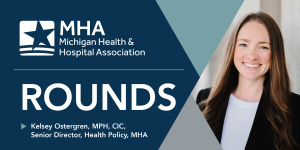
For many Americans, diseases like measles and polio exist largely in history books. Most parents today have never seen a child with measles, much less watched one become seriously ill from it. Generations have grown up without seeing the devastating effects of polio in their schools and communities. That is not because these diseases disappeared on their own, but because vaccines have been incredibly effective at preventing them.
When prevention works, it is easy to forget what we are being protected from, which results in declining vaccination rates creating an environment where these diseases return.
That is why prevention remains such an important part of the work we do in healthcare and public health. Vaccination is one of the most effective tools available to prevent serious illness and save lives, but questions about vaccines are real and should be met with good information and trusted conversations.
The MHA has consistently encouraged patients and families to talk with their physicians, nurses, pharmacists and other healthcare providers about vaccines and make informed decisions based on credible, evidence-based information.
Healthcare providers have an important role in those conversations, too. It’s critical to ask patients about their vaccination status, make clear recommendations about vaccination scheduling and take time to answer questions without judgment. A routine office visit, hospitalization or urgent care visit can all be opportunities to remind patients why vaccines matter, correct misinformation and connect them with the right resources. A straightforward recommendation from someone a patient already knows and trusts can be powerful.
The MHA continues to support those efforts through partnerships including the Alliance for Immunization in Michigan, Michigan Advisory Committee on Immunizations and Michigan for Vaccines, while our MHA Healthcare & Public Health Integration Council continues to bring hospitals and public health partners together around vaccination, infectious disease prevention, communication and coordinated response. This work is ultimately about making sure healthcare and public health are reinforcing the same message and communities have credible information from people they trust.
The loss of measles elimination status is concerning, but it is not irreversible. The same tools that eliminated endemic measles transmission in the U.S. more than two decades ago still work today. Vaccination, strong disease surveillance, trusted healthcare providers and effective partnerships between healthcare and public health can get us there again.
Perhaps the most important lesson is also the simplest: prevention is easiest to undervalue when it is working. Our job is to make sure we do not have to relearn its value the hard way.
Additional Resources:
Those with questions are encouraged to contact the MHA Policy department.

Phone: (517) 703-8601
Fax: (517) 703-0628