 MHA Submits Comments on Proposed Medicaid Mental Health Assessment Policy
The MHA recently submitted comments to the Michigan Department of Health and Human Services on proposed policy 2545-BH, which sets new mental health assessment requirements for Medicaid Health Plan providers caring for Comprehensive Health Care Program enrollees. Although …
 2025 Michigan Caregiver Navigation Toolkit Available
In alignment with National Caregiver Month, the MHA Keystone Center recently created the 2025 Michigan Caregiver Navigation Toolkit to support hospitals in their efforts to initiate and enhance caregiver support programming across the state. The …
 Report: Access, Affordability & Community Health Improved by Hospital Programming, Investments
The Michigan Health & Hospital Association (MHA) released its 2025 Community Impact Report Nov. 17 highlighting community programming and investments from Michigan hospitals that are improving access to care, addressing affordability and advancing the health of …
MHA Keystone Center PSO Hosts Virtual Care Safe TableRegistration is open for the MHA Keystone Center Patient Safety Organization (PSO) Virtual Care Safe Table in partnership with Henry Ford Health. The event will take place from 12:30 to 4 p.m. Dec. 3 at …
MDHHS Seeks Volunteers to Support Development of New EMS Credentialing ExamsThe Michigan Department of Health and Human Services (MDHHS) is developing a Paramedic Exam and an Instructor Coordinator Exam and is seeking volunteers to support the process. Individuals across the Emergency Medical Services (EMS) and …
MHA Keystone Board Reviews Workplace Violence Prevention and Maternal Health EffortsThe MHA Keystone Board of Directors met Nov. 12 to review ongoing work to improve safety and quality across member organizations. The meeting opened with a connect-to-purpose story shared by Keystone Board Chair Doug Dascenzo, …
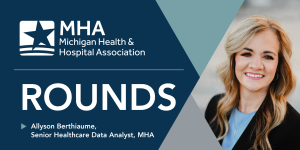 Caring For Those Who Provide Care
November is National Family Caregiver Month, which recognizes the 63+ million individuals across the United States who support loved ones with health needs every day. I am one of the 63 million and provide care for both of my parents. …

For Health Insurers, the Big Questions need Answers
“The federal shutdown ended Wednesday. Congress passed and the President signed a continuing resolution (CR) that extends funding and delays changes to several health programs until January 30, 2026 including community health centers, the National Health Service Corps, teaching health centers, the Acute Hospital-at-Home initiative, telehealth, disproportionate share hospital payment cuts and many others. But extension of the ACA tax credits used by 24 million to purchase coverage at a discount was not included in the deal. The Congressional Budget Office estimates more than 4 million people will lose insurance if the subsidies are not renewed at the end of the year. …
The majority of voters think the political system is not working, lending to hyper-partisanship by establishment players and lack of trust in the status quo. Misinformation is weaponized and ‘blame and shame’ tactics deployed. That’s where U.S. politics is. …
In the peer reviewed literature, health insurance coverage is strongly correlated with better health outcomes, including lower mortality, improved chronic disease management, and increased use of preventive care. But its affordability is increasingly in question.
Tax credits will be in the news until the end of the year and prominent in Campaign 2026 politics but the value proposition on which the industry has operated will be the focus beyond. Like every sector in healthcare, increased scrutiny is certain.”
 News to Know
 MHA in the News
The MHA received media coverage during the week of Nov. 17 covering the Rural Health Transformation Program, the MHA’s Community Impact Report and medical debt. Bridge published a story Nov. 19 on the Rural Health …
*Disclaimer: This grant is supported by the Centers for Medicare & Medicaid Services (CMS) of the U.S. Department of Health and Human Services (HHS) as part of a financial assistance award totaling $11.1 million, with 100% funding provided by CMS/HHS. The contents are those of the author(s) and do not necessarily represent the official views of, nor an endorsement by, CMS/HHS or the U.S. Government.

Phone: (517) 703-8601
Fax: (517) 703-0628