Council Workgroups Advance Care Delivery Strategies

The MHA Council on Health Access and Community Impact, established in June 2024, brings together voices from across the MHA membership to advance a shared commitment to improving healthcare and health outcomes. Over the past year, the council has transitioned from defining its scope and purpose to launching work that supports meaningful, systemwide change.

This shift led to the formation of workgroups aligned with key drivers of care delivery transformation, a priority in the MHA 2025-26 Strategic Action Plan. Collectively, the council and its workgroups aim to advance strategies that optimize operations across access, quality improvement, patient experience, community alliance and care integration.

Shared Focus, Clear Direction

Central to this work is a commitment to delivering safe, high-quality and reliable care to every patient, regardless of circumstance.

The council also recognizes that meaningful transformation requires moving beyond traditional clinical models. Integrated care must address the full range of factors shaping health, including social, structural, behavioral and clinical conditions, while elevating community voice and advancing population‑level impact.

Workgroup Purpose and Progress Highlights

Driven by this focus, the council workgroups share common objectives:

  • Develop practical roadmaps and tools for scalable implementation across member hospitals.
  • Outline approaches for integrating and operationalizing best practices.
  • Advance recommendations for statewide adoption to be presented to the MHA Board of Trustees.

Three workgroups are currently active and meet monthly. Highlights include:

  • Quality Improvement (QI): Members of the workgroup conducted stakeholder and subject-matter expert interviews with national, state and academic QI leaders. Insights from these conversations informed the development of a draft blueprint and implementation framework to guide statewide and hospital‑level QI initiatives, with an intentional focus on addressing persistent gaps in outcomes and advancing quality.
  • Patient Experience and Community Alliance: This workgroup is developing a framework that expands the patient journey beyond clinical encounters to strengthen partnerships with patients and communities by aligning engagement and communication strategies with lived experience and local context.
  • Care Integration: The workgroup is identifying gaps in how clinical and social care are operationalized across health systems, including staffing, IT infrastructure, policies and workflows, while informing scalable best practices and alignment across the state.

Looking Ahead

As the council and workgroups move forward, the focus remains on scalable solutions that advance care delivery transformation while centering community partnership and measurable impact.

Members with questions about the council’s work may contact Ewa Panetta at the MHA.
MHA Monday Report April 6, 2026

MHA EventsHospital HR Professionals Gather at MHA Human Resources Conference

The MHA welcomed human resources leaders from across the state for the 2026 MHA Human Resources Conference March 24 in Lansing. Attendees gathered for a day of learning, networking and discussions focused on the workforce …


CMS Issues Guidance on Updated Federal Dietary Guidelines

The Centers for Medicare & Medicaid Services (CMS) recently released a Quality & Safety Special Alert Memo reminding critical access hospital providers of their responsibilities for patient food and nutrition services under existing …


MHA Annual Membership Meeting Strengthens Statewide Collaboration

The MHA Annual Membership Meeting will be held June 24-26 on Mackinac Island. It will include education sessions that deliver tactics and perspectives to shape the future, recognition of prestigious individuals leading transformation and numerous …


Excellence in Governance Fellowship Offers Meaningful Dialogue Among Trustees and Experts

Applications are now being accepted for the 2026-27 cohort of the MHA Excellence in Governance Fellowship, a rigorous and comprehensive program delivering tools and knowledge in effective governance. Hospital and health system governing board members …


Hospitals Help: Kalkaska Memorial Walks Beside Patients at Discharge

Patients often feel most vulnerable during the transition from hospital to home – especially if questions linger, follow-up care is extensive or there’s any risk of complications. Knowing this, hospitals are finding ways to ensure …


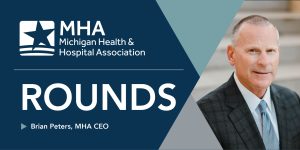
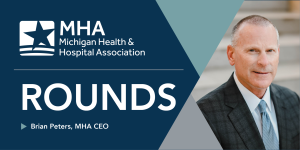
MHA Rounds image of Brian PetersMHA CEO Report — Violence Is Not Part of the Job

Healthcare workers accept extraordinary responsibility in their role as caregivers for their community, but fearing for their own safety is never something they should have to accept as part of the job. …


March Recap

March was marked by a strong focus on National Nutrition Month, highlighting how hospitals are advancing Food as Medicine efforts across Michigan. The following articles recap key conversations and initiatives supporting improved health outcomes through nutrition.

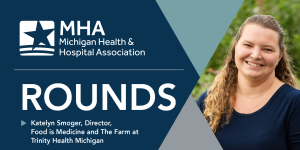
Food as Medicine: How Trinity Health Is Advancing Health Through Nutrition

Food is Medicine. Health by Food. ProduceRx. The integration of healthy food into healthcare is gaining attention under many names, but the message remains the same: access to healthy foods as a part of care. …


Health Access & Community Impact Council Focuses on Food as Medicine

The MHA Health Access & Community Impact Council convened virtually March 5 to discuss strategies to improve health outcomes through stronger integration of social and clinical care. In recognition of National Nutrition Month, members also explored …


Hospitals Expand Food Access Through Community Benefit Collaboratives

As many observe National Nutrition Month, hospitals across the state are implementing programs to address chronic disease through nutrition education and expanded food access. This work is being done through the MHA Community Benefit Collaboratives, which support efforts to improve Michiganders’ health outcomes in …


Keckley Report

Reality Check: the New Healthcare Advisory Committee

“Last week, Secretary of Health and Human Services (HHS) Robert Kennedy and Centers for Medicare and Medicaid Services (CMS) Director Mehmet Oz announced appointments to the new Healthcare Advisory Committee (HAC).

Its 18 members were selected from 400 nominees and will serve two-year terms. The group includes 4 health system executives, 5 physician leaders, 4 policy analysts, 3 ‘others’ (including motivational speaker Tony Robbins) and 2 Ex Officio (Non‑Voting) Members (Kimberly Brandt, JD — CMS Deputy Administrator & COO Stephanie Carlton, CMS Chief of Staff). …

The U.S. health system is in chaos. Its long-term destination is unknown. It’s near-term is mired in political brinksmanship and discontent about its costs and affordability. It is unhealthy. Majorities in both parties, and independent voters think the system is broken but few know what a viable alternative might be. Lost but making record time!!!”

Paul Keckley, March 29, 2026


New to KnowNews to Know

  • MHA Endorsed Business Partner i2G Systems is hosting the webinar Pathway to Prevention April 22 from 11 a.m. to noon ET.
  • The American Hospital Association (AHA) is accepting applications for the 2027 AHA Foster G. McGaw Prize.

MHA in the News

The MHA received media coverage during the week of March 30 following Executive Vice President of Government Relations and Public Policy Laura Appel’s participation in two panels focused on key healthcare challenges and opportunities. WZMQ …

MHA CEO Report — Violence Is Not Part of the Job

MHA Rounds graphic of Brian Peters

“Fear is not a good motivator.” — Edgar Schein

MHA Rounds graphic of Brian PetersHealthcare workers accept extraordinary responsibility in their role as caregivers for their community, but fearing for their own safety is never something they should have to accept as part of the job.

During Workplace Violence Prevention Month, we must be clear in our conviction that ensuring the safety of healthcare workers is not optional.

Violence against healthcare workers is rising at a concerning rate. According to a 2025 American Hospital Association report, up to 76% of healthcare workers have reported experiencing violence. Hospitals refuse to accept this as the status quo. Across the state, our members are investing in security enhancements, strengthening de‑escalation training and reinforcing the message that hospitals are places of healing.

But hospitals cannot solve this growing crisis on our own.

Without intentional policy solutions, efforts to reduce violence against healthcare workers will not meet the scope and severity of the problem. Healthcare workers deserve the same legal and workplace safeguards afforded to others who serve the public, like flight attendants and first responders. The MHA continues to advocate for legislation that will cement the expectation that assaulting healthcare workers will not be tolerated into law.

A fragmented approach to addressing workplace violence isn’t sustainable, which is why our members remain actively engaged in coordinated statewide mitigation efforts. Just last month, hospital HR leaders gathered at our annual HR conference and participated in a workplace violence reduction panel discussion. This October, our Safety & Quality Symposium will continue that focus with programming centered on worker safety. The MHA Keystone Center, a certified patient safety organization, supports this work year‑round by facilitating a member‑led workplace safety collaborative and offering educational opportunities, security risk assessments and trainings in partnership with MHA‑endorsed business partner Tarian.

Healthcare workers are there for us during our most vulnerable moments. It is our responsibility to be there for them as well by building cultures of safety that extend not only to patients, but to those supporting and providing care.

During Workplace Violence Prevention Month, and every month thereafter, we must reaffirm our commitment to prioritizing safety and advancing comprehensive solutions that support staff well-being. Protecting healthcare workers is not only fundamental to our values, but also to our ability to deliver the care our communities deserve.

As always, I welcome your thoughts.

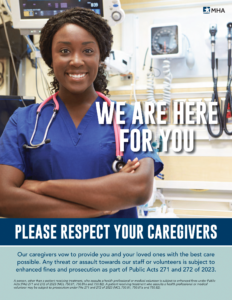
Member Resource Available – Workplace Safety Posters

The MHA developed workplace safety posters for members to display throughout their facilities communicating the consequences of committing physical harm toward healthcare workers or hospital property. The informational posters are geared toward patients, families and visitors, with a couple of creative options available in two sizes. With the help of MHA Endorsed Business Partner AMN Healthcare Language Services, Spanish and Arabic versions are also available. Complimentary copies of the materials are available to MHA members by request through an online order form. Non-members may purchase materials at cost. Questions about materials may be directed to the MHA.

News to Know – April 6, 2026

  • New to KnowMHA Endorsed Business Partner i2G Systems is hosting the webinar Pathway to Prevention April 22 from 11 a.m. to noon ET. Guest speaker, Jeff McDole, chief product officer at i2G Systems, will review a recent case study on how properly aligning safety and security policies, procedures and technology helped prevent a workplace violence incident and explore solutions to support sustained security performance in healthcare facilities. Members are encouraged to register or contact Rob Wood at the MHA with questions.
  • The American Hospital Association (AHA) is accepting applications for the 2027 AHA Foster G. McGaw Prize. The prize recognizes health delivery organizations that demonstrate alignment between community health needs and co-designed programs. One winner and up to three finalists will be recognized at the 2027 AHA Leadership Summit. Members improving community health and well-being through leadership and community partnerships are encouraged to apply. Members interested in learning more are encouraged to visit the AHA website. Those with questions may contact the AHA.

CMS Issues Guidance on Updated Federal Dietary Guidelines

The Centers for Medicare & Medicaid Services (CMS) recently released a Quality & Safety Special Alert Memo reminding hospitals and critical access hospital providers of their responsibilities for patient food and nutrition services under existing Medicare Conditions of Participation.

The memo follows the release of the 2025-2030 Dietary Guidelines for Americans and directs hospitals to review and update their menus and nutrition practices to better align with current federal recommendations.

Medicare already requires hospitals to provide meals that meet patient nutritional needs under the oversight of a qualified dietitian.

The updated guidelines emphasize diet quality, including limiting highly processed food, sugary drinks and refined carbohydrates, while encouraging whole and minimally processed foods.

This update does not create new requirements but reinforces existing expectations. Hospitals that do not meet current standards may still face enforcement actions under existing rules. The Cornerstone Group, the MHA’s Washington, D.C.-based government affairs representation, provided an additional analysis on the requirements.

Hospitals are encouraged to evaluate their current nutrition practices and make updates as appropriate while continuing to meet the needs of individual patients.

Members with questions may contact Lenise Freeman at the MHA.

MHA Annual Membership Meeting Strengthens Statewide Collaboration

MHA Events

MHA Annual Meeting logoThe MHA Annual Membership Meeting will be held June 24–26 on Mackinac Island. It will include education sessions that deliver tactics and perspectives to shape the future, recognition of prestigious individuals leading transformation and numerous networking opportunities.

Meaningful and candid conversations are indispensable during challenging times, and the annual meeting offers many opportunities to connect. Popular events include the lawn party with games and entertainment, the ice cream social, front porch receptions and the Sip N’ Sail cruise, which supports health improvement programs recognized by the MHA Health Foundation Ludwig Community Benefits Award.

Hundreds of leaders will gather, creating space for new partnerships to begin. Members are encouraged to register by May 22 to attend this memorable event. Opportunities to sponsor the annual meeting are available through May 5. Members with questions may contact the MHA or call (517) 323-3443.

Excellence in Governance Fellowship Offers Meaningful Dialogue Among Trustees and Experts

Applications are now being accepted for the 2026-27 cohort of the MHA Excellence in Governance Fellowship, a rigorous and comprehensive program delivering tools and knowledge in effective governance.

Hospital and health system governing board members who enroll will engage in dialogue with healthcare experts to gain skills to effectively consider strategies and make decisions and share their experiences with other trustees.

Hospital and health system governing board members who enroll will engage in dialogue with healthcare experts to:

  • Gain skills.
  • Effectively consider strategies.
  • Make decisions.
  • Share their experiences with other trustees.

Between October 2026 and June 2027, fellows will meet in person three times at the MHA headquarters in Okemos and participate in virtual sessions. More than 100 trustees have graduated from this unique program, and they all speak highly of it.

“The MHA Fellowship has given me the tools I need to engage more intentionally, the right questions to ask and to be a partner with the CEO in advancing healthcare,” said one graduate.

Questions about the fellowship can be directed to Erin Steward at the MHA.

Media Recap: Coverage Highlights MHA Insights on Access, Affordability and Innovation

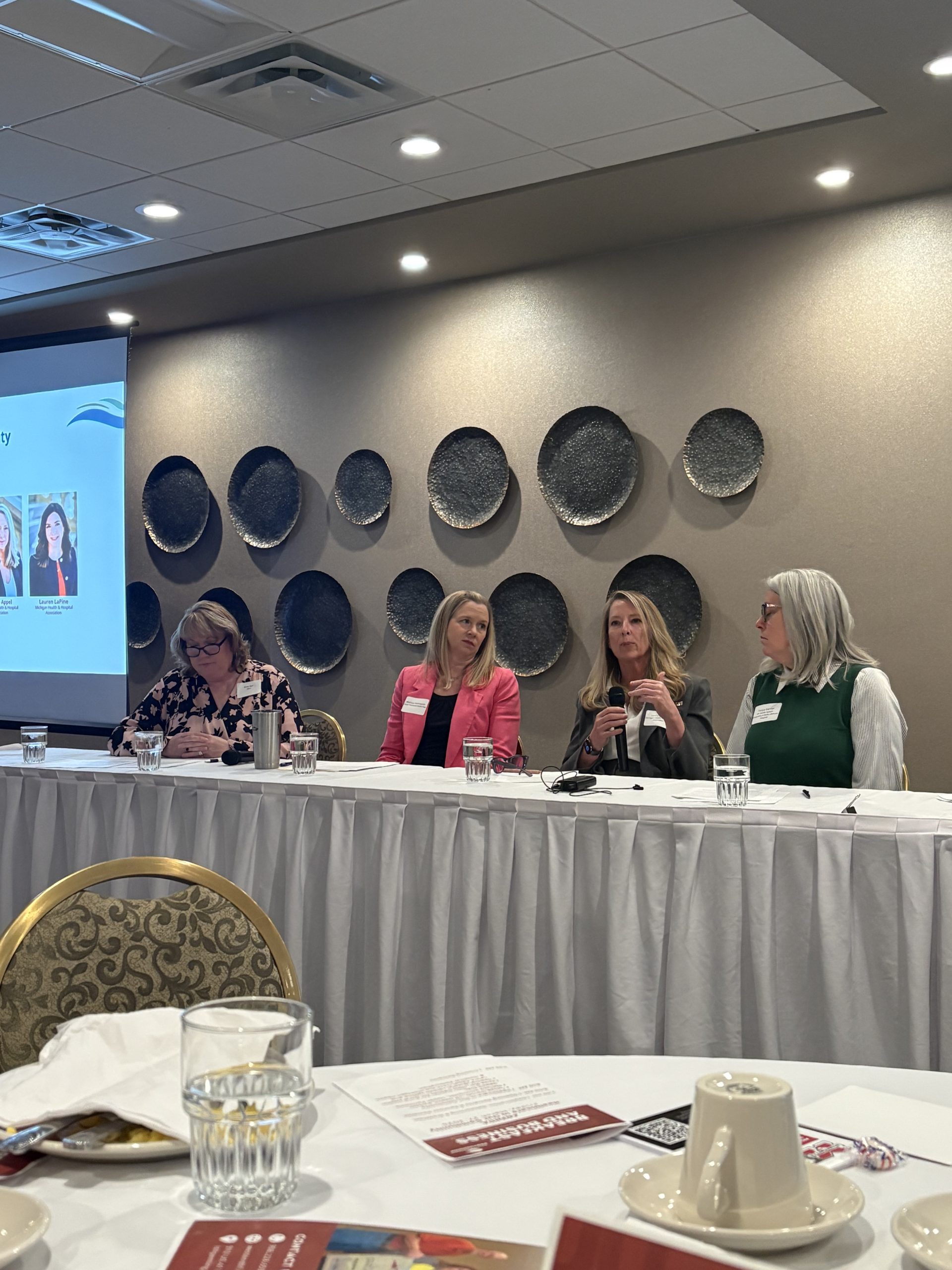
Laura Appel, executive vice president, government relations and public policy, MHA, during a panel discussion at the Lake Superior Community Partnership Breakfast & Business event.

The MHA received media coverage during the week of March 30 following Executive Vice President of Government Relations and Public Policy Laura Appel’s participation in two panels focused on key healthcare challenges and opportunities.

WZMQ covered the Lake Superior Community Partnership’s Breakfast & Business event, where Appel and Lauren LaPine-Ray, DrPH, MPH, vice president, policy & rural health, MHA, discussed the unique healthcare landscape and challenges in the Upper Peninsula. Appel and LaPine-Ray emphasized how federal policy decisions could impact access to care and economic stability in the region.

The Michigan Daily reported on the Blueprints for Pangaea Healthcare Business Gala, which included a panel presentation in which Appel discussed the need for cross‑sector collaboration to address healthcare access and affordability.

MLive published a story on projected Medicaid coverage losses following the passage of H.R. 1. MHA CEO Brian Peters was quoted in the article discussing the long-term impact on Michigan hospitals.

“For Michigan hospitals alone, that number is north of $6 billion in negative impact over that 10-year horizon,” said Peters. “You cannot take $6 billion out of the hospital funding line without severe consequences in terms of access to patient care.”

Members with questions regarding media requests should contact Elise Gonzales at the MHA.

Hospital HR Professionals Gather at MHA Human Resources Conference

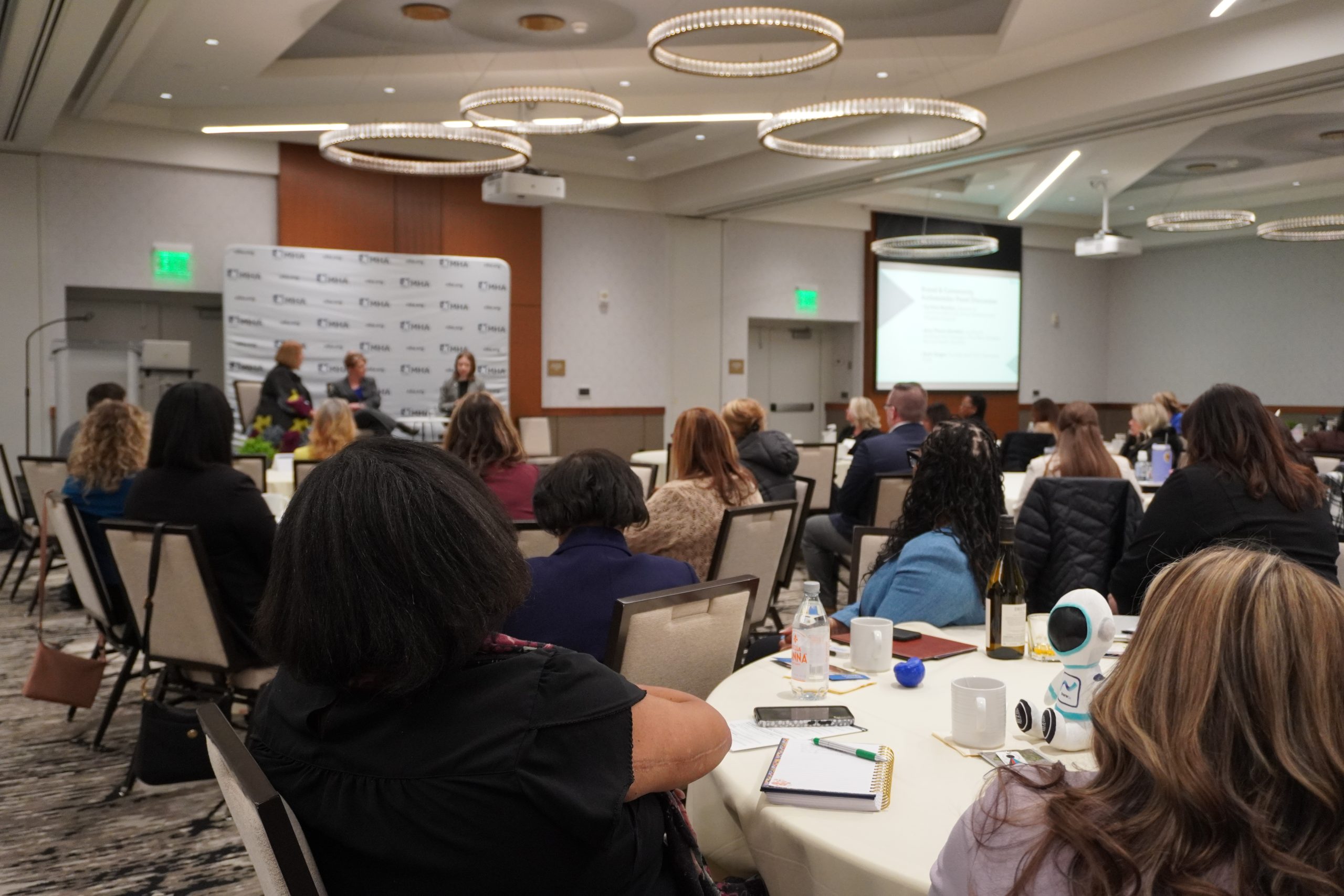
Conference attendees seated at round tables listen to speakers at the front of the room during the MHA Human Resources Conference.
Attendees during the 2026 MHA Human Resources Conference.

The MHA welcomed human resources leaders from across the state for the 2026 MHA Human Resources Conference March 24 in Lansing. Attendees gathered for a day of learning, networking and discussions focused on the workforce challenges facing healthcare organizations.

As hospitals and health systems continue to navigate a complex workforce environment, the conference highlighted practical, actionable strategies HR leaders can bring back to their teams.

Throughout the day, speakers emphasized several key themes, including the importance of measuring what matters through data-driven decision-making, vendor evaluation and workforce metrics. Sessions also highlighted approachable leadership as a driver of trust and engagement, the growing urgency of workplace violence prevention and staff safety and the value of strong community partnerships to support employees and patients.

Attendees explored ways to engage and recognize employees, elevate authentic staff voices and use video storytelling to strengthen recruitment, culture and community trust.

Thank you to event sponsors and exhibitors:

  • AgencySync
  • HPS
  • Medical Solutions
  • Michigan Health Council
  • Northwood University
  • People Results
  • Pine Rest Employee Assistance Programs
  • Prolink
  • Salary.com

Members with questions should contact Erica Leyko at the MHA.

Hospitals Help: Kalkaska Memorial Walks Beside Patients at Discharge

Members of the Kalkaska Memorial Health Center team

Patients often feel most vulnerable during the transition from hospital to home – especially if questions linger, follow-up care is extensive or there’s any risk of complications. Knowing this, hospitals are finding ways to ensure patients don’t have to navigate discharge and recovery alone.

The Community Paramedic program at Kalkaska Memorial Health Center is a great example of this work. Based in the health center’s emergency department, the program supports patients during and after discharge in an effort to address concerns and prevent avoidable emergency department visits.

“At Kalkaska Memorial Health Center, our mission is to improve the health and quality of life for those that we serve,” said Jeremy Cannon, VP, chief nursing officer, Kalkasa Memorial Health Center. “To truly make an impact, we look beyond the four walls of our hospital and focus on understanding patient needs in their own environment.”

According to the National Library of Medicine, readmission within 30 days of hospital discharge has been linked to both short and long-term mortality. Proper care coordination before, during and after a hospital stay is critical for improving patient outcomes.

The program at Kalkaska engages providers across acute care, long-term care and primary care to identify patient’s risk for hospital re-admission. Team members often address discharge questions, concerns or confusion – whether it be difficulties managing acute or chronic conditions, missing resources at home, medication adjustments or new care needs.

Paramedics are available seven days a week to meet patients before discharge or contact them to schedule home visits within 24 hours. In the home, they identify barriers that may not have been apparent during the hospital stay and coordinate with primary providers, social work, pharmacy and the electronic medical record team to support comprehensive care.

“We are fortunate to have a hospital-owned emergency medical services agency operating through Kalkaska Memorial Health Center, allowing us to invest directly in the individuals who respond to our community members during their most vulnerable moments,” said Cannon.

Patients enrolled in the program have demonstrated significantly lower emergency department readmission rates. The work allows the teams at Kalkaska to better support patients and keep them where they want to be: home.

Those with questions or content ideas for the Hospitals Help series may contact Lucy Ciaramitaro at the MHA.