MHA Healthcare Leadership Academy Applications Due Feb. 6

The enrollment deadline for the MHA Healthcare Leadership Academy (HCLA) is Feb. 6. The cohort meets Feb. 25-27 and May 7-8 at the MHA headquarters in Okemos.

HCLA, in partnership with Executive Core, has been a staple of the MHA, with more than 125 physicians, nurses and other healthcare professionals completing the academy. The two power-packed modules featured in the coursework provide participants with Leadership 360° feedback with personalized executive coaching, an exploration of best practices balanced with patient outcomes and valuable discussions with senior healthcare leaders.

2025 HCLA cohort participant Megan Cahill, DO, MBA, division chief of medicine, Henry Ford Macomb Hospital, highlighted the program’s impact on her leadership development. Cahill noted the value of learning how to coach and mentor leaders more effectively within her organization, as well as gaining new perspectives on how to apply existing tools in more intentional ways. She also emphasized the role of 360-degree leadership feedback and personalized coaching in strengthening her self-awareness and leadership approach.

For more information, please contact Erica Leyko at the MHA.

MHA Joins Coalition Letter Opposing Federal Redefinition of Professional Degrees

The MHA joined a statewide coalition in signing a letter to Michigan’s congressional delegation expressing concern about a proposed federal change that would remove several health professions, including nursing and behavioral health fields, from the definition of a professional degree.

The proposal, developed through the U.S. Department of Education Reimagining and Improving Student Education negotiated rulemaking process, could limit access to federal graduate student aid for individuals pursuing careers in nursing, social work, counseling and other essential healthcare roles. Coalition members noted that these professions require accredited graduate education, supervised clinical training and state licensure.

As Michigan continues to experience significant healthcare and behavioral health workforce shortages, limiting access to graduate education would further strain hospitals, clinics and community providers across the state. The letter raises concerns that the proposal could create additional barriers for students seeking to enter or advance within these professions.

The MHA and coalition partners urged Michigan’s congressional delegation to request that the Department of Education revise the proposal to align with existing accreditation and licensure standards and to preserve access to federal financial aid that supports the state’s health care workforce pipeline.

Members with questions may contact Lauren LaPine-Ray at the MHA.

MHA CEO Report — 2026, A Pivotal Year for Healthcare

MHA Rounds graphic of Brian Peters

MHA Rounds graphic of Brian Peters“The best way to predict the future is to create it.” — Peter Drucker

As we look toward the year ahead, one thing is clear: healthcare will remain at the forefront of public debate. We’ve seen time and again how healthcare delivery is shaped by policy decisions. In an election year, and at a time when families and employers alike are feeling the strain of rising healthcare costs, it is more important than ever to prioritize electing policymakers who are committed to working alongside those serving our communities every day to develop thoughtful, informed solutions.

Despite rising costs for highly skilled clinical and non-clinical labor, medications, medical supplies, emerging medical technology and cybersecurity, along with persistent workforce shortages and supply chain challenges, hospitals continue to put patients first. They remain committed to delivering safe, high-quality care, even as they treat older, sicker patient populations – many of whom experience food insecurity, housing challenges and transportation barriers. Hospitals are open 24/7/365.  There are no days off.  We treat the most complex cases, often with multiple comorbidities and the attendant risk that accompanies them.  And we don’t refuse care to patients based on their ability – or inability – to pay.

All of this comes at a cost, and while we own our share of the affordability crisis, as we pointed out in a recent op-ed, pointing the finger solely at hospitals is patently unfair.  As healthcare takes center stage this election cycle, it is critical that these realities are reflected in policy discussions.

Toward the end of 2025, we saw a preview of how legislation will influence coverage, reimbursement and accessibility in 2026. More than a half a million Michiganders received healthcare coverage through an Affordable Care Act health plan in 2025. With the loss of enhanced premium tax credits, more than 50 percent of those individuals are expected to forgo coverage due to costs.  We’ve seen this movie before: loss of coverage and rising levels of uncompensated care is what led directly to the passage of the Affordable Care Act.

We know that when individuals delay or opt out of care because of cost, the consequences are far-reaching. Patients who could have received lifesaving, preventive care from a primary care provider instead arrive in emergency rooms needing more complex, intensive treatment after their condition worsens. This system does not work for anyone. As more individuals seek emergency and hospital care without coverage, it drives up costs and limits access to care for patients and families throughout our communities.

As we repeatedly pointed out during the debate over the federal reconciliation bill, H.R. 1, the healthcare ecosystem is complex and interrelated.  When hospital reimbursement is cut in the Medicaid or Medicare programs – or if insurance market changes result in fewer individuals with comprehensive coverage – the resulting service line reductions or eliminations affect everyone in the community.  As a result, everyone involved in delivering and supporting healthcare has a shared responsibility to address the affordability crisis. In 2026, we have the opportunity to come together for critical conversations about the future of healthcare. Hospitals remain committed to uplifting solutions that ensure healthcare remains within reach for all.

As always, I welcome your thoughts.

MHA Monday Report Dec. 22, 2025

Healthcare Bills Advance During Final State Legislative Session Week of 2025

Enforcement of hospital price transparency measures, removal of mental health questions on health professionals’ license applications, and the creation of a palliative care advisory task force were among the healthcare-related bills that advanced in the …


State’s Chief Medical Executive Shares Standing Recommendation Regarding Children’s Vaccines

Michigan’s Chief Medical Executive Natasha Bagdasarian, MD, issued a standing recommendation Dec. 18, encouraging healthcare providers to follow the children’s immunization schedules developed by the American Academy of Pediatrics or the American Academy of …


CMS Announces MAHA ELEVATE Model

The Centers for Medicare & Medicaid Services (CMS) is inviting healthcare organizations nationwide to apply for the Make America Healthy Again: Enhancing Lifestyle and Evaluating Value-Based Approaches Through Evidence (MAHA ELEVATE) model, a new initiative scheduled …


AHA Releases 2025 National Governance Report

The American Hospital Association (AHA) has released its 2025 National Governance Report. The report, based on data collected from August to December 2024, continues to develop a comprehensive picture of the state of healthcare…


Hospitals Help: Aspire Rural Health System Offers Lifeline to Families in the Thumb

Transitions, offered through Aspire Rural Health System, is a free community-based program dedicated to supporting individuals with chronic or life-limiting illnesses, as well as their families, across Michigan’s thumb region. The program provides a compassionate …


Mid-Program Year Highlights: Resources & Reports

Below is a compilation of resources shared during the first half of the 2025-26 program year to provide members with relevant tools, updates and insights.

Michigan Hospital Collaboratives Launch to Improve Community Health

More than 50 Michigan hospitals are coming together to improve outcomes in maternal health, behavioral health and chronic disease across the state through new community benefit collaboratives launched by the Michigan Health & Hospital Association …


MHA Keystone Center Annual Report Highlights Safety and Quality Initiatives


The MHA Keystone Center recently released its 2024-25 annual report, which demonstrates Michigan hospitals’ commitment to improving outcomes and advancing care. The report highlights MHA Keystone Center-led safety and quality initiatives, including: A five-year collaboration with …


Report: Access, Affordability & Community Health Improved by Hospital Programming, Investments

The MHA released its 2025 Community Impact Report highlighting community programming and investments from Michigan hospitals that are improving access to care, addressing affordability and advancing the health of …


New MHA Infographic Showcases Rural Michigan Healthcare Impact

The MHA recently released the infographic Healthcare Impact in Rural Michigan, which highlights how critical access hospitals, sole community hospitals, rural emergency hospitals and birthing hospitals support communities across the state. The infographic highlights the …


2025 Michigan Caregiver Navigation Toolkit Available

In alignment with National Caregiver Month, the MHA Keystone Center recently created the 2025 Michigan Caregiver Navigation Toolkit to support hospitals in their efforts to initiate and enhance caregiver support programming across the state. …


News to Know

  • The MHA will offer the Healthcare Leadership Academy in 2026, with cohorts meeting Feb. 25–27 and May 7–8 at the MHA Headquarters in Okemos.
  • MHA Endorsed Business Partner CyberForce|Q is hosting the Proactive Cyber Risk Measures Webinar on Jan. 29 with speakers from Trinity Health, the Michigan State Cyber Command Center and other organizations.
  • The MHA offices will be closed and no formal meetings will be scheduled Dec. 24, 2025–Jan. 1, 2026.
  • Due to the holidays, Monday Report will not be published Dec. 29 and Jan. 5 and will resume its normal schedule Jan. 12.

News to Know – Dec. 22, 2025

New to Know

New to Know

  • The MHA will offer the Healthcare Leadership Academy in 2026, with cohorts meeting Feb. 25–27 and May 7–8 at MHA Headquarters in Okemos. In partnership with Executive Core, the program features two immersive modules focused on leadership 360° feedback with personalized executive coaching, advanced business acumen and intimate discussions with senior healthcare leaders; class size is limited. For more information, please contact Erica Leyko at the MHA.
  • MHA Endorsed Business Partner CyberForce|Q is hosting the webinar Proactive Cyber Risk Measures on Jan. 29 with speakers from Trinity Health, the Michigan State Cyber Command Center and other organizations. Members are encouraged to register for a first-hand look at what happens when a real cyber incident occurs, including proactive steps organizations can take to accelerate recovery and reduce impact.
  • The MHA offices will be closed and no formal meetings will be scheduled Dec. 24 – Jan. 1, 2026.
  • Due to the holidays, Monday Report will not be published Dec. 29 and Jan. 5 and will resume its normal schedule Jan. 12. Member alerts and MHA newsroom articles will continue to be published during that time to provide relevant updates to the MHA membership, as necessary.


Healthcare Bills Advance During Final State Legislative Session Week of 2025

Enforcement of hospital price transparency measures, removal of mental health questions on health professionals’ license applications, and the creation of a palliative care advisory task force were among the healthcare-related bills that advanced in the House and Senate in the final legislative session week of 2025.

The House of Representatives unanimously approved Senate Bill (SB) 95 by a vote of 106-0. Sponsored by Sen. Jonathan Lindsey (R-Coldwater), the bill enforces hospital price transparency measures largely based on existing federal requirements and prohibits medical debt collection when a hospital is out of compliance with those requirements. The legislation now awaits concurrence action in the Senate. SB 95 was previously tied to legislation protecting the 340B program in Michigan, and the MHA supports maintaining 340B as an integral component of the bill package.

The House also passed House Bill 4277, sponsored by Rep. Matthew Bierlein (R-Vassar), which removes mental health questions from licensure applications for healthcare professionals. The MHA-supported bill has been referred to the Senate for further consideration.

Additionally, the Senate passed SB 483 on Dec. 16. Sponsored by Sen. Rosemary Bayer (D-West Bloomfield), the bill establishes a palliative care advisory task force within the Michigan Department of Health and Human Services. The task force would develop an annual report identifying palliative care services offered throughout the state. The MHA-supported bill has been referred to the House Government Operations Committee.

Members with questions may contact the MHA advocacy team.

AHA Releases 2025 National Governance Report

The American Hospital Association (AHA) has released its 2025 National Governance Report. The report, based on data collected from August to December 2024, continues to develop a comprehensive picture of the state of healthcare governance structures and practices across the country in areas including composition, performance oversight and selection. The report also includes commentary from several governance experts following each section, offering valuable interpretations of the data and trends identified in the report.

For information about MHA trustee resources or webinars, contact Erin Steward at the MHA.

CMS Announces MAHA ELEVATE Model

The Centers for Medicare & Medicaid Services (CMS) is inviting healthcare organizations nationwide to apply for the Make America Healthy Again: Enhancing Lifestyle and Evaluating Value-Based Approaches Through Evidence (MAHA ELEVATE) model, a new initiative scheduled to launch in 2026.

MAHA ELEVATE will support the implementation of evidence-based lifestyle and chronic disease prevention programs aimed at improving outcomes for Medicare beneficiaries. The model will focus on interventions that address risk factors such as poor nutrition, physical inactivity, obesity, hypertension and diabetes, and will test whether preventive, lifestyle-oriented strategies can improve outcomes and reduce long-term healthcare costs when implemented at scale.

CMS will release a Notice of Funding Opportunity in early 2026 for the first cohort, and the voluntary model will launch Sept. 1, 2026. Funding will be awarded to organizations that propose interventions supported by strong evidence and demonstrate the ability to measure outcomes, report data and sustain program delivery over time. Proposals will be competitively reviewed based on evidence strength, implementation readiness and potential impact on Medicare populations.

Members interested in applying can find additional details, application materials and timelines on the CMS Innovation Center website.

Members with questions may contact the MHA policy team.

State’s Chief Medical Executive Shares Standing Recommendation Regarding Children’s Vaccines

Michigan’s Chief Medical Executive Natasha Bagdasarian, MD, issued a Standing Recommendation  Dec. 18 encouraging healthcare providers to follow the children’s immunization schedules developed by the American Academy of Pediatrics (AAP) or the American Academy of Family Physicians (AAFP).

Dr. Bagdasarian noted that the AAP and AAFP vaccine schedules are evidence-based and support the prevention of infectious diseases. Historically, Michigan providers have referred to vaccine schedules issued by the Centers for Disease Control and Prevention’s Advisory Committee (ACIP) on Immunization Practices for both children and adults. However, recent changes to ACIP membership and recommendations that are not evidence-based, such as discontinuing the birth dose of the hepatitis B vaccine, prompted the Michigan Department of Health and Human Services (MDHHS) to recommend alternative guidance.

MDHHS emphasized that following AAP or AAFP vaccine schedules will help ensure the safety and wellbeing of children across the state.

Clinical leaders from the Michigan Children’s Hospital Collaborative and the Michigan chapter of the AAP expressed strong support for the recommendation. The Children’s Hospital Collaborative stated that vaccine-preventable diseases can have devastating effects on infants and young children and underscored the importance of guidance rooted in rigorous, up-to-date scientific evidence. Clinical leaders noted that adherence to the AAP’s child and adolescent immunization schedule will allow Michigan providers to confidently administer safe and effective vaccines, reduce preventable hospitalizations and protect children.

Vaccines remain a primary tool for the prevention and control of infectious diseases, and the MHA supports Dr. Bagdasarian’s standing recommendation to follow the AAP and AAFP immunization schedules as evidence-based guidance that promotes the health and wellbeing of children across Michigan. More information is available on the MDHHS Immunization Recommendations for Michigan webpage.

Members with questions should contact Kelsey Ostergren at the MHA.

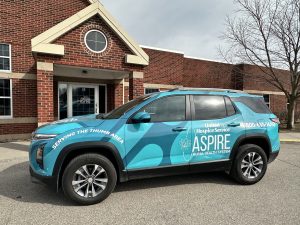
Hospitals Help: Aspire Rural Health System Offers Lifeline to Families in the Thumb

The Transitions program offers case management, referral services and specially trained Transitions volunteers to provide support, friendship, practical assistance and respite breaks for family and caregivers in the thumb region.

Transitions, offered through Aspire Rural Health System, is a free community-based program dedicated to supporting individuals with chronic or life-limiting illnesses, as well as their families, across Michigan’s thumb region. The program provides a compassionate bridge between healthcare and daily living, ensuring that no one has to navigate these challenges alone.

At the heart of Transitions is a dedicated coordinator who offers case management, referral services and personalized guidance. Specially trained Transitions volunteers extend this support by providing companionship, respite breaks for caregivers and practical assistance with everyday tasks such as light housekeeping, meal preparation and errands.

Families are also guided through advance healthcare directives and connected with community resources, helping them plan ahead and reduce stress during difficult times.

In 2024, the Transitions program supported more than 120 individuals and families to ensure patients received emotional and practical care in addition to medical treatment. These efforts not only improve quality of life but also strengthen community connections by fostering dignity, comfort and peace of mind.

“Transitions has been a lifeline for families in the thumb region,” said Angela McConnachie, co-chief executive officer, Aspire Health System. “By pairing compassionate care and resources for those who need them most, we’re able to provide relief, friendship and advocacy at a time when it matters most.”

For more information and hospital stories, check out the 2025 Community Impact Report. Members with questions may contact Lucy Ciaramitaro at the MHA.