
MHA offices will be closed and no formal meetings will be scheduled Jan. 19, in honor of Martin Luther King Jr. Day.

MHA offices will be closed and no formal meetings will be scheduled Jan. 19, in honor of Martin Luther King Jr. Day.
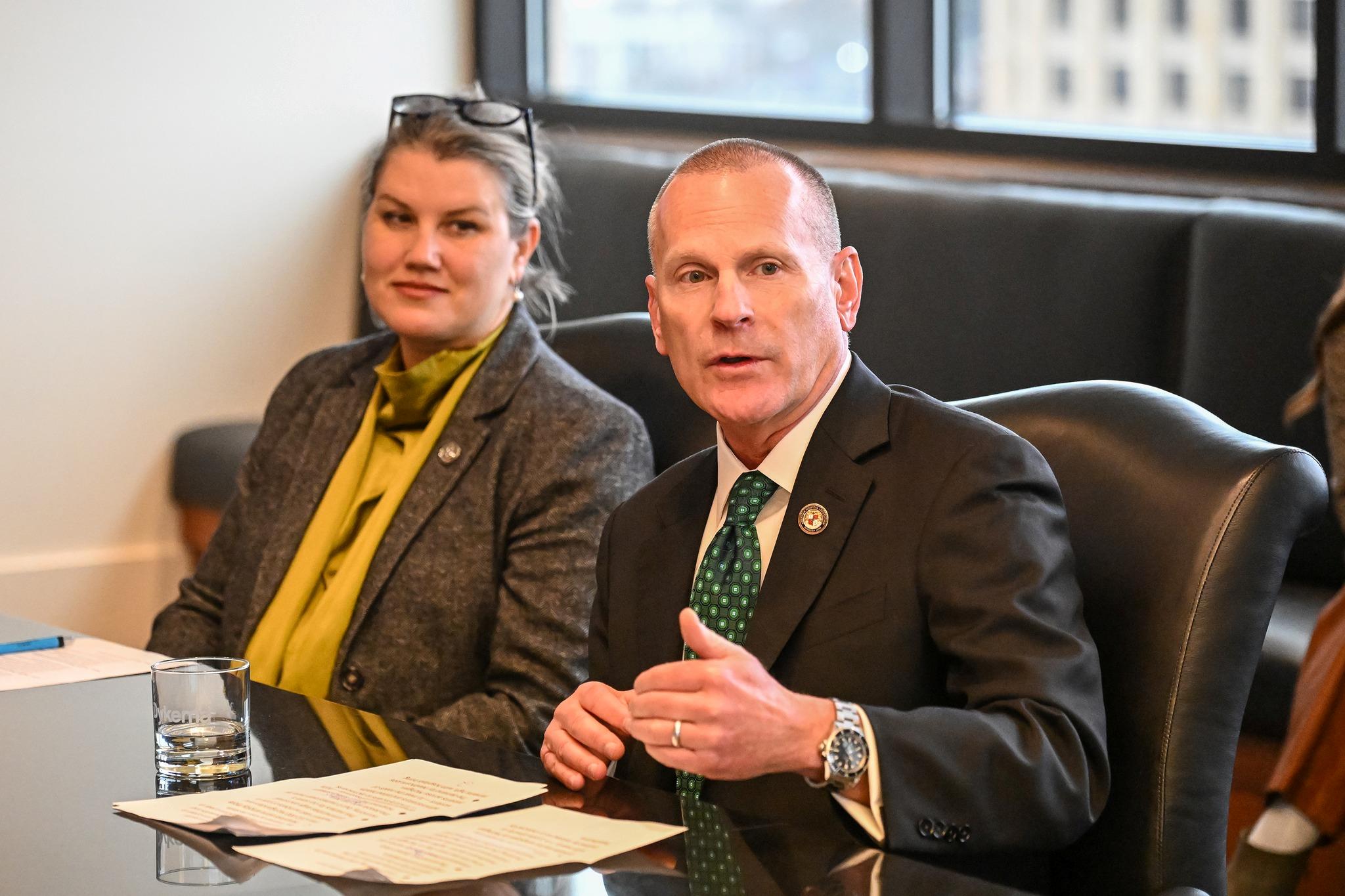 MHA CEO Brian Peters joined the Michigan Association of State Universities Jan. 13 in a media roundtable to discuss the economic impact of Michigan’s public universities, which generate nearly $45 billion in net new economic activity a year.
Peters reinforced how higher education institutions are essential partners in building the healthcare workforce and preparing graduates for the rapidly evolving demands of healthcare delivery.
Healthcare employs more Michiganders than any other sector, with hospitals alone employing more than 222,000 Michiganders and supporting a vast numbers of jobs in communities large and small.
The round table garnered media coverage across the state. Peters and the MHA were mentioned in stories published by the Lansing State Journal, Michigan Advance, WSBT, WWMT and Yahoo News.
Members with questions regarding media requests should contact John Karasinski at the MHA.

 The Michigan Department of Health and Human Services (MDHHS) recently announced an updated application period for the 2026 Michigan State Loan Repayment Program (MSLRP), which will be open from March 2 through April 30, 2026. The program offers hospitals and other eligible employers an opportunity to recruit and retain primary medical, dental and mental health providers. MSLRP provides tax-free student loan repayment to eligible providers who commit to serving in Health Professional Shortage Areas (HPSAs), with awards of up to $300,000 over a period of up to 10 years.
For the 2026 application cycle, MSLRP will use a new online application portal through the State of Michigan’s MiLogin system. Providers are responsible for submitting applications and must include required employed documentation. Employer contribution requirements remain at 20% for nonprofit employers and 50% for for-profit employers placing providers in nonprofit sites, with contributions waived for eligible State of Michigan employees working at state psychiatric hospitals and for Indian Tribal-Affiliated Primary Care Clinics.
MDHHS identified several priority application groups for 2026, including inpatient pediatric psychiatric providers, provider practices in Genesee Country and northern obstetric service providers. Early submissions are encouraged, as those who submit in March will receive priority consideration. Non-priority practices sites with HPSA scores of eight or higher will be treated as priority sites.
Members with questions may contact Lenise Freeman at the MHA.
The Michigan Department of Health and Human Services (MDHHS) recently released a grant funding opportunity to prevent child abuse and neglect. This funding opportunity aims to prevent child abuse and neglect by developing protective factors that promote healthier and resilient families and communities. Activities include strategies that aim to reach families before allegations of abuse and neglect occur.
501(c)(3) nonprofits, private and public entities, local health departments, federally recognized tribes or a group of federally recognized Michigan tribes, Urban Indian Health Clinic programs and universities are eligible to apply. A total of $97,500 in funding is available.
The grant period runs from April 1 to Sept. 30. To apply, applicants must register via EGrAMS to request an application by 5 p.m. on Feb 6, with final grant applications due by 3 p.m., Feb. 13.
To learn more about the opportunities, potential applicants are encouraged to attend a 90-minute pre-application conference scheduled for Jan. 22 at 2 p.m.
Members with questions may contact the MHA policy team.
The Michigan Department of Health and Human Services (MDHHS) is accepting applications to serve on the Rural Health Transformation (RHT) Advisory Council, which will support implementation of Michigan’s RHT Program to improve rural health. The council will convene quarterly, with meetings lasting between 60 to 90 minutes and may hold additional sessions as needed to support program activities.
The Members of the RHT Advisory Council will help:
Ideal candidates are those who:
The MDHHS will select a group that reflects Michigan’s rural regions and key sectors, including public and behavioral health, healthcare delivery, community organizations, tribal health, academia, workforce and policy partners. Priority will be given to applicants with a strong awareness of rural challenges and alignment with the goals of the RHT Program.
The MHA encourages rural healthcare providers and leaders to apply to serve on this advisory council.
Members with questions may contact Lauren LaPine-Ray at the MHA.

 Registration is now open for the upcoming MHA Human Resources Conference scheduled from 8:30 a.m. – 4 p.m. March 24 at the Crowne Plaza, Lansing, a must-attend event for HR leaders, talent professionals and executives shaping the future of healthcare workforces. This dynamic conference will bring together experts from across the healthcare spectrum to explore timely challenges, share best practices and deliver actionable strategies for today’s rapidly evolving HR landscape.
Healthcare organizations continue to face unprecedented workforce pressures—from talent shortages and burnout to regulatory changes and the accelerating role of technology. This conference is designed to equip human resources professionals with the insights and tools needed to attract, retain and support a resilient healthcare workforce while advancing organizational goals.
Registration is $259 per person and members are encouraged to register by March 13.
Members with questions regarding registration should contact Ellie Droste and those with questions about the event should contact Erica Leyko at the MHA.
Health and Human Services Secretary Robert F. Kennedy Jr. directed Jan. 5 the Centers for Disease Control and Prevention (CDC) to revise the U.S. child and adolescent immunization schedule, reducing the number of universally recommended vaccines from 17 to 11 and shifting several others to high-risk or shared decision-making categories.
Under the updated schedule, vaccines recommended for all children include protection against diseases such as measles, polio, pertussis, pneumococcal disease, human papillomavirus and chickenpox. Other vaccines including influenza, Covid-19, hepatitis A and B, RSV and meningococcal disease, will now be recommended only for certain high-risk populations or based on discussions between families and their healthcare providers. Federal officials stated the changes will not affect insurance coverage and vaccines currently recommended by CDC will remain covered.
The Michigan Department of Health and Human Services (MDHHS) affirms the standing recommendation released Dec. 18, 2025, encouraging providers to continue following the evidence-based childhood immunization schedules developed by the American Academy of Pediatrics and the American Academy of Family Physicians. MDHHS reiterated this guidance Jan. 6, emphasizing its commitment to science-based recommendations to protect Michigan families.
Effective Jan. 1, Michigan Medicaid begun covering stand-alone vaccine counseling visits, allowing providers to be reimbursed for vaccine discussions even when no vaccine is given.
The MHA is supporting efforts to form a statewide immunization coalition aimed at improving coordination, increasing vaccine access and addressing declining childhood vaccination rates. While the association does not provide clinical guidance, the MHA continues to support hospitals in efforts to prevent vaccine-preventable diseases and encourage informed conversations between providers and patients.
Members with questions about vaccine may contact Kelsey Ostergren at the MHA.


The 103rd Michigan Legislature resumed session for the 2025-26 term during the week of Jan. 12, with the MHA continuing to work with lawmakers on initiatives that prioritize patients, providers, and hospitals and improve the health of communities across the state.
The House Rules Committee voted in support of House Bill (HB) 4925 and HB 4896 on Jan. 15. The bills, introduced by Rep. Phil Green (R-Watertown Township) and Rep. Jason Woolford (R-Howell) respectively, would create a new pathway for certain internationally educated physicians to practice medicine in Michigan. The MHA supported this legislation in committee after securing key amendments. The bills now move to the full House for consideration.
Members with questions may contact the MHA advocacy team.
 Orienting new trustees extends far beyond a single session. New members usually require months to get fully up-to-speed on strategic priorities and the basic expectations for trustees. A daunting challenge is interpreting language about operations, clinical care, insurance and regulation.
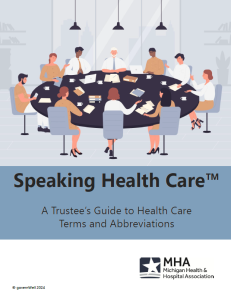
The MHA, other state hospital associations and governWell™ collaborated to create Speaking Health Care™, a guide designed to help hospital and health system trustees better understand the complex and often confusing language used in healthcare. The glossary includes over 1,000 words with acronyms that are often used in briefings, documents and discussions in the boardroom.
The MHA encourages members to share this guide with governing board members, new employees and others who could benefit.
Questions about the guide can be directed to Erin Steward at the MHA.

MyMichigan Health established the Continuing Care Clinics in 2023 to serve residents across its 26-county service region who lack timely access to primary care physicians. These clinics are pivotal during critical health transitions, offering responsive care after hospital discharges, emergency department visits, stays in long-term care facilities or while patients await new primary care providers.
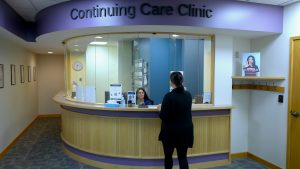
Through the Continuing Care Clinics model, MyMichigan Health has demonstrated significant success in reducing poor health outcomes. Patients receiving care exhibit a lower risk of readmission compared to those at other, similar clinics. This achievement is credited to the multidisciplinary team of clinicians who develop personalized care plans, assisting patients in successfully transitioning home while minimizing readmission risks.
Additionally, patients receive referrals for preventive care screenings, further promoting community wellness. The Continuing Care Clinics collaborate with community partners to enhance patients’ access to essential resources including food, transportation and medication. These efforts empower patients to manage their health more effectively and improve recovery.
“Through partnerships with food centers, transportation services and pharmacies, we’ve improved patient access to essential resources like free food, transportation and medication,” said Steve Frazier, MHA, BA, RN, ACN-RN, director of quality and patient safety, MyMichigan Health. “These interventions help patients manage their health, reduce the risk of readmissions and improve overall health outcomes. Additionally, the clinics connect patients without a primary care provider to care, ensuring continuous support and reducing gaps in preventative care.”
For more information and hospital stories, check out the 2025 Community Impact Report. Additionally, this work earned MyMichigan Health a 2025 Ludwig Community Benefit Award. Members with questions may contact Lucy Ciaramitaro at the MHA.